

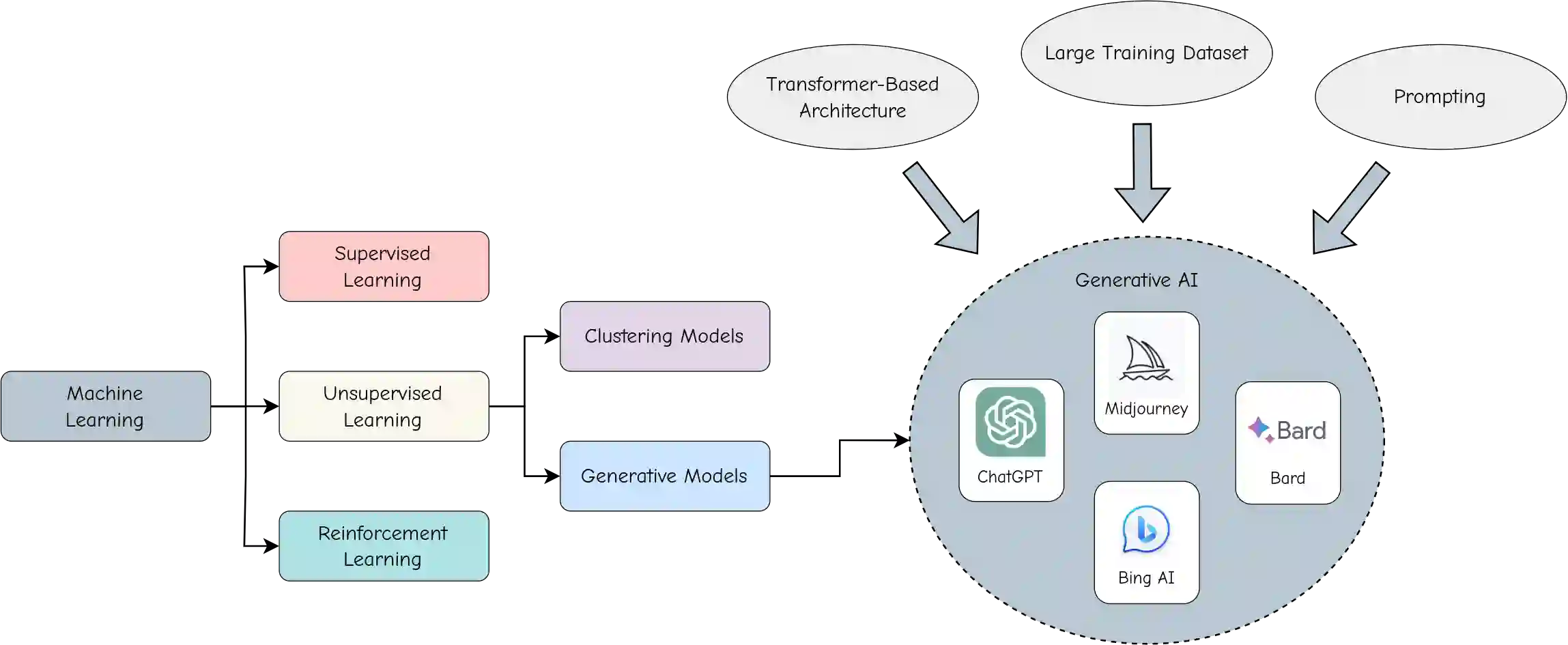
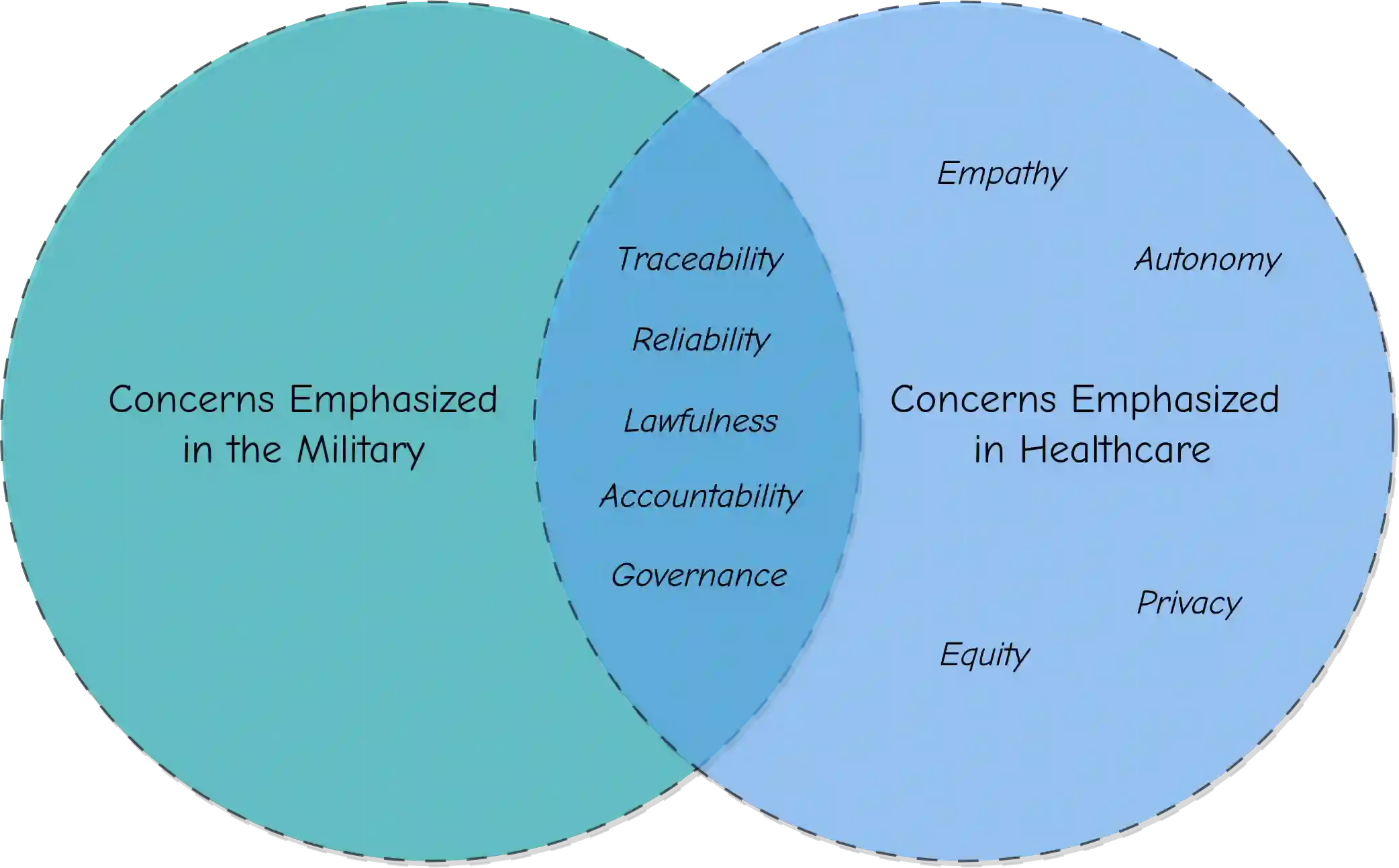
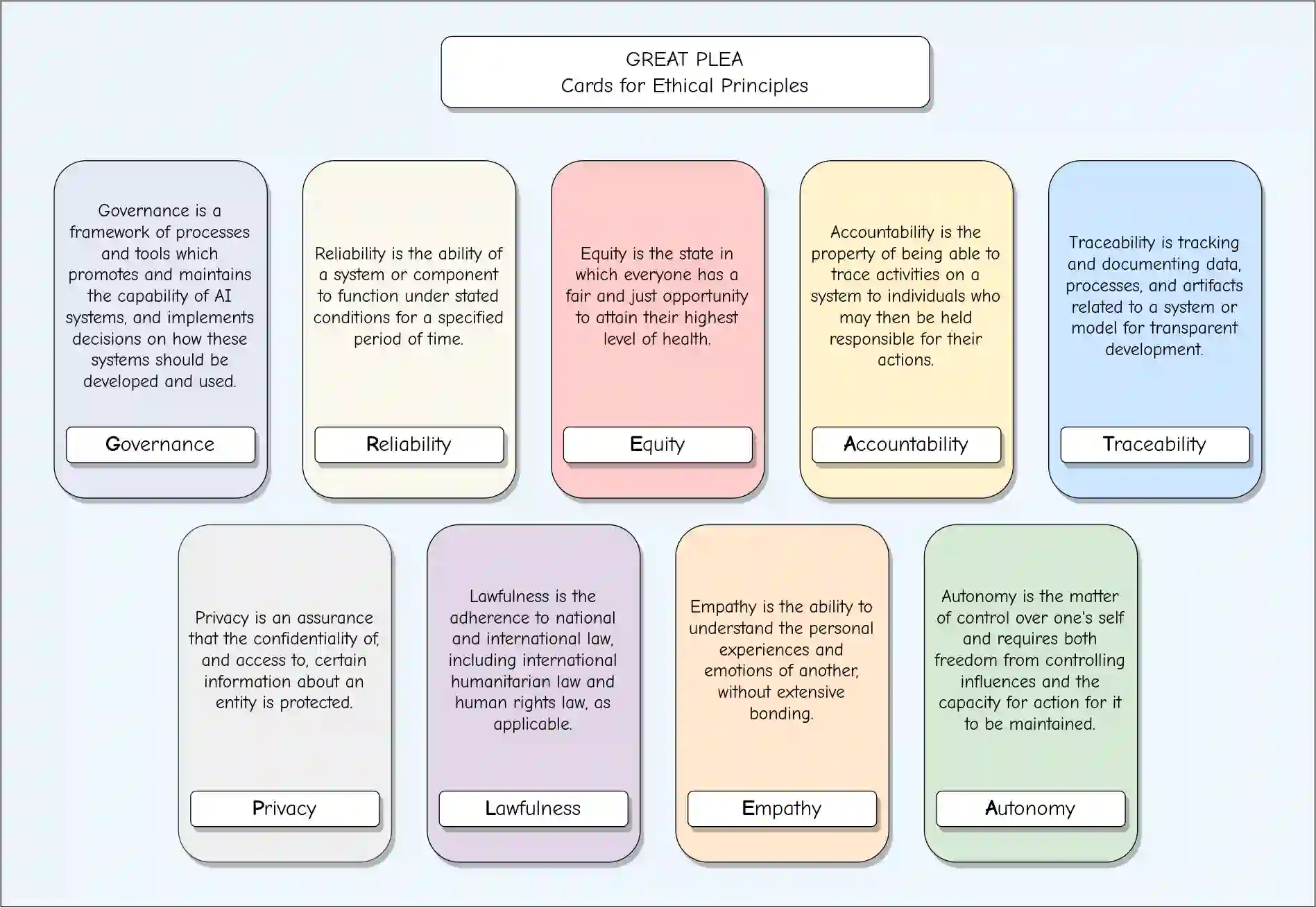
In 2020, the U.S. Department of Defense officially disclosed a set of ethical principles to guide the use of Artificial Intelligence (AI) technologies on future battlefields. Despite stark differences, there are core similarities between the military and medical service. Warriors on battlefields often face life-altering circumstances that require quick decision-making. Medical providers experience similar challenges in a rapidly changing healthcare environment, such as in the emergency department or during surgery treating a life-threatening condition. Generative AI, an emerging technology designed to efficiently generate valuable information, holds great promise. As computing power becomes more accessible and the abundance of health data, such as electronic health records, electrocardiograms, and medical images, increases, it is inevitable that healthcare will be revolutionized by this technology. Recently, generative AI has captivated the research community, leading to debates about its application in healthcare, mainly due to concerns about transparency and related issues. Meanwhile, concerns about the potential exacerbation of health disparities due to modeling biases have raised notable ethical concerns regarding the use of this technology in healthcare. However, the ethical principles for generative AI in healthcare have been understudied, and decision-makers often fail to consider the significance of generative AI. In this paper, we propose GREAT PLEA ethical principles, encompassing governance, reliability, equity, accountability, traceability, privacy, lawfulness, empathy, and autonomy, for generative AI in healthcare. We aim to proactively address the ethical dilemmas and challenges posed by the integration of generative AI in healthcare.
翻译:2020年,美国国防部正式公布了一套伦理原则,用于指导人工智能(AI)技术在未来战场上的应用。尽管存在显著差异,但军事与医疗服务之间存在核心共性。战场上的战士常面临需要快速决策的改变人生的境况。医疗服务提供者同样在快速变化的医疗环境中面临类似挑战,例如急诊科或手术中需救治危及生命的病症时。生成式人工智能作为一项旨在高效生成有价值信息的新兴技术,具有巨大潜力。随着计算能力的普及以及电子健康记录、心电图和医学影像等健康数据的激增,该技术革新医疗领域已不可避免。近年来,生成式人工智能吸引了学术界的广泛关注,并引发了关于其在医疗领域应用的争论,主要源于透明度及相关问题的担忧。同时,由于建模偏差可能加剧健康差距的问题,该技术在医疗中的使用引发了显著的伦理关切。然而,针对医疗领域生成式人工智能的伦理原则研究尚不充分,决策者往往未能认识到其重要性。本文提出了GREAT PLEA伦理原则,涵盖治理(Governance)、可靠性(Reliability)、公平性(Equity)、问责制(Accountability)、可追溯性(Traceability)、隐私(Privacy)、合法性(Lawfulness)、共情(Empathy)与自主性(Autonomy),旨在主动应对生成式人工智能融入医疗领域所带来的伦理困境与挑战。




相关内容





 微信扫码咨询专知VIP会员