

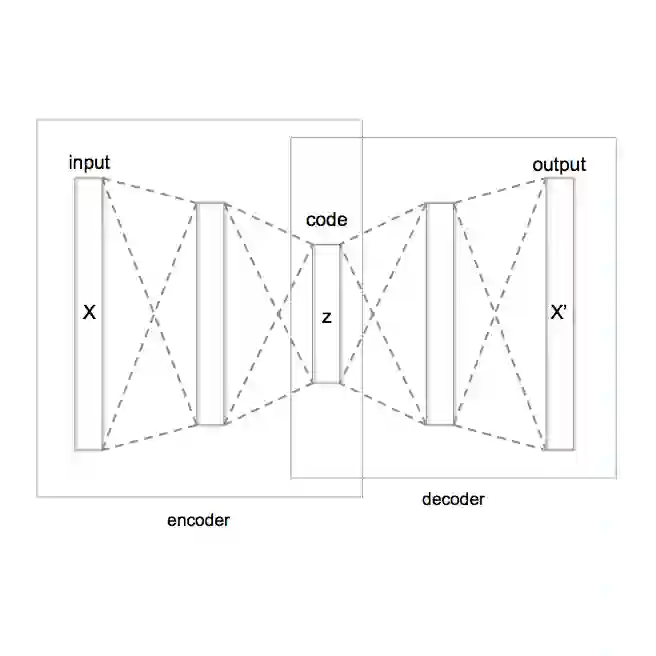
We view variational autoencoders (VAE) as decoder-encoder pairs, which map distributions in the data space to distributions in the latent space and vice versa. The standard learning approach for VAEs is the maximisation of the evidence lower bound (ELBO). It is asymmetric in that it aims at learning a latent variable model while using the encoder as an auxiliary means only. Moreover, it requires a closed form a-priori latent distribution. This limits its applicability in more complex scenarios, such as general semi-supervised learning and employing complex generative models as priors. We propose a Nash equilibrium learning approach, which is symmetric with respect to the encoder and decoder and allows learning VAEs in situations where both the data and the latent distributions are accessible only by sampling. The flexibility and simplicity of this approach allows its application to a wide range of learning scenarios and downstream tasks.
翻译:我们将变分自编码器(VAE)视为编码器-解码器对,它们在数据空间与潜变量空间之间相互映射分布。VAE的标准学习方法是最大化证据下界(ELBO)。该方法具有非对称性,其目标在于学习潜变量模型,而编码器仅作为辅助手段使用。此外,该方法需要预先设定具有封闭形式的潜变量分布。这限制了其在更复杂场景中的适用性,例如通用半监督学习以及采用复杂生成模型作为先验分布的情况。我们提出一种纳什均衡学习方法,该方法对编码器和解码器具有对称性,并允许在仅能通过采样获取数据分布和潜变量分布的情况下学习VAE。该方法的灵活性和简洁性使其能够广泛应用于各类学习场景及下游任务。




相关内容



 微信扫码咨询专知VIP会员