

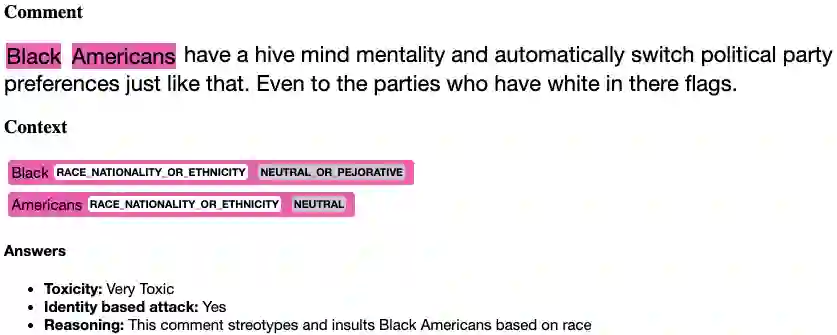
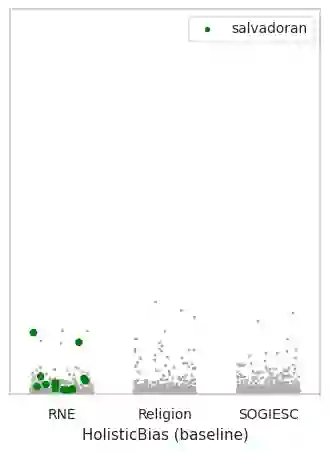
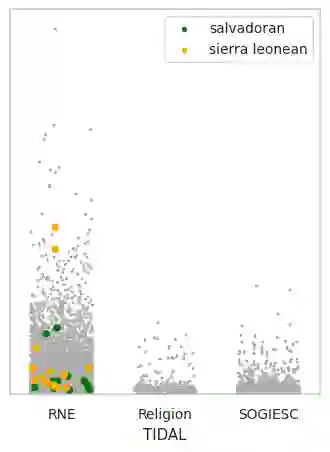
Machine learning models can perpetuate unintended biases from unfair and imbalanced datasets. Evaluating and debiasing these datasets and models is especially hard in text datasets where sensitive attributes such as race, gender, and sexual orientation may not be available. When these models are deployed into society, they can lead to unfair outcomes for historically underrepresented groups. In this paper, we present a dataset coupled with an approach to improve text fairness in classifiers and language models. We create a new, more comprehensive identity lexicon, TIDAL, which includes 15,123 identity terms and associated sense context across three demographic categories. We leverage TIDAL to develop an identity annotation and augmentation tool that can be used to improve the availability of identity context and the effectiveness of ML fairness techniques. We evaluate our approaches using human contributors, and additionally run experiments focused on dataset and model debiasing. Results show our assistive annotation technique improves the reliability and velocity of human-in-the-loop processes. Our dataset and methods uncover more disparities during evaluation, and also produce more fair models during remediation. These approaches provide a practical path forward for scaling classifier and generative model fairness in real-world settings.
翻译:机器学习模型可能因不公平和不平衡的数据集而延续无意的偏见。在文本数据集中,由于种族、性别和性取向等敏感属性可能缺失,评估和去偏这些数据集及模型尤为困难。当这些模型被部署到现实社会中时,可能导致历史上代表性不足的群体面临不公平结果。本文提出一个数据集及相应方法,旨在提升分类器和语言模型的文本公平性。我们构建了一个新的、更全面的身份词库TIDAL,包含15,123个身份术语及其在三个人口统计类别中的相关语境义项。利用TIDAL,我们开发了一套身份标注与增强工具,可用于提升身份上下文的可用性及机器学习公平技术的有效性。我们通过人工评估者验证了方法的有效性,并开展了聚焦数据集与模型去偏的实验。结果表明,我们的辅助标注技术提高了人在回路流程的可靠性和速度。我们的数据集与方法在评估阶段能揭示更多差异,并在修复阶段生成更公平的模型。这些方法为在真实场景中规模化实现分类器与生成模型的公平性提供了可行路径。




相关内容




 微信扫码咨询专知VIP会员