

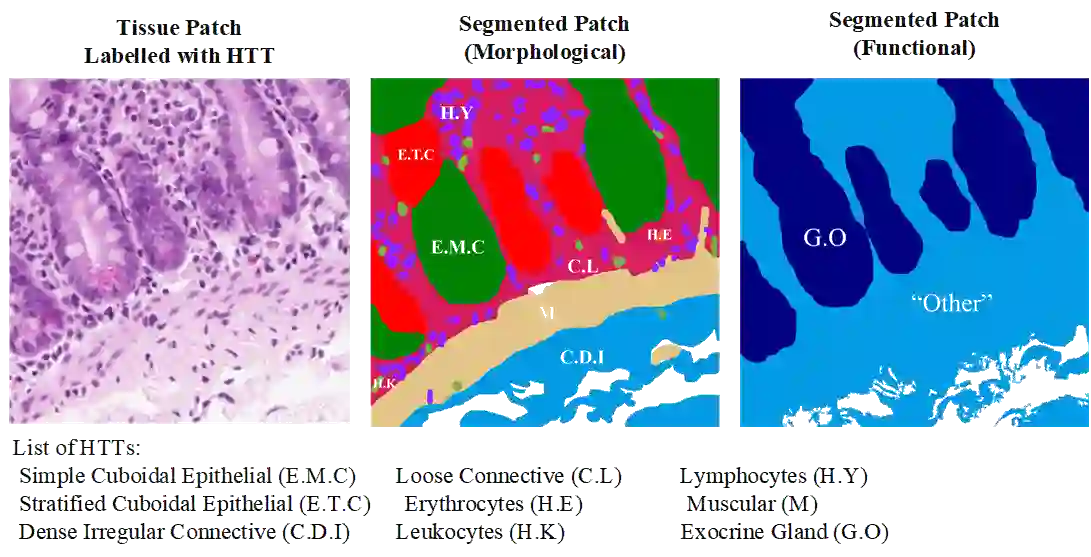
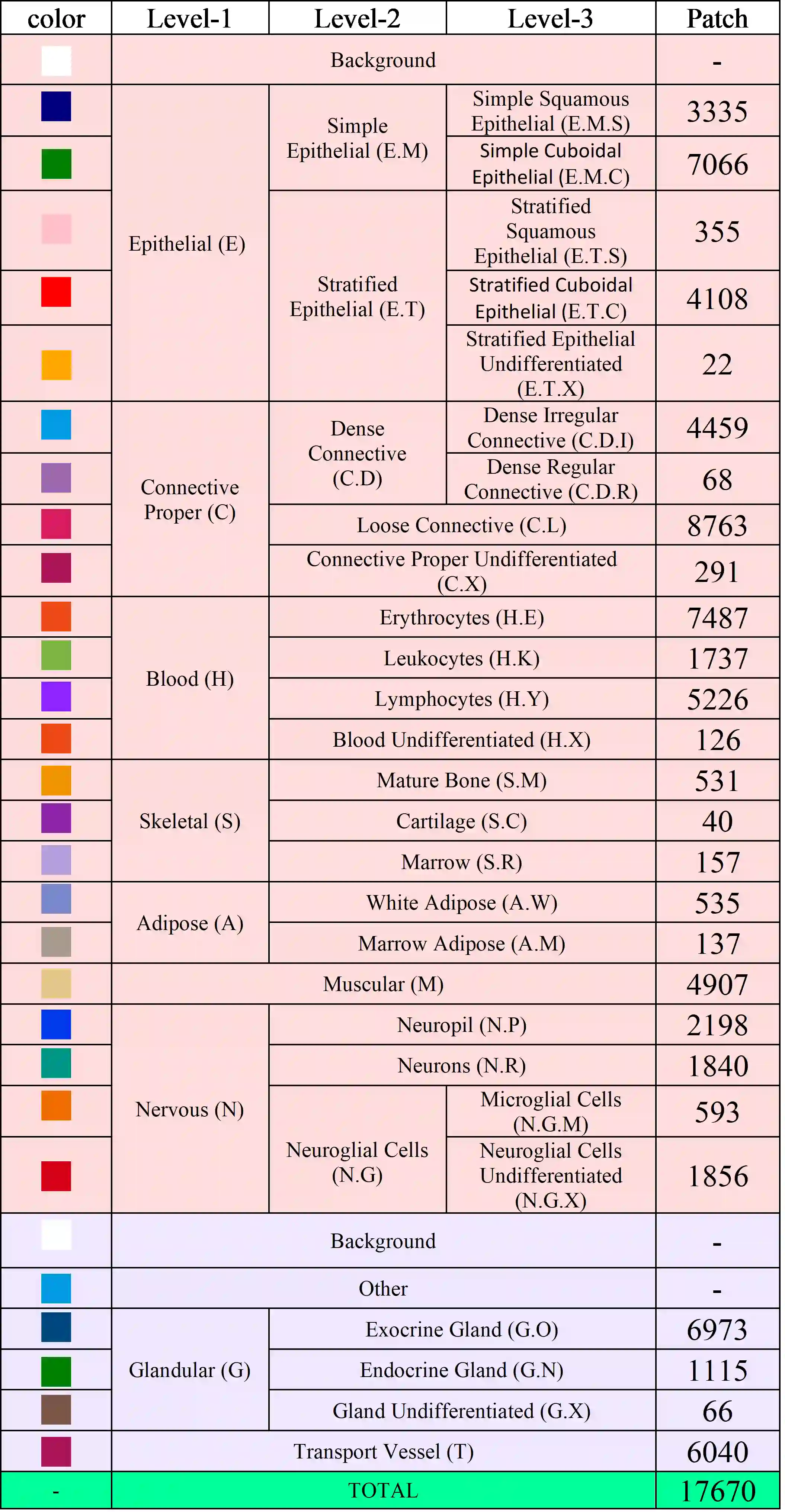
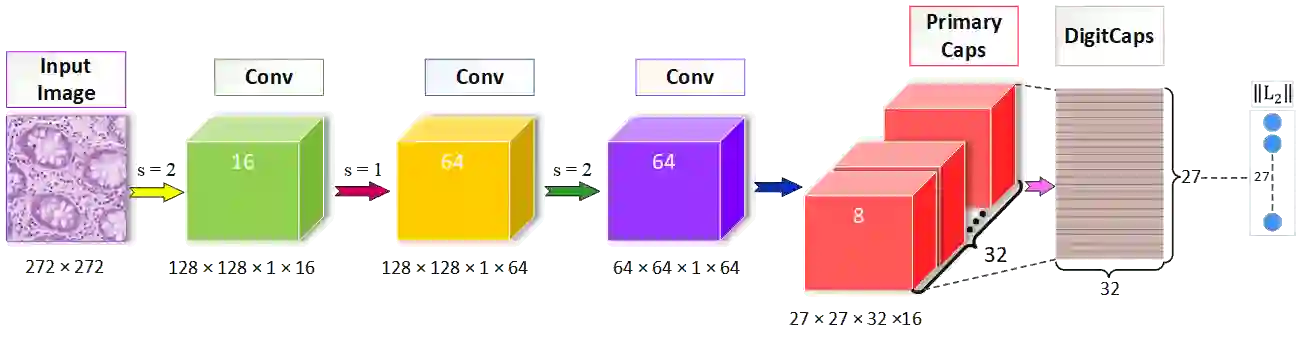
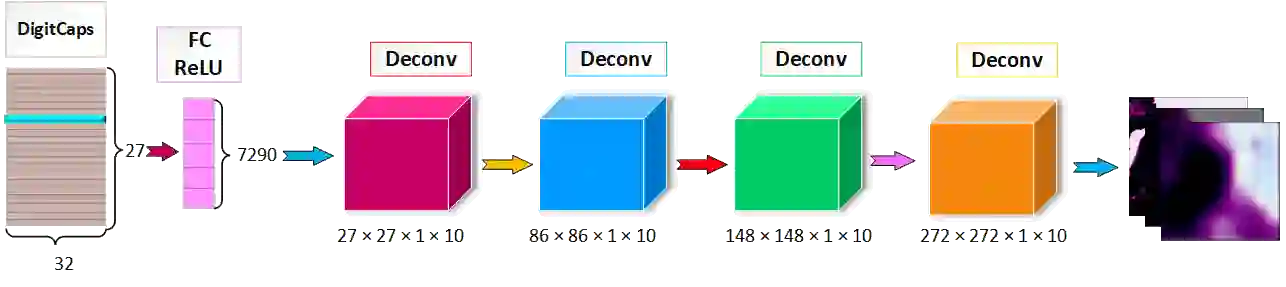
Digital pathology involves converting physical tissue slides into high-resolution Whole Slide Images (WSIs), which pathologists analyze for disease-affected tissues. However, large histology slides with numerous microscopic fields pose challenges for visual search. To aid pathologists, Computer Aided Diagnosis (CAD) systems offer visual assistance in efficiently examining WSIs and identifying diagnostically relevant regions. This paper presents a novel histopathological image analysis method employing Weakly Supervised Semantic Segmentation (WSSS) based on Capsule Networks, the first such application. The proposed model is evaluated using the Atlas of Digital Pathology (ADP) dataset and its performance is compared with other histopathological semantic segmentation methodologies. The findings underscore the potential of Capsule Networks in enhancing the precision and efficiency of histopathological image analysis. Experimental results show that the proposed model outperforms traditional methods in terms of accuracy and the mean Intersection-over-Union (mIoU) metric.
翻译:数字病理学涉及将物理组织切片转化为高分辨率全切片图像(WSI),病理学家通过分析这些图像识别病变组织。然而,包含大量显微镜视野的大尺寸组织切片对视觉搜索构成挑战。为辅助病理学家,计算机辅助诊断(CAD)系统通过高效检查WSI并识别诊断相关区域提供视觉支持。本文提出一种基于胶囊网络的弱监督语义分割(WSSS)方法,这是首次将该类网络应用于组织病理图像分析。所提模型采用数字病理图谱(ADP)数据集进行评估,并与多种组织病理语义分割方法进行性能对比。实验结果揭示了胶囊网络在提升组织病理图像分析精度与效率方面的潜力,表明所提模型在准确率与平均交并比(mIoU)指标上均优于传统方法。




相关内容



 微信扫码咨询专知VIP会员