

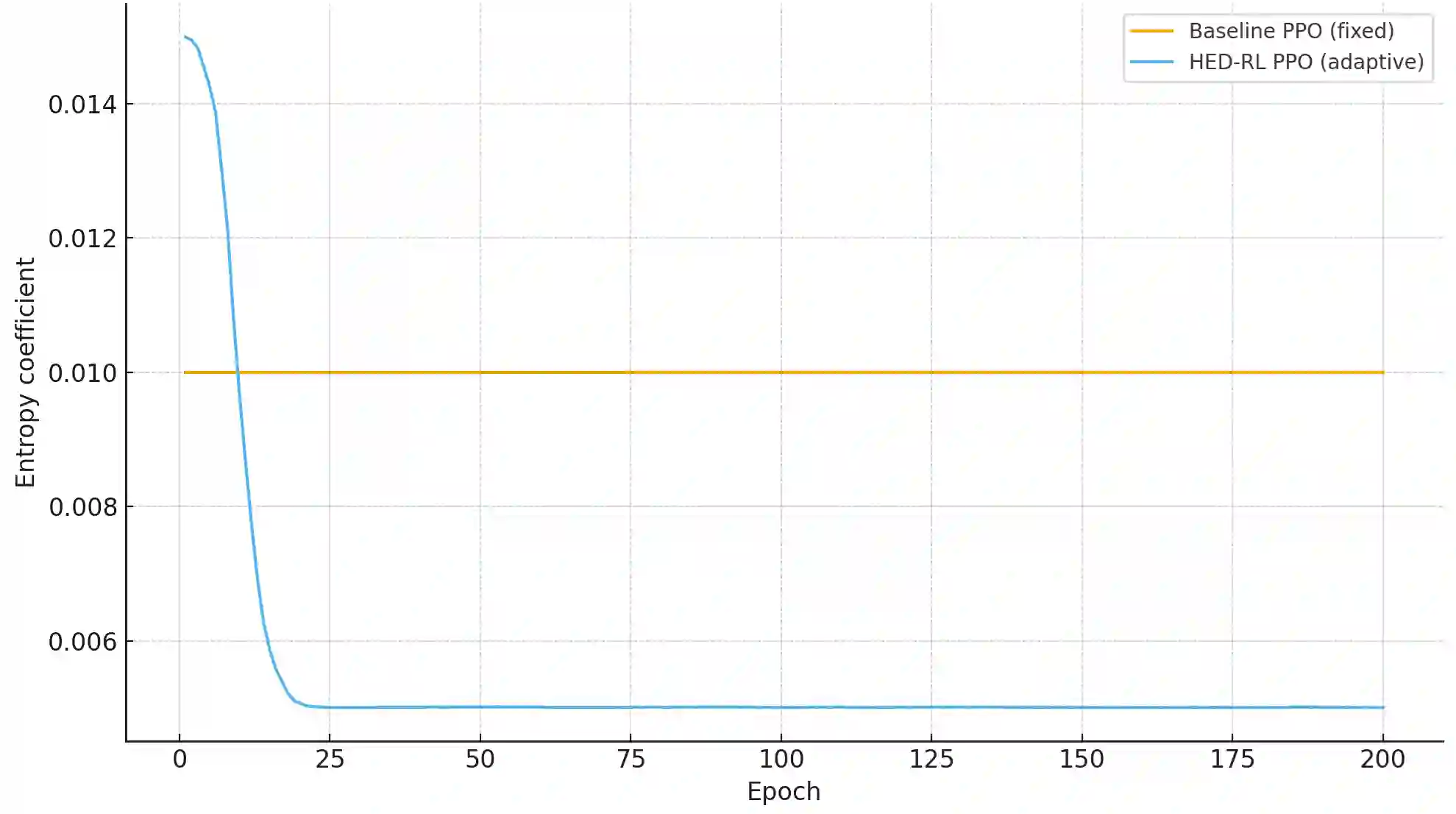
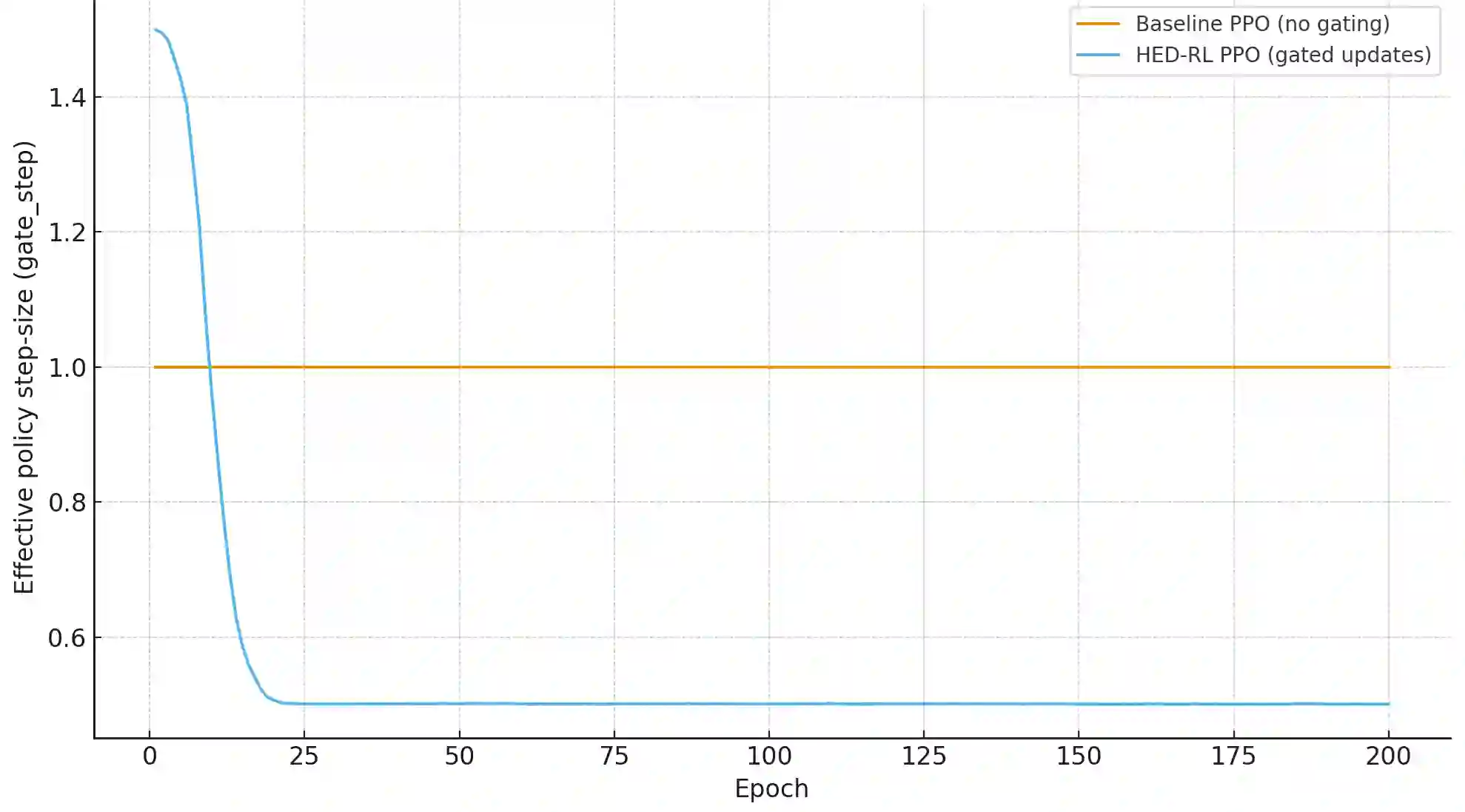
Learning systems deployed in nonstationary and safety-critical environments often suffer from instability, slow convergence, or brittle adaptation when learning dynamics evolve over time. While modern optimization, reinforcement learning, and meta-learning methods adapt to gradient statistics, they largely ignore the temporal structure of the error signal itself. This paper proposes a diagnostic-driven adaptive learning framework that explicitly models error evolution through a principled decomposition into bias, capturing persistent drift; noise, capturing stochastic variability; and alignment, capturing repeated directional excitation leading to overshoot. These diagnostics are computed online from lightweight statistics of loss or temporal-difference (TD) error trajectories and are independent of model architecture or task domain. We show that the proposed bias-noise-alignment decomposition provides a unifying control backbone for supervised optimization, actor-critic reinforcement learning, and learned optimizers. Within this framework, we introduce three diagnostic-driven instantiations: the Human-inspired Supervised Adaptive Optimizer (HSAO), Hybrid Error-Diagnostic Reinforcement Learning (HED-RL) for actor-critic methods, and the Meta-Learned Learning Policy (MLLP). Under standard smoothness assumptions, we establish bounded effective updates and stability properties for all cases. Representative diagnostic illustrations in actor-critic learning highlight how the proposed signals modulate adaptation in response to TD error structure. Overall, this work elevates error evolution to a first-class object in adaptive learning and provides an interpretable, lightweight foundation for reliable learning in dynamic environments.
翻译:部署于非平稳与安全关键环境中的学习系统,其学习动态随时间演化时常面临不稳定性、收敛缓慢或适应性脆弱等问题。尽管现代优化、强化学习和元学习方法能够适应梯度统计量,但它们大多忽略了误差信号本身的时间结构。本文提出一种诊断驱动的自适应学习框架,通过将误差演化分解为三个原则性分量进行显式建模:偏差(捕捉持续漂移)、噪声(捕捉随机波动)以及对齐(捕捉导致超调的重复杂向激励)。这些诊断指标通过损失函数或时序差分误差轨迹的轻量级统计量在线计算,且独立于模型架构或任务领域。我们证明,所提出的偏差-噪声-对齐分解为监督优化、执行者-评论者强化学习以及学习型优化器提供了统一的控制主干。在此框架内,我们引入三种诊断驱动的具体实现:受人类启发的监督自适应优化器、面向执行者-评论者方法的混合误差诊断强化学习,以及元学习型学习策略。在标准平滑性假设下,我们为所有案例建立了有效更新边界与稳定性证明。在执行者-评论者学习中的典型诊断图示进一步阐明,所提出的信号如何根据时序差分误差结构调节自适应过程。总体而言,本工作将误差演化提升为自适应学习中的一等对象,并为动态环境中的可靠学习提供了可解释、轻量级的理论基础。




相关内容




 微信扫码咨询专知VIP会员