

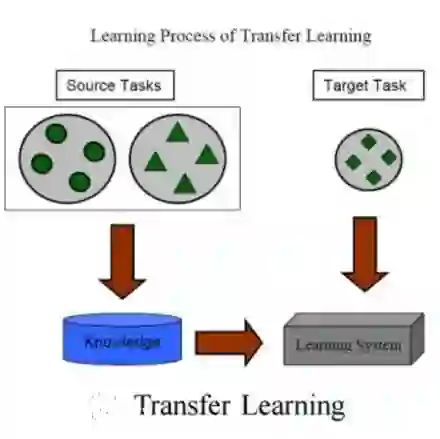
Self-supervised learning has emerged as a powerful tool for pretraining deep networks on unlabeled data, prior to transfer learning of target tasks with limited annotation. The relevance between the pretraining pretext and target tasks is crucial to the success of transfer learning. Various pretext tasks have been proposed to utilize properties of medical image data (e.g., three dimensionality), which are more relevant to medical image analysis than generic ones for natural images. However, previous work rarely paid attention to data with anatomy-oriented imaging planes, e.g., standard cardiac magnetic resonance imaging views. As these imaging planes are defined according to the anatomy of the imaged organ, pretext tasks effectively exploiting this information can pretrain the networks to gain knowledge on the organ of interest. In this work, we propose two complementary pretext tasks for this group of medical image data based on the spatial relationship of the imaging planes. The first is to learn the relative orientation between the imaging planes and implemented as regressing their intersecting lines. The second exploits parallel imaging planes to regress their relative slice locations within a stack. Both pretext tasks are conceptually straightforward and easy to implement, and can be combined in multitask learning for better representation learning. Thorough experiments on two anatomical structures (heart and knee) and representative target tasks (semantic segmentation and classification) demonstrate that the proposed pretext tasks are effective in pretraining deep networks for remarkably boosted performance on the target tasks, and superior to other recent approaches.
翻译:自监督学习已成为一种强大的工具,可在有限标注的目标任务迁移学习之前,利用无标签数据预训练深度网络。预训练代理任务与目标任务之间的相关性对迁移学习的成功至关重要。针对医学图像数据的特性(例如三维性),已有多种代理任务被提出,这些任务比通用的自然图像任务更适用于医学图像分析。然而,以往工作很少关注具有解剖导向成像平面的数据(例如标准心脏磁共振成像视图)。由于这些成像平面根据所成像器官的解剖结构定义,有效利用此信息的代理任务可预训练网络,使其获得目标器官的相关知识。本文针对此类医学图像数据,基于成像平面的空间关系提出了两种互补的代理任务。第一种任务是学习成像平面之间的相对方向,通过回归其相交线实现。第二种任务利用平行成像平面,回归堆叠中切片的相对位置。两种代理任务概念简洁、易于实现,并可通过多任务学习结合以实现更好的表征学习。在两个解剖结构(心脏和膝关节)及代表性目标任务(语义分割与分类)上的充分实验表明,所提代理任务能有效预训练深度网络,显著提升目标任务性能,并优于其他近期方法。




相关内容



 微信扫码咨询专知VIP会员