

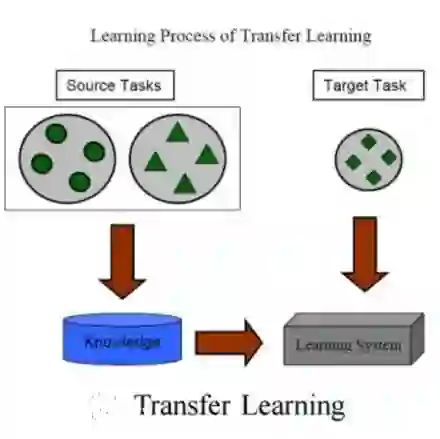
When applying deep learning to remote sensing data in archaeological research, a notable obstacle is the limited availability of suitable datasets for training models. The application of transfer learning is frequently employed to mitigate this drawback. However, there is still a need to explore its effectiveness when applied across different archaeological datasets. This paper compares the performance of various transfer learning configurations using two semantic segmentation deep neural networks on two LiDAR datasets. The experimental results indicate that transfer learning-based approaches in archaeology can lead to performance improvements, although a systematic enhancement has not yet been observed. We provide specific insights about the validity of such techniques that can serve as a baseline for future works.
翻译:在考古研究中将深度学习应用于遥感数据时,一个显著障碍是用于训练模型的合适数据集有限。迁移学习的应用常被用于缓解这一不足,然而,其在不同考古数据集间的有效性仍需深入探究。本文通过两个语义分割深度神经网络在两个LiDAR数据集上比较了多种迁移学习配置的性能。实验结果表明,基于迁移学习的考古学方法虽能带来性能提升,但尚未观察到系统性的增强。我们就此类技术的有效性提供了具体见解,可作为未来研究的基线参考。




相关内容


 微信扫码咨询专知VIP会员