

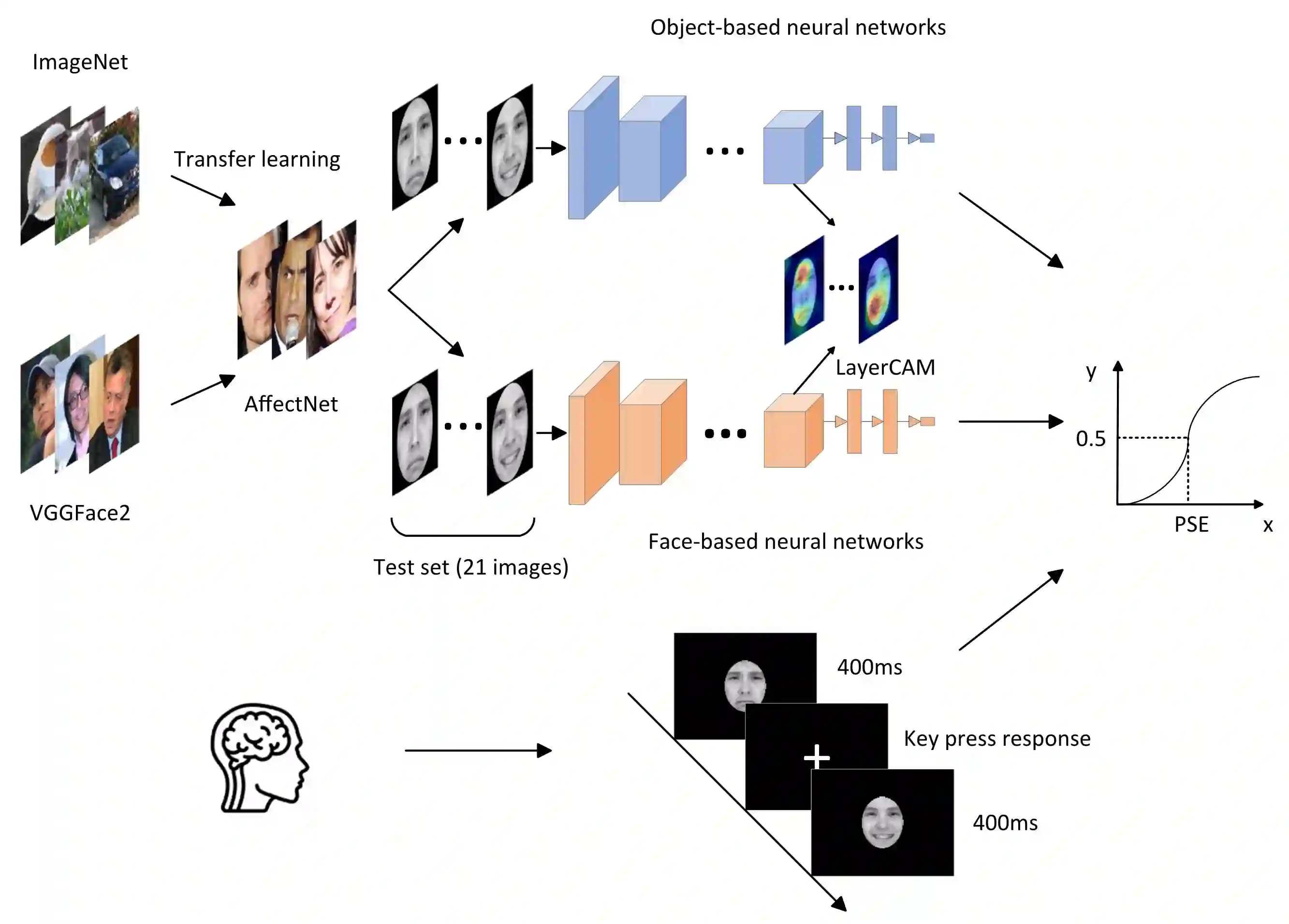
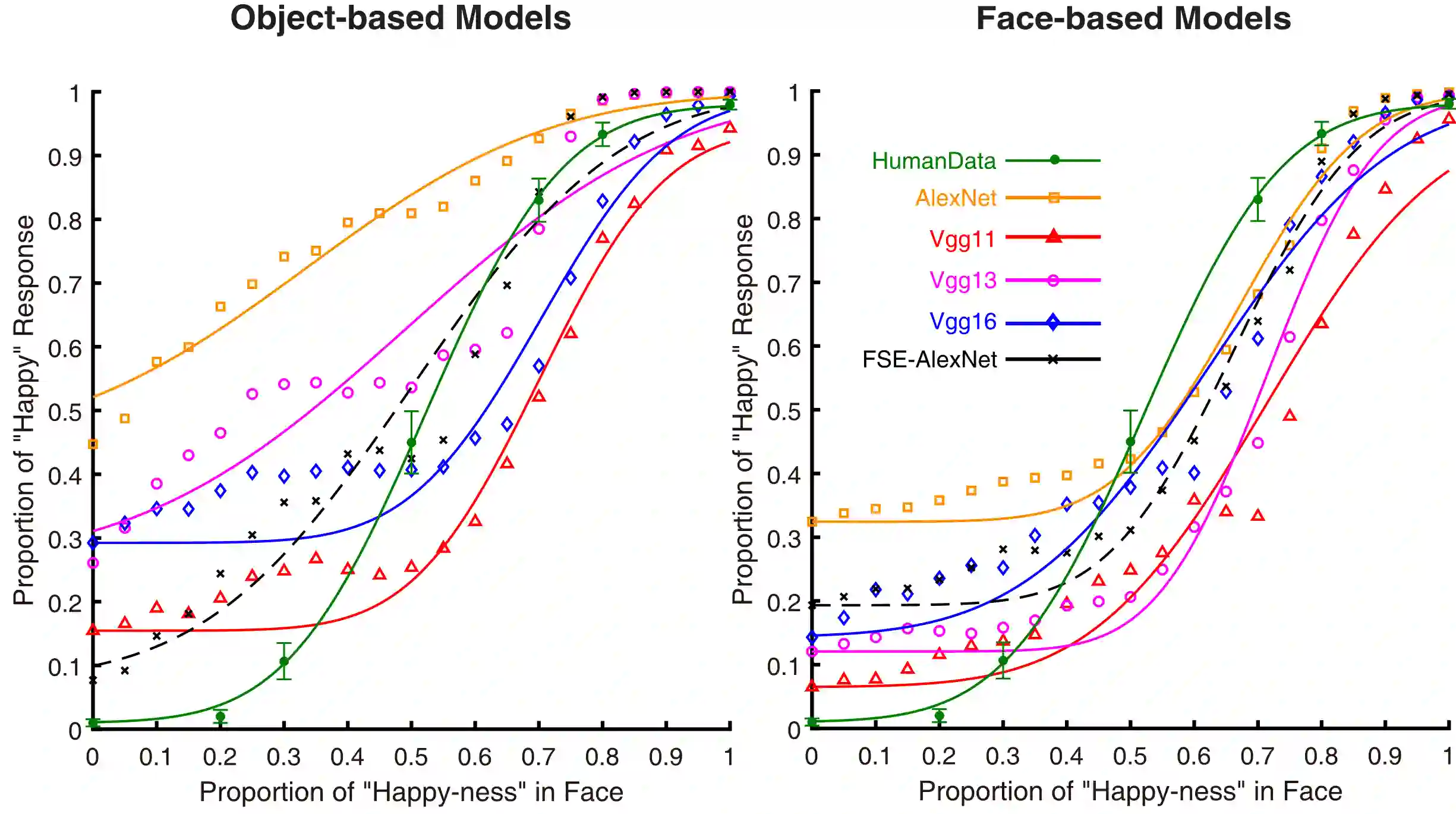
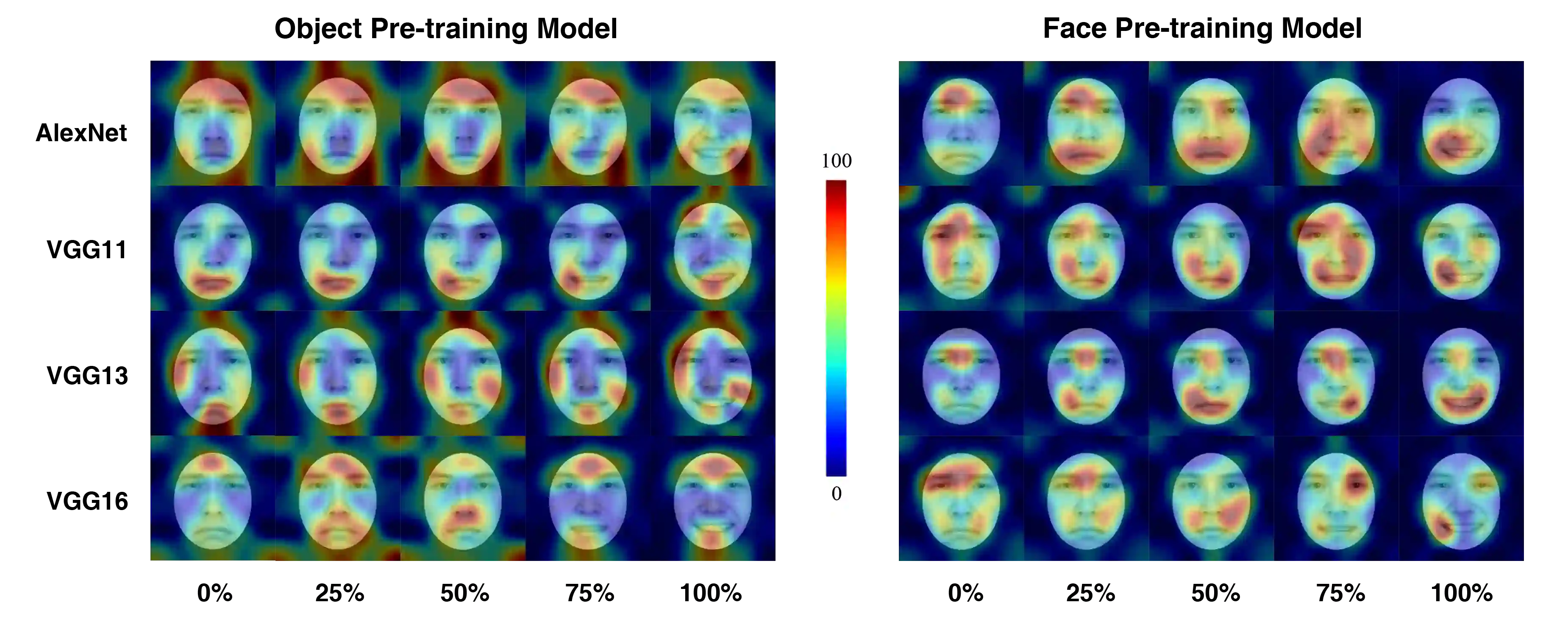
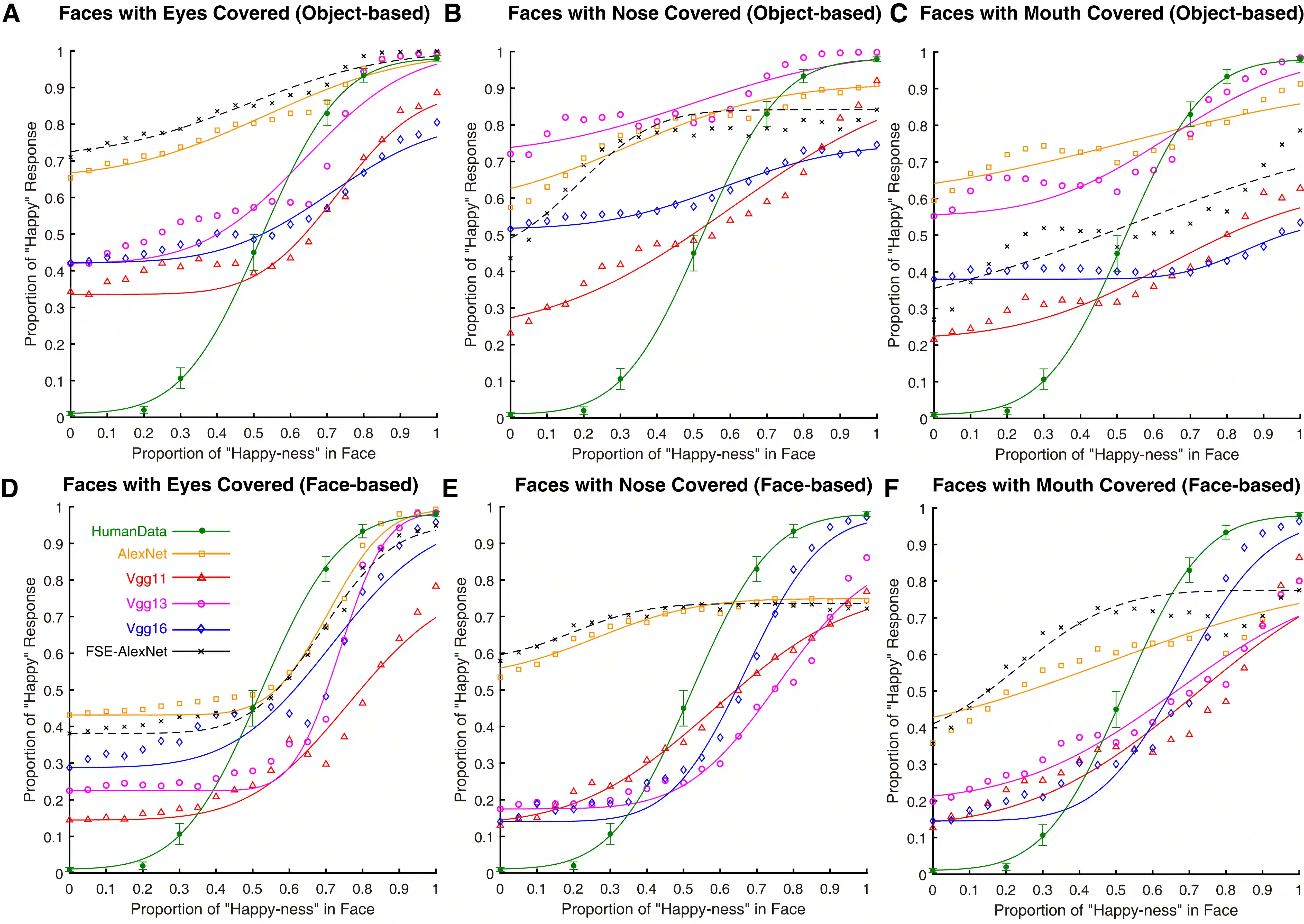
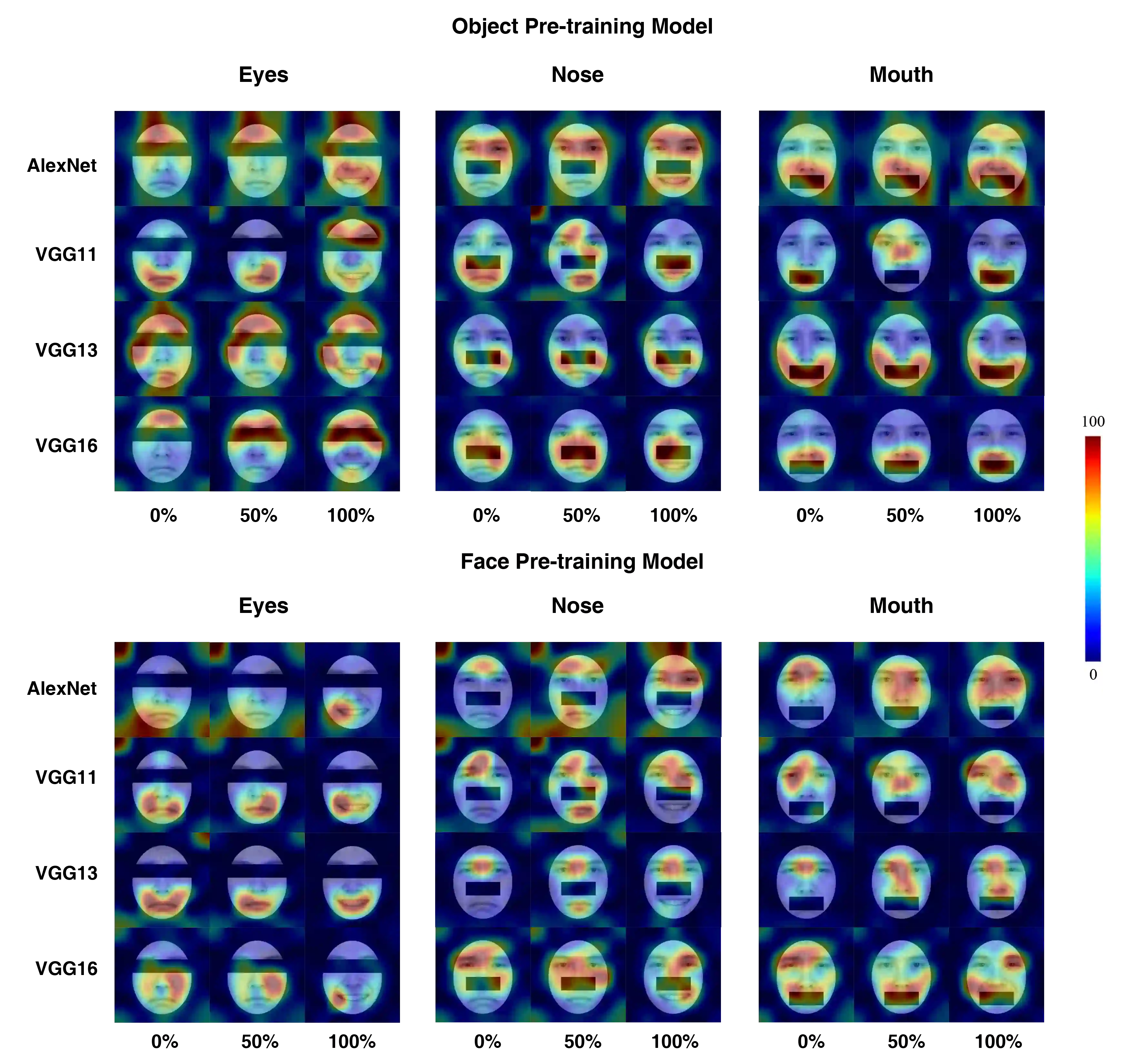
Convolutional neural network (CNN), as an important model in artificial intelligence, has been widely used and studied in different disciplines. The computational mechanisms of CNNs are still not fully revealed due to the their complex nature. In this study, we focused on 4 extensively studied CNNs (AlexNet, VGG11, VGG13, and VGG16) which has been analyzed as human-like models by neuroscientists with ample evidence. We trained these CNNs to emotion valence classification task by transfer learning. Comparing their performance with human data, the data unveiled that these CNNs would partly perform as human does. We then update the object-based AlexNet using self-attention mechanism based on neuroscience and behavioral data. The updated FE-AlexNet outperformed all the other tested CNNs and closely resembles human perception. The results further unveil the computational mechanisms of these CNNs. Moreover, this study offers a new paradigm to better understand and improve CNN performance via human data.
翻译:卷积神经网络作为人工智能领域的重要模型,已在不同学科中得到广泛应用与研究。由于卷积神经网络的复杂性,其计算机制尚未被完全揭示。本研究聚焦于四种被广泛研究的卷积神经网络(AlexNet、VGG11、VGG13和VGG16),神经科学家已通过充分证据将其作为类人模型进行分析。我们通过迁移学习训练这些卷积神经网络执行情绪效价分类任务。通过将其表现与人类数据进行比较,结果表明这些卷积神经网络在部分情况下确实表现出类人特征。随后,我们基于神经科学与行为数据,运用自注意力机制对基于对象的AlexNet进行改进。更新后的FE-AlexNet在所有测试的卷积神经网络中表现最优,且与人类感知高度相似。该结果进一步揭示了这些卷积神经网络的计算机制。此外,本研究为通过人类数据更好理解与提升卷积神经网络性能提供了新范式。




相关内容




 微信扫码咨询专知VIP会员