

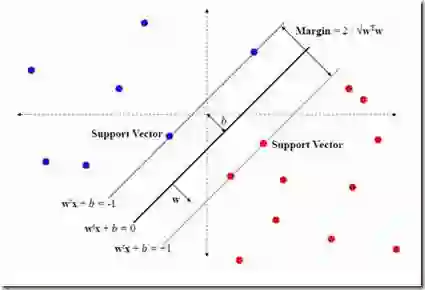
The escalating sophistication of Android malware poses significant challenges to traditional detection methods, necessitating innovative approaches that can efficiently identify and classify threats with high precision. This paper introduces a novel framework that synergistically integrates an attention-enhanced Multi-Layer Perceptron (MLP) with a Support Vector Machine (SVM) to make Android malware detection and classification more effective. By carefully analyzing a mere 47 features out of over 9,760 available in the comprehensive CCCS-CIC-AndMal-2020 dataset, our MLP-SVM model achieves an impressive accuracy over 99% in identifying malicious applications. The MLP, enhanced with an attention mechanism, focuses on the most discriminative features and further reduces the 47 features to only 14 components using Linear Discriminant Analysis (LDA). Despite this significant reduction in dimensionality, the SVM component, equipped with an RBF kernel, excels in mapping these components to a high-dimensional space, facilitating precise classification of malware into their respective families. Rigorous evaluations, encompassing accuracy, precision, recall, and F1-score metrics, confirm the superiority of our approach compared to existing state-of-the-art techniques. The proposed framework not only significantly reduces the computational complexity by leveraging a compact feature set but also exhibits resilience against the evolving Android malware landscape.
翻译:Android恶意软件的日益复杂化对传统检测方法构成了重大挑战,亟需能够高效、高精度识别与分类威胁的创新方法。本文提出一种新颖框架,通过协同整合注意力增强的多层感知机(MLP)与支持向量机(SVM),显著提升Android恶意软件检测与分类的效能。基于综合性CCCS-CIC-AndMal-2020数据集中超过9,760个可用特征,我们仅精选取47个特征进行深入分析,所构建的MLP-SVM模型在恶意应用识别中取得了超过99%的准确率。通过引入注意力机制增强的MLP聚焦于最具判别力的特征,并借助线性判别分析(LDA)将47个特征进一步压缩至14个成分。尽管特征维度大幅降低,配备RBF核函数的SVM组件仍能出色地将这些成分映射到高维空间,实现对恶意软件家族的精准确分类。通过准确率、精确率、召回率与F1分数等指标的严格评估,本方法相较于现有前沿技术展现出显著优势。该框架不仅通过采用紧凑特征集大幅降低了计算复杂度,同时展现出对持续演变的Android恶意软件环境具有强适应能力。




相关内容



 微信扫码咨询专知VIP会员