

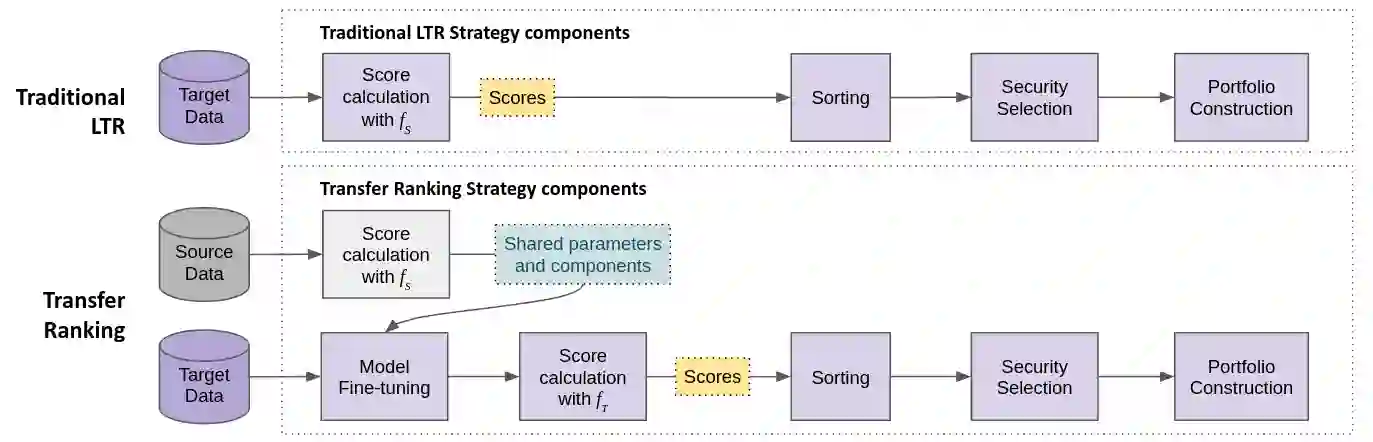
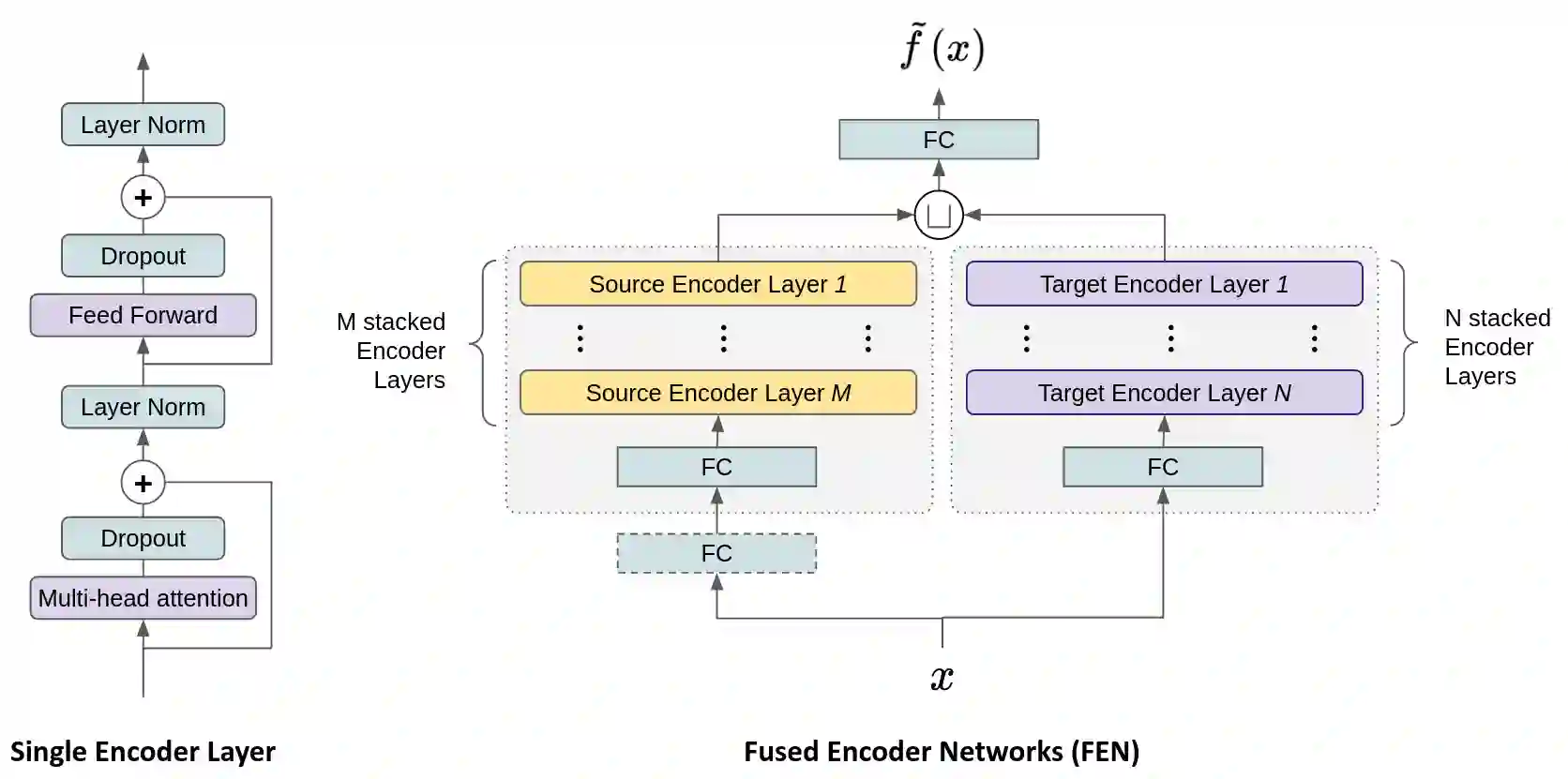
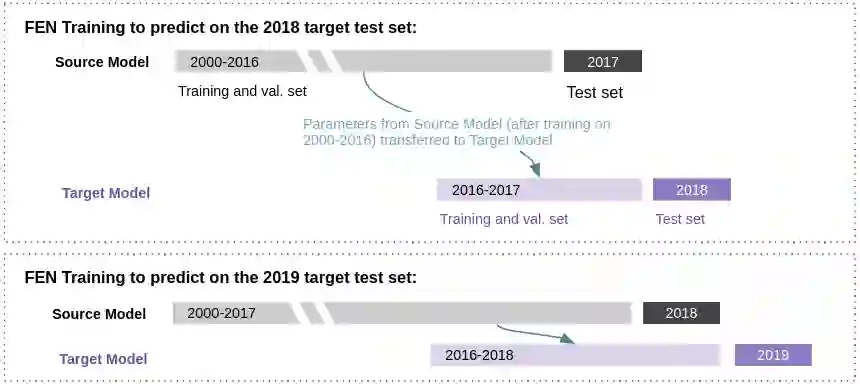
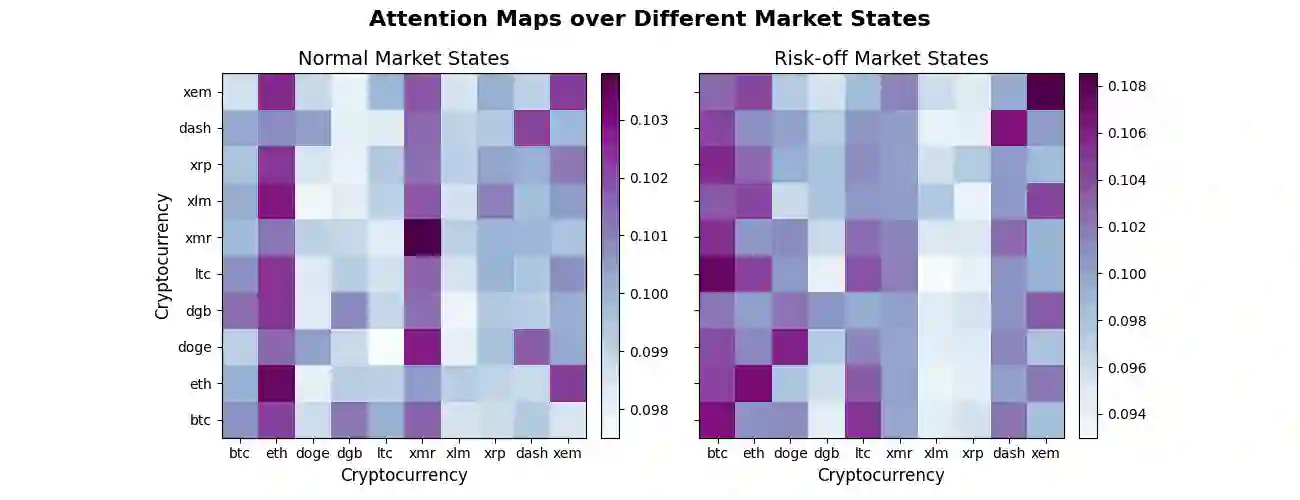
Cross-sectional strategies are a classical and popular trading style, with recent high performing variants incorporating sophisticated neural architectures. While these strategies have been applied successfully to data-rich settings involving mature assets with long histories, deploying them on instruments with limited samples generally produce over-fitted models with degraded performance. In this paper, we introduce Fused Encoder Networks -- a novel and hybrid parameter-sharing transfer ranking model. The model fuses information extracted using an encoder-attention module operated on a source dataset with a similar but separate module focused on a smaller target dataset of interest. This mitigates the issue of models with poor generalisability that are a consequence of training on scarce target data. Additionally, the self-attention mechanism enables interactions among instruments to be accounted for, not just at the loss level during model training, but also at inference time. Focusing on momentum applied to the top ten cryptocurrencies by market capitalisation as a demonstrative use-case, the Fused Encoder Networks outperforms the reference benchmarks on most performance measures, delivering a three-fold boost in the Sharpe ratio over classical momentum as well as an improvement of approximately 50% against the best benchmark model without transaction costs. It continues outperforming baselines even after accounting for the high transaction costs associated with trading cryptocurrencies.
翻译:截面策略是一种经典且流行的交易风格,近期的高性能变体引入了复杂的神经架构。尽管这些策略已成功应用于包含成熟资产长期历史数据的富数据场景,但在样本有限的工具上部署时,通常会生成过拟合模型并导致性能下降。本文提出融合编码器网络——一种新颖的混合参数共享迁移排序模型。该模型通过操作于源数据集的编码器-注意力模块,与针对较小目标数据集的类似独立模块相融合,提取信息,从而缓解因目标数据稀缺训练导致的模型泛化能力不足问题。此外,自注意力机制使工具间的相互作用不仅体现在模型训练时的损失层面,还能在推理阶段被纳入考量。以按市值排名前十的加密货币作为动量策略的典型用例,融合编码器网络在多数性能指标上优于参考基准,相较于经典动量策略将夏普比率提升三倍,并在无交易成本条件下比最优基准模型改进约50%。即使在考虑加密货币交易相关的高交易成本后,该模型仍持续优于基线模型。




相关内容





 微信扫码咨询专知VIP会员