

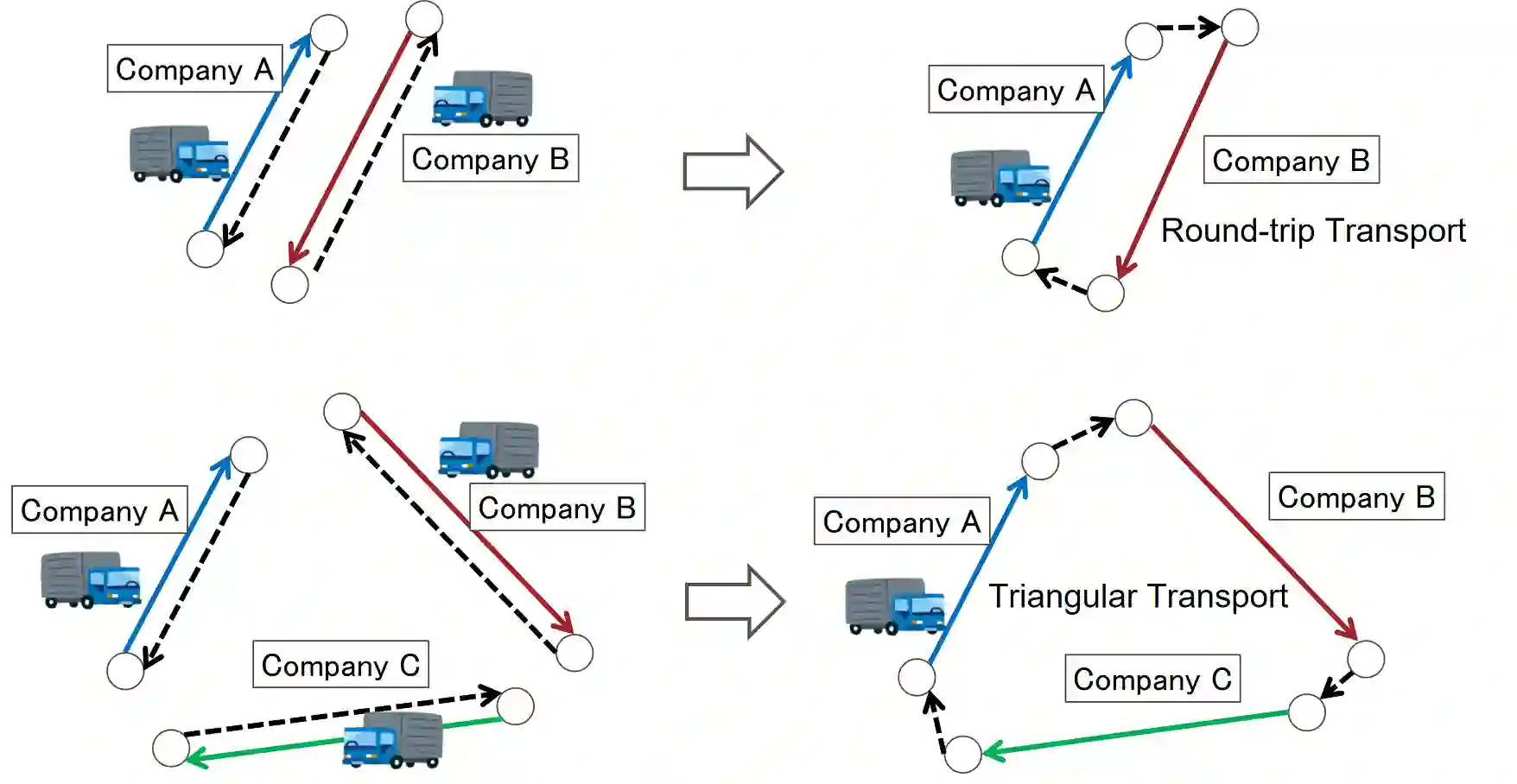
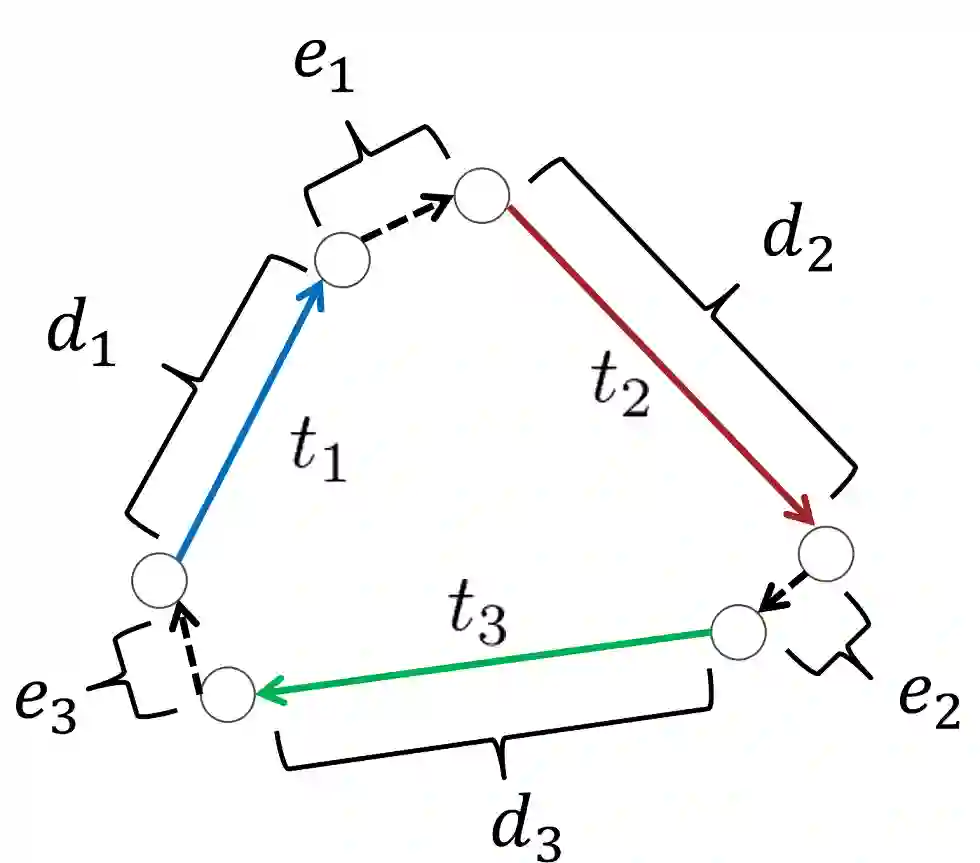
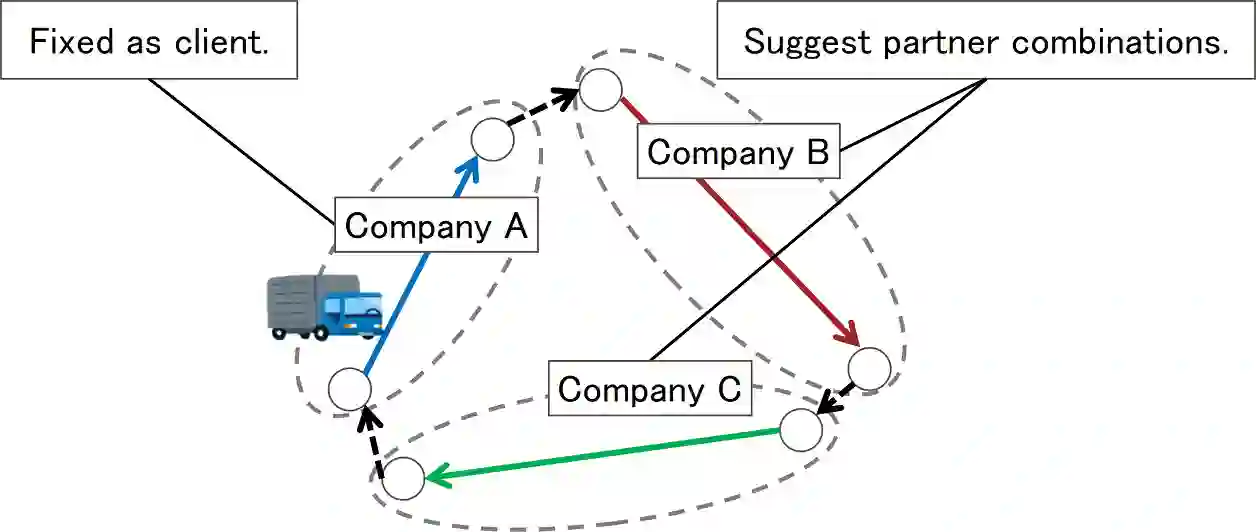
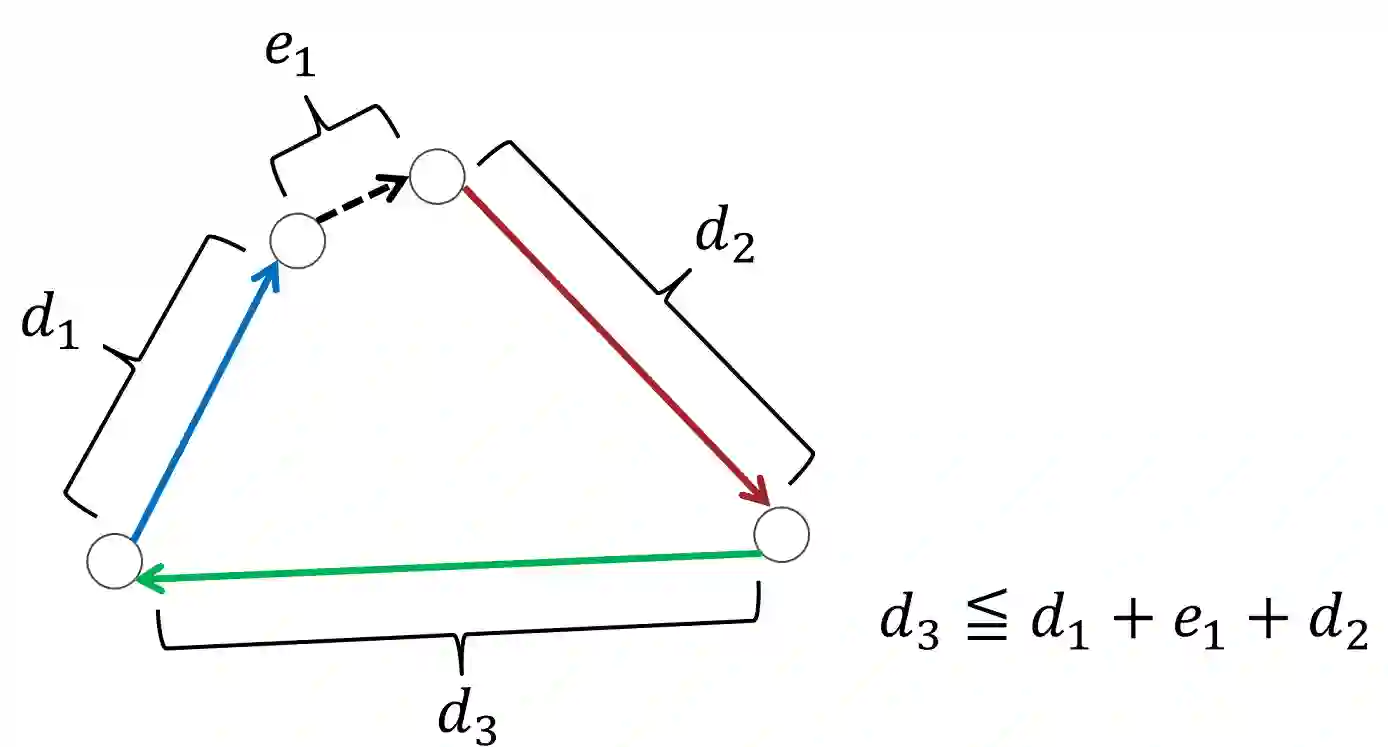
The logistics industry in Japan is facing a severe shortage of labor. Therefore, there is an increasing need for joint transportation allowing large amounts of cargo to be transported using fewer trucks. In recent years, the use of artificial intelligence and other new technologies has gained wide attention for improving matching efficiency. However, it is difficult to develop a system that can instantly respond to requests because browsing through enormous combinations of two transport lanes is time consuming. In this study, we focus on a form of joint transportation called triangular transportation and enumerate the combinations with high cooperation effects. The proposed algorithm makes good use of hidden inequalities, such as the distance axiom, to narrow down the search range without sacrificing accuracy. Numerical experiments show that the proposed algorithm is thousands of times faster than simple brute force. With this technology as the core engine, we developed a joint transportation matching system. The system has already been in use by over 150 companies as of October 2022, and was featured in a collection of logistics digital transformation cases published by Japan's Ministry of Land, Infrastructure, Transport and Tourism.
翻译:日本物流行业正面临严重的劳动力短缺问题。因此,利用更少的卡车运输大量货物的联合运输需求日益增长。近年来,人工智能等新技术的应用在提升匹配效率方面受到广泛关注。然而,由于需遍历海量运输线路组合的耗时长,开发能即时响应请求的系统颇具挑战。本研究聚焦于一种被称为三角运输的联合运输形式,并枚举具有高协同效应的组合。所提出的算法巧妙利用距离公理等隐含不等式,在不牺牲精度的前提下缩小搜索范围。数值实验表明,该算法相比简单暴力搜索提速数千倍。以该技术为核心引擎,我们开发了联合运输匹配系统。截至2022年10月,该系统已被超过150家企业采用,并被收录于日本国土交通省发布的物流数字化转型案例集。




相关内容




 微信扫码咨询专知VIP会员