

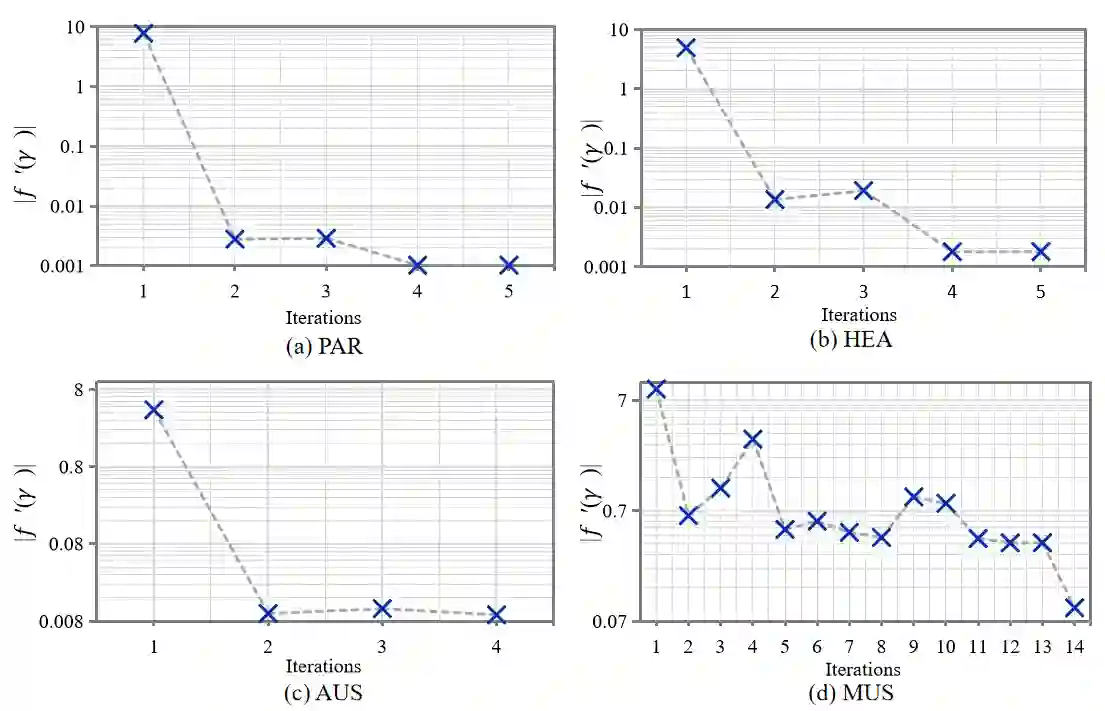
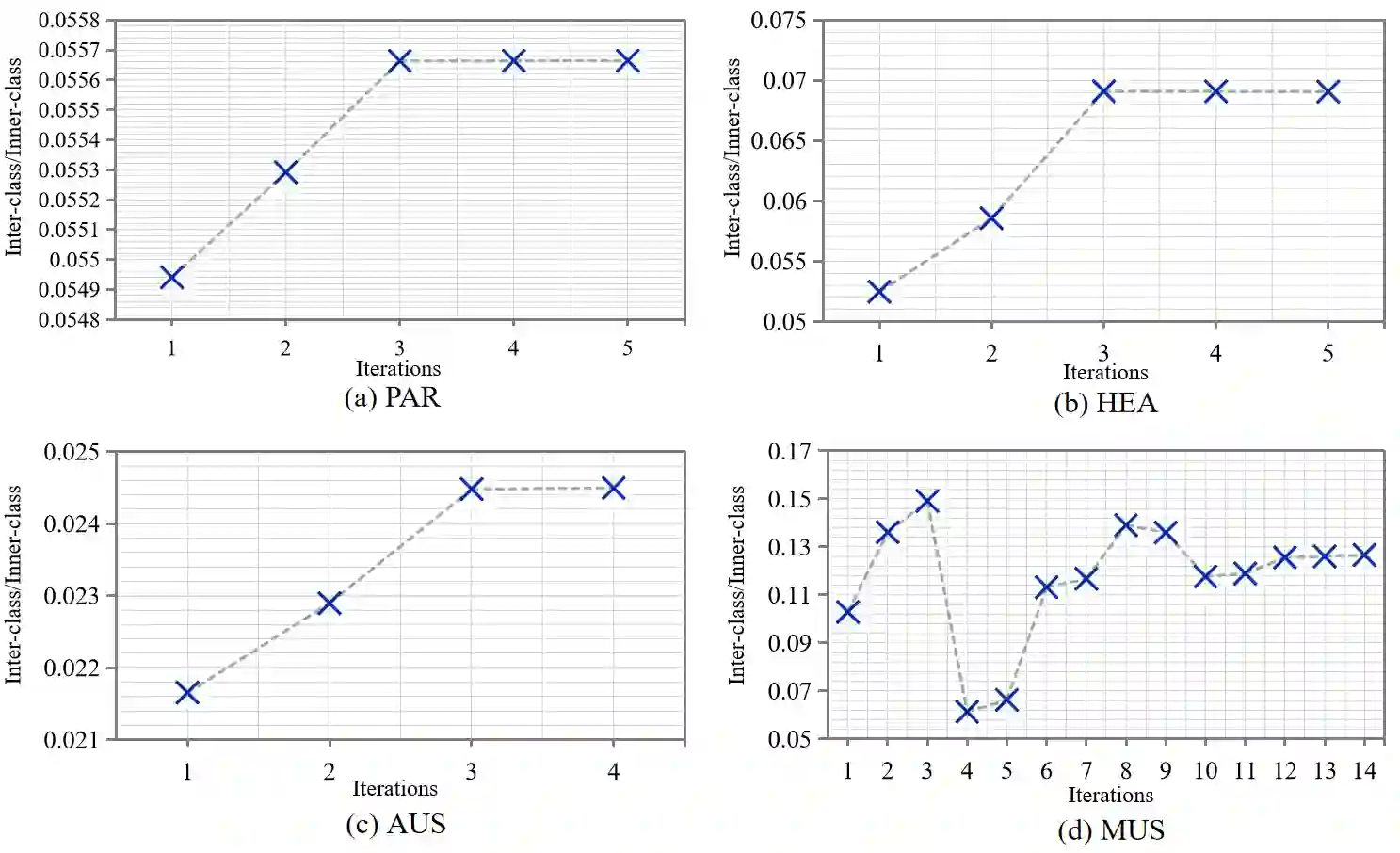
The selection of Gaussian kernel parameters plays an important role in the applications of support vector classification (SVC). A commonly used method is the k-fold cross validation with grid search (CV), which is extremely time-consuming because it needs to train a large number of SVC models. In this paper, a new approach is proposed to train SVC and optimize the selection of Gaussian kernel parameters. We first formulate the training and parameter selection of SVC as a minimax optimization problem named as MaxMin-L2-SVC-NCH, in which the minimization problem is an optimization problem of finding the closest points between two normal convex hulls (L2-SVC-NCH) while the maximization problem is an optimization problem of finding the optimal Gaussian kernel parameters. A lower time complexity can be expected in MaxMin-L2-SVC-NCH because CV is not needed. We then propose a projected gradient algorithm (PGA) for training L2-SVC-NCH. The famous sequential minimal optimization (SMO) algorithm is a special case of the PGA. Thus, the PGA can provide more flexibility than the SMO. Furthermore, the solution of the maximization problem is done by a gradient ascent algorithm with dynamic learning rate. The comparative experiments between MaxMin-L2-SVC-NCH and the previous best approaches on public datasets show that MaxMin-L2-SVC-NCH greatly reduces the number of models to be trained while maintaining competitive test accuracy. These findings indicate that MaxMin-L2-SVC-NCH is a better choice for SVC tasks.
翻译:高斯核参数的选择在支持向量分类(SVC)应用中起着重要作用。常用的方法是基于网格搜索的k折交叉验证(CV),但由于需要训练大量SVC模型,该方法极为耗时。本文提出了一种新的SVC训练与高斯核参数优化选择方法。我们首先将SVC训练与参数选择问题建模为一个极小极大优化问题,命名为MaxMin-L2-SVC-NCH。其中,极小化子问题为寻找两个标准凸包之间最近点的优化问题(L2-SVC-NCH),而极大化子问题为寻找最优高斯核参数的优化问题。由于无需交叉验证,MaxMin-L2-SVC-NCH有望实现更低的时间复杂度。随后,我们提出了用于训练L2-SVC-NCH的投影梯度算法(PGA)。著名的序列最小优化(SMO)算法是PGA的一个特例,因此PGA比SMO具有更高的灵活性。此外,极大化子问题的解通过具有动态学习率的梯度上升算法实现。在公开数据集上,将MaxMin-L2-SVC-NCH与先前最优方法的对比实验表明,MaxMin-L2-SVC-NCH在保持竞争性测试精度的同时,大幅减少了需训练的模型数量。这些结果证明,MaxMin-L2-SVC-NCH是SVC任务的更优选择。




相关内容


 微信扫码咨询专知VIP会员