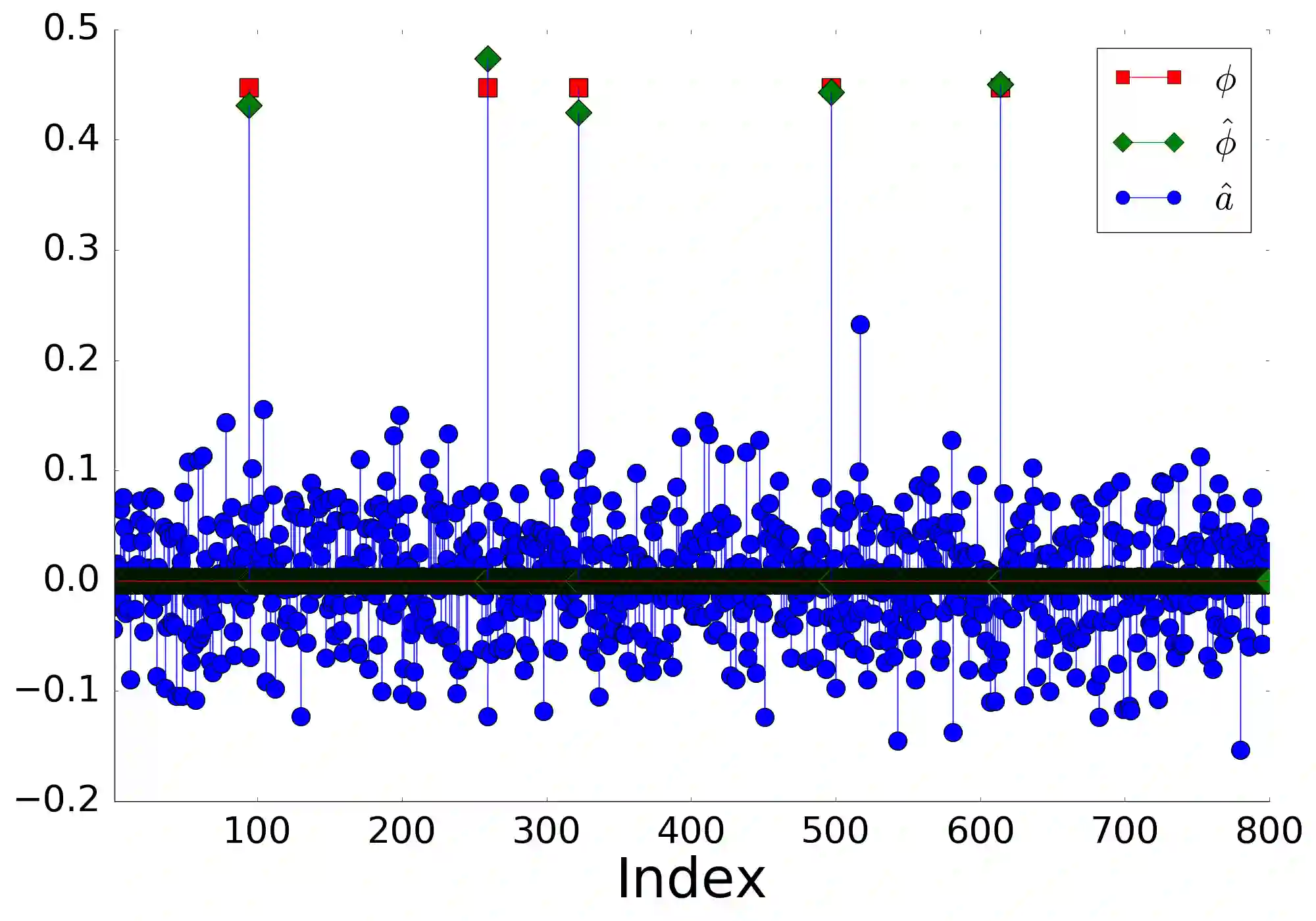
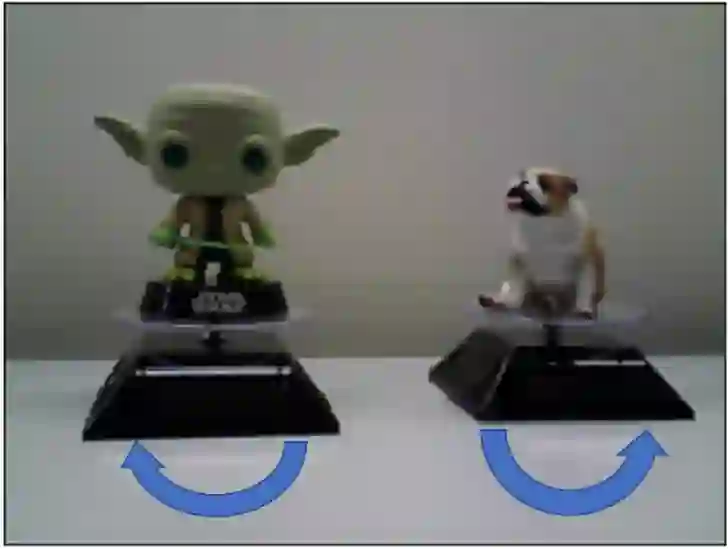
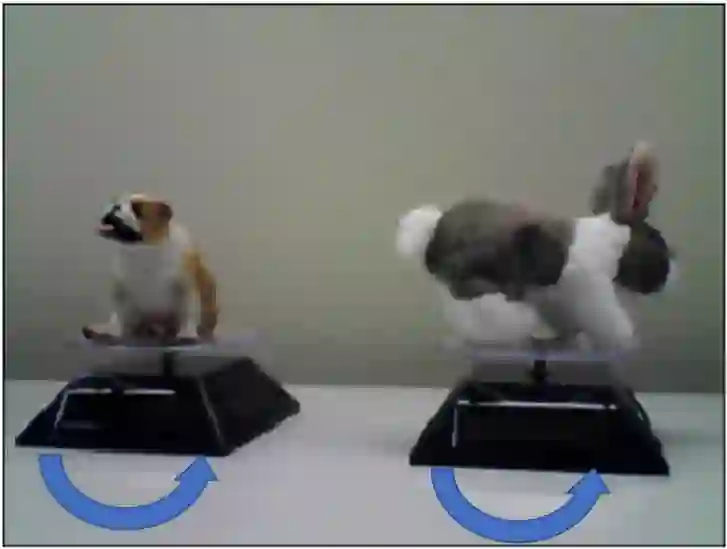
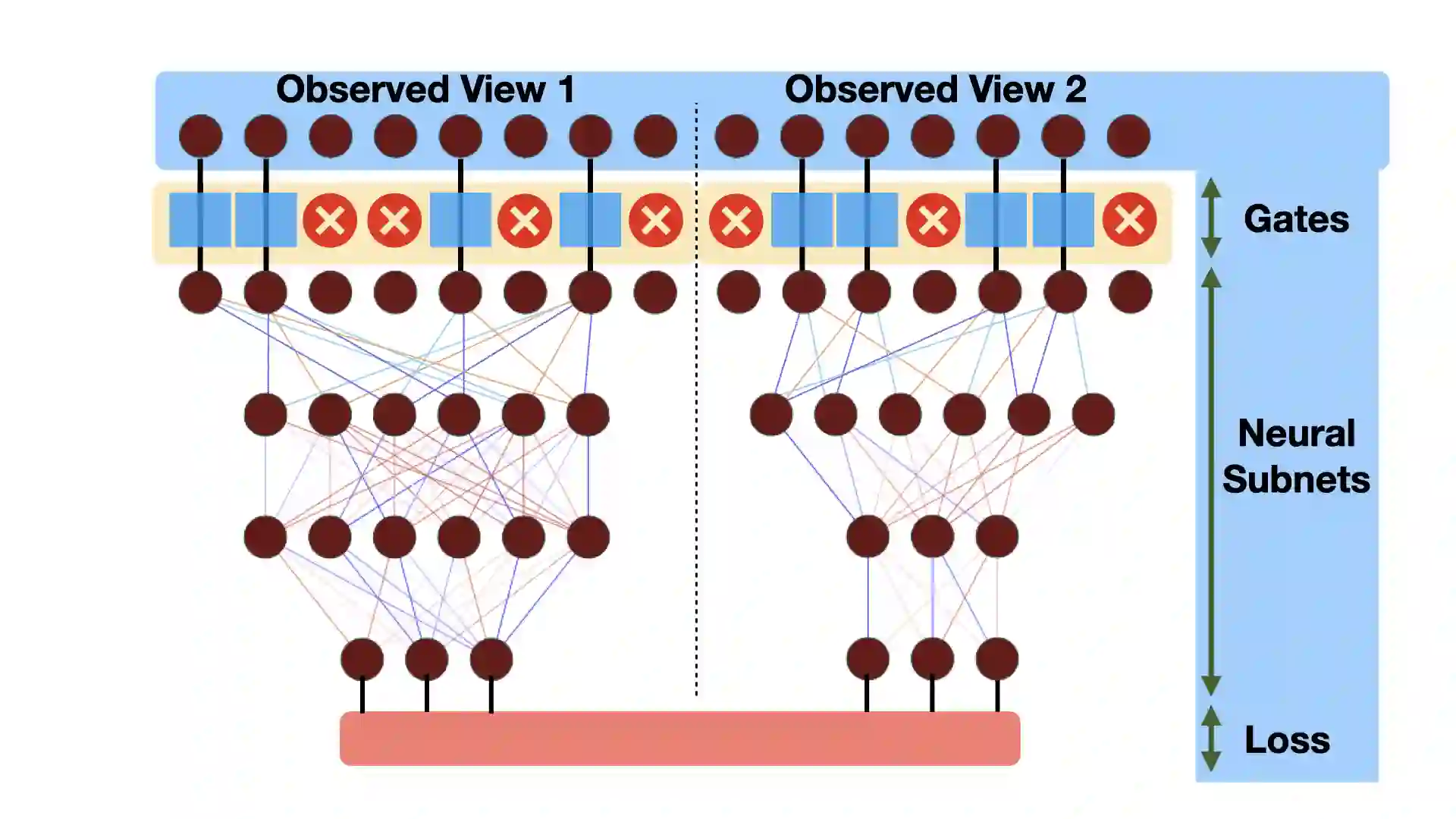
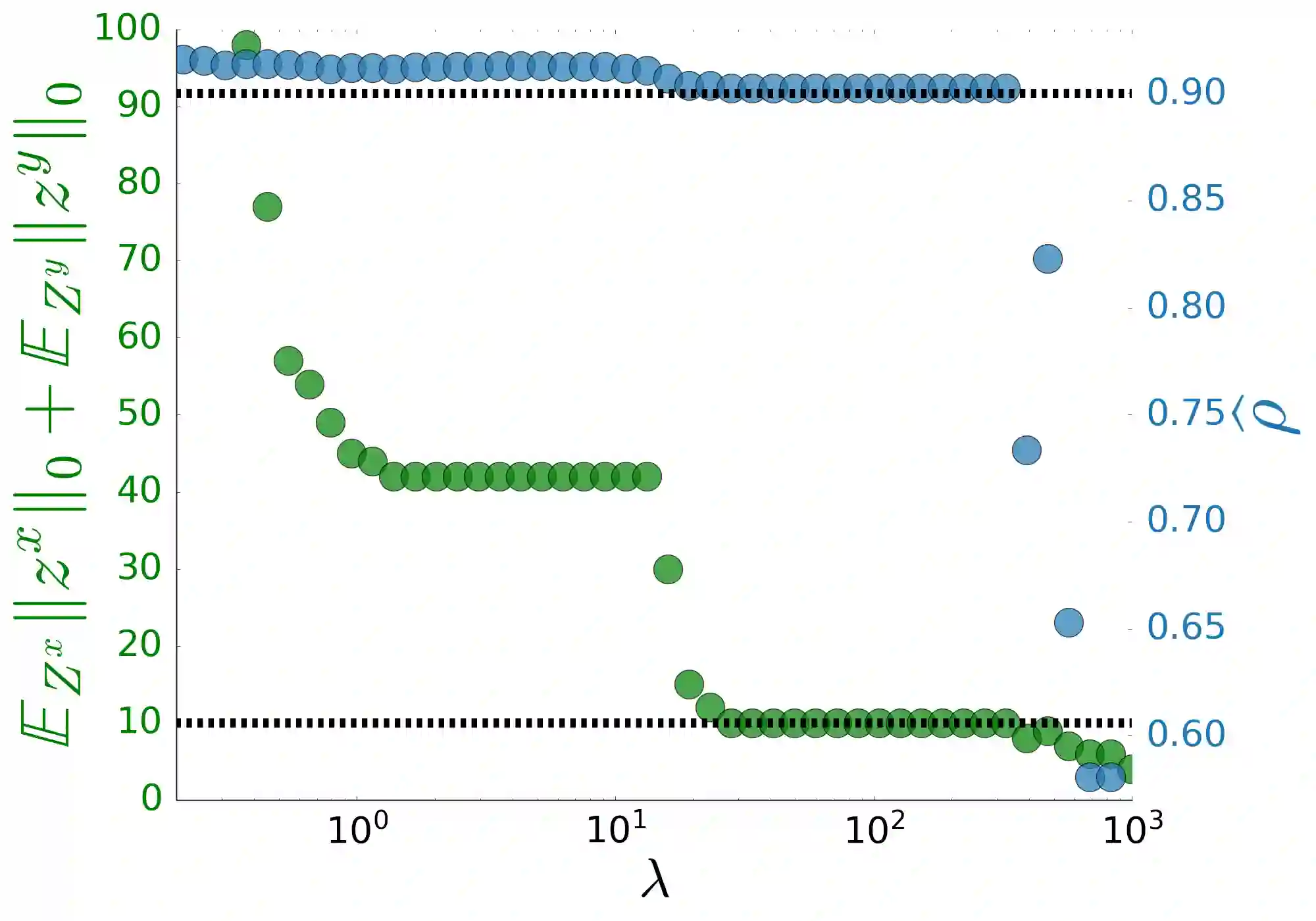
Canonical Correlation Analysis (CCA) models are powerful for studying the associations between two sets of variables. The canonically correlated representations, termed \textit{canonical variates} are widely used in unsupervised learning to analyze unlabeled multi-modal registered datasets. Despite their success, CCA models may break (or overfit) if the number of variables in either of the modalities exceeds the number of samples. Moreover, often a significant fraction of the variables measures modality-specific information, and thus removing them is beneficial for identifying the \textit{canonically correlated variates}. Here, we propose $\ell_0$-CCA, a method for learning correlated representations based on sparse subsets of variables from two observed modalities. Sparsity is obtained by multiplying the input variables by stochastic gates, whose parameters are learned together with the CCA weights via an $\ell_0$-regularized correlation loss. We further propose $\ell_0$-Deep CCA for solving the problem of non-linear sparse CCA by modeling the correlated representations using deep nets. We demonstrate the efficacy of the method using several synthetic and real examples. Most notably, by gating nuisance input variables, our approach improves the extracted representations compared to other linear, non-linear and sparse CCA-based models.


翻译:Canonic Connectrical Africa (CCA) 模型对于研究两组变量之间的关联作用很大。 被称为\ textit{canonical variates} 的 Canonical complates (CCA) 模型被广泛用于无监督的学习, 分析未贴标签的多式登记数据集。 尽管这些模型取得了成功, 但是如果两种模式中的变量数量都超过样本数量, 则Condical complicals Complication (CA) 模型可能会打破( 或过度使用) 。 此外, 变量计量模式特定信息中的一大部分往往有利于确定\ textit{cancontinual contric concolates 。 在这里, 我们提出 $\ ell_ 0 $- Deep CCA, 用于学习基于两种观察到的变量的稀少组别组别组别, 用于学习关联性表达方式的方法。 我们用最深网的模型, 和最不精确的模型, 展示了我们的方法, 改进了计算方法的效能。
0
下载
关闭预览

相关内容

【干货书】机器学习速查手册,135页pdf
专知会员服务
128+阅读 · 2020年11月20日
[综述]深度学习下的场景文本检测与识别
专知会员服务
78+阅读 · 2019年10月10日
最新BERT相关论文清单,BERT-related Papers
专知会员服务
53+阅读 · 2019年9月29日
已删除
将门创投
6+阅读 · 2019年6月10日
Hierarchically Structured Meta-learning
CreateAMind
27+阅读 · 2019年5月22日
Transferring Knowledge across Learning Processes
CreateAMind
29+阅读 · 2019年5月18日
论文浅尝 | Global Relation Embedding for Relation Extraction
开放知识图谱
12+阅读 · 2019年3月3日
Unsupervised Learning via Meta-Learning
CreateAMind
44+阅读 · 2019年1月3日
Disentangled的假设的探讨
CreateAMind
9+阅读 · 2018年12月10日
disentangled-representation-papers
CreateAMind
26+阅读 · 2018年9月12日
笔记 | Sentiment Analysis
黑龙江大学自然语言处理实验室
10+阅读 · 2018年5月6日
Linguistically Regularized LSTMs for Sentiment Classification
黑龙江大学自然语言处理实验室
8+阅读 · 2018年5月4日
Hierarchical Disentangled Representations
CreateAMind
4+阅读 · 2018年4月15日
Arxiv
0+阅读 · 2021年7月29日
Arxiv
21+阅读 · 2019年8月21日
VIP会员
最新内容
现代战争的隐蔽系统:伊朗战争十大启示
专知会员服务
0+阅读 · 今天3:58
ICML 2026 | 自回归Boltzmann生成器重塑分子采样
专知会员服务
3+阅读 · 6月26日
GNN跨域综述:从消息传递到图基础模型
专知会员服务
4+阅读 · 6月26日
无人机自主控制与人工智能:系统性综述
专知会员服务
12+阅读 · 6月26日
巡飞弹与反无人机系统——现代战场的两大支柱
《打造“黄金舰队”》57页报告
专知会员服务
4+阅读 · 6月26日
《北约数字教官网络发展路径》128页报告
专知会员服务
3+阅读 · 6月26日
ECCV 2026 | MIMFlow:MIM与归一化流统一图像生成
专知会员服务
7+阅读 · 6月25日
网状网络及其在军事领域的运用
专知会员服务
8+阅读 · 6月25日
无美国参与的欧洲战争方式(万字长文)
专知会员服务
8+阅读 · 6月25日
相关VIP内容
【干货书】机器学习速查手册,135页pdf
专知会员服务
128+阅读 · 2020年11月20日
[综述]深度学习下的场景文本检测与识别
专知会员服务
78+阅读 · 2019年10月10日
最新BERT相关论文清单,BERT-related Papers
专知会员服务
53+阅读 · 2019年9月29日
相关资讯
已删除
将门创投
6+阅读 · 2019年6月10日
Hierarchically Structured Meta-learning
CreateAMind
27+阅读 · 2019年5月22日
Transferring Knowledge across Learning Processes
CreateAMind
29+阅读 · 2019年5月18日
论文浅尝 | Global Relation Embedding for Relation Extraction
开放知识图谱
12+阅读 · 2019年3月3日
Unsupervised Learning via Meta-Learning
CreateAMind
44+阅读 · 2019年1月3日
Disentangled的假设的探讨
CreateAMind
9+阅读 · 2018年12月10日
disentangled-representation-papers
CreateAMind
26+阅读 · 2018年9月12日
笔记 | Sentiment Analysis
黑龙江大学自然语言处理实验室
10+阅读 · 2018年5月6日
Linguistically Regularized LSTMs for Sentiment Classification
黑龙江大学自然语言处理实验室
8+阅读 · 2018年5月4日
Hierarchical Disentangled Representations
CreateAMind
4+阅读 · 2018年4月15日
Top
微信扫码咨询专知VIP会员