

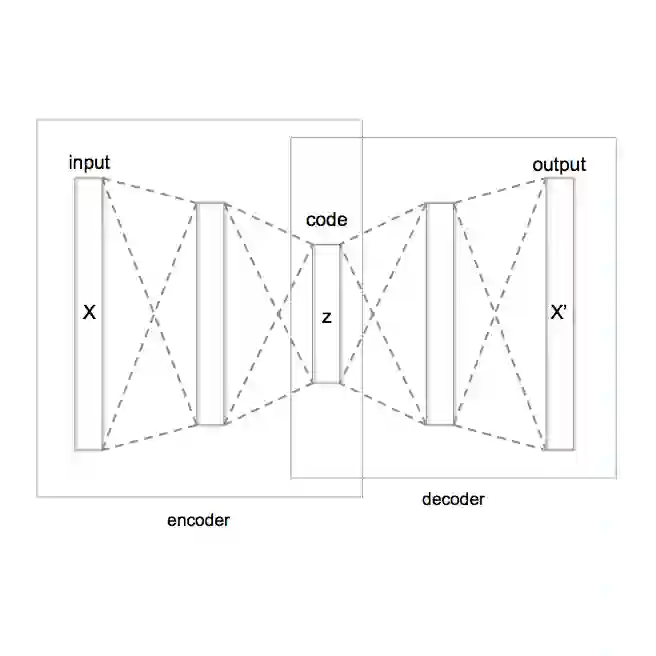
Deep generative models have been demonstrated as problematic in the unsupervised out-of-distribution (OOD) detection task, where they tend to assign higher likelihoods to OOD samples. Previous studies on this issue are usually not applicable to the Variational Autoencoder (VAE). As a popular subclass of generative models, the VAE can be effective with a relatively smaller model size and be more stable and faster in training and inference, which can be more advantageous in real-world applications. In this paper, We propose a novel VAE-based score called Error Reduction (ER) for OOD detection, which is based on a VAE that takes a lossy version of the training set as inputs and the original set as targets. Experiments are carried out on various datasets to show the effectiveness of our method, we also present the effect of design choices with ablation experiments. Our code is available at: https://github.com/ZJLAB-AMMI/VAE4OOD.
翻译:深度生成模型在无监督分布外(OOD)检测任务中已被证明存在问题,因为它们倾向于为OOD样本分配更高的似然。先前关于此问题的研究通常不适用于变分自编码器(VAE)。作为生成模型的一个流行子类,VAE在相对较小的模型规模下仍能有效工作,并且在训练和推理过程中更加稳定和快速,这在现实应用中更具优势。在本文中,我们提出一种新颖的基于VAE的评分方法,称为错误减少(ER),用于OOD检测。该方法基于一个以训练集的有损版本为输入、原始版本为目标的VAE。我们在多种数据集上进行实验以展示我们方法的有效性,并通过消融实验呈现设计选择的影响。我们的代码可在 https://github.com/ZJLAB-AMMI/VAE4OOD 获取。




相关内容



 微信扫码咨询专知VIP会员