

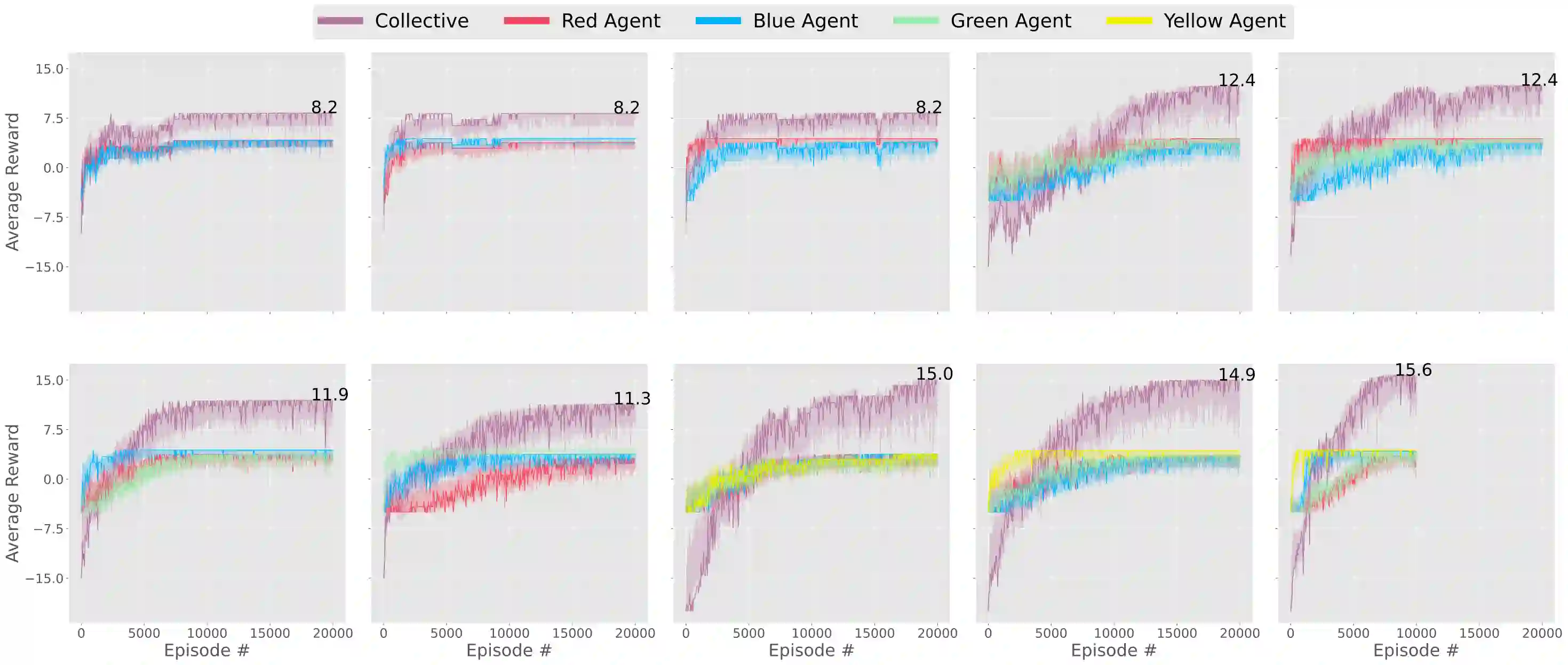
Effective coordination and cooperation among agents are crucial for accomplishing individual or shared objectives in multi-agent systems. In many real-world multi-agent systems, agents possess varying abilities and constraints, making it necessary to prioritize agents based on their specific properties to ensure successful coordination and cooperation within the team. However, most existing cooperative multi-agent algorithms do not take into account these individual differences, and lack an effective mechanism to guide coordination strategies. We propose a novel multi-agent learning approach that incorporates relationship awareness into value-based factorization methods. Given a relational network, our approach utilizes inter-agents relationships to discover new team behaviors by prioritizing certain agents over other, accounting for differences between them in cooperative tasks. We evaluated the effectiveness of our proposed approach by conducting fifteen experiments in two different environments. The results demonstrate that our proposed algorithm can influence and shape team behavior, guide cooperation strategies, and expedite agent learning. Therefore, our approach shows promise for use in multi-agent systems, especially when agents have diverse properties.
翻译:智能体间的有效协调与合作对于多智能体系统中实现个体或共享目标至关重要。在许多实际多智能体系统中,智能体具备不同的能力和约束条件,因此需要根据其特定属性对智能体进行优先级排序,以确保团队内的成功协调与合作。然而,现有大多数合作型多智能体算法未考虑这些个体差异,且缺乏有效的协调策略引导机制。本文提出了一种新颖的多智能体学习方法,将关系感知融入基于价值因子分解的方法中。给定一个关系网络,我们的方法利用智能体间的关系,通过对特定智能体赋予优先级(相较于其他智能体),发现新的团队行为,从而在合作任务中体现智能体间的差异。我们在两个不同环境中进行了十五项实验来评估所提方法的有效性。结果表明,我们的算法能够影响和塑造团队行为、引导合作策略并加速智能体学习。因此,本文方法在多智能体系统中具有应用前景,特别是在智能体属性异质性显著的场景下。




相关内容



 微信扫码咨询专知VIP会员