

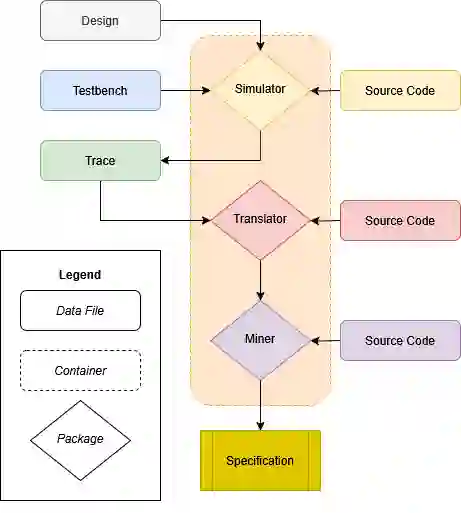
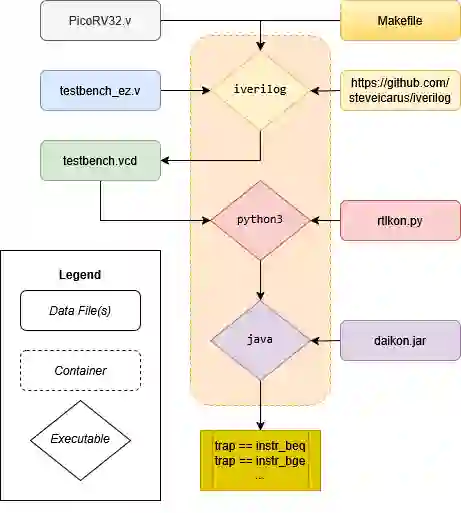
Addressing TedX, Amber Huffman made an impassioned case that "none of us is as smart as all of us" and that open-source hardware is the future. A major contribution to software quality, open source and otherwise, on the software side, is the systems design methodology of Continuous Integration and Delivery (CI/CD), which we propose to systematically bring to hardware designs and their specifications. To do so, we automatically generate specifications using specification mining, "a machine learning approach to discovering formal specifications" which dramatically impacted the ability of software engineers to achieve quality, verification, and security. Yet applying the same techniques to hardware is non-trivial. We present a technique for generalized, continuous integration (CI) of hardware specification designs that continually deploys (CD) a hardware specification. As a proof-of-concept, we demonstrate Myrtha, a cloud-based, specification generator based on established hardware and software quality tools.
翻译:在TedX演讲中,Amber Huffman曾提出一个极具感染力的观点:“任何个人的智慧都无法与集体的智慧相提并论”,并指出开源硬件是未来的发展方向。在软件领域,持续集成与持续交付(CI/CD)这一系统设计方法对提升软件质量(包括开源及其他类型软件)做出了重大贡献,我们提议将这一方法系统地引入硬件设计及其规范中。为此,我们采用规范挖掘技术自动生成规范——这是一种“通过机器学习方法发现形式化规范”的技术,曾显著提升软件工程师实现质量保障、验证与安全的能力。然而,将相同技术应用于硬件领域并非易事。本文提出一种通用化的硬件规范设计持续集成(CI)技术,能够持续部署(CD)硬件规范。作为概念验证,我们展示了Myrtha——一个基于成熟硬件与软件质量工具的云端规范生成器。




相关内容





 微信扫码咨询专知VIP会员