

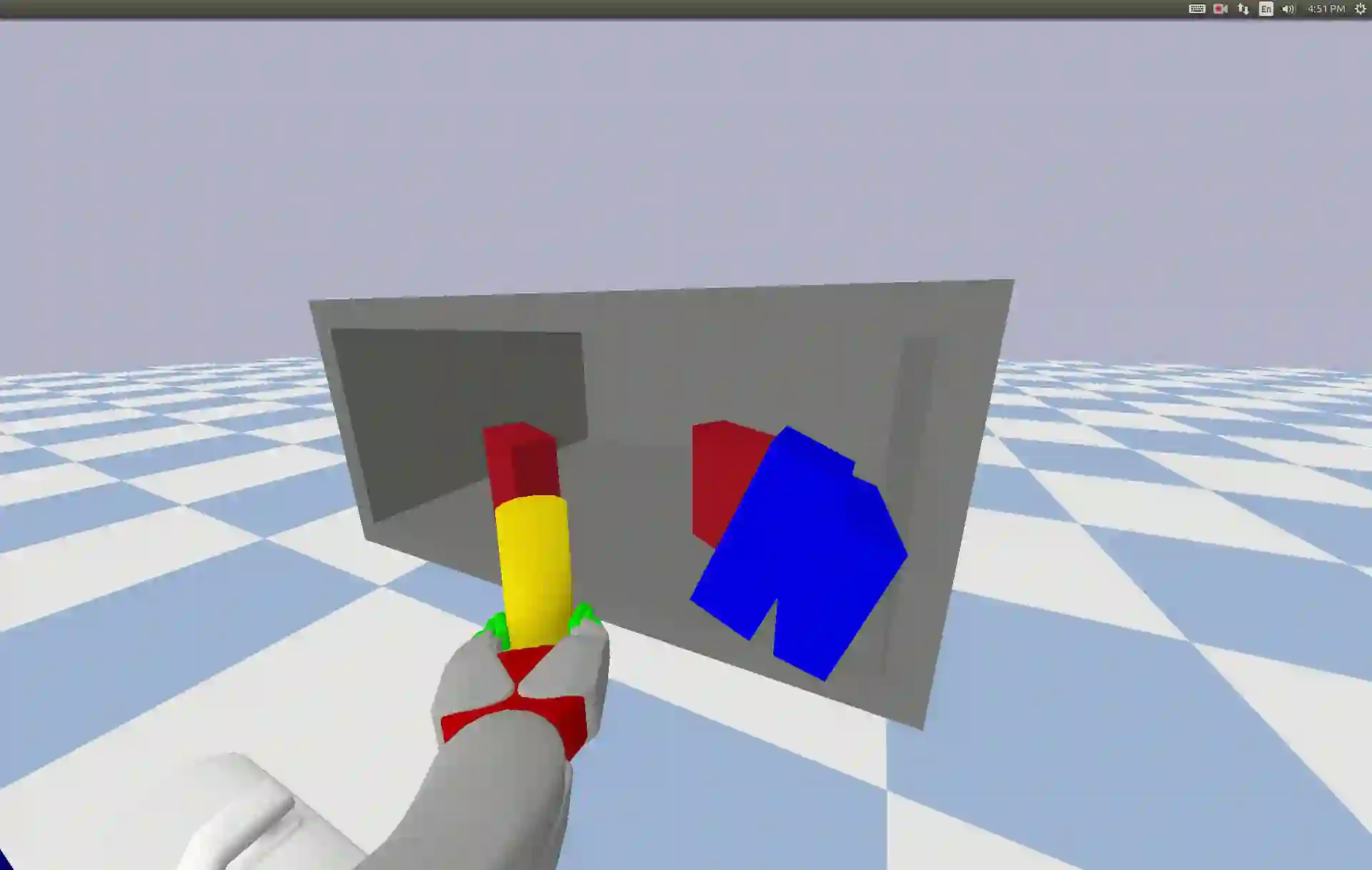
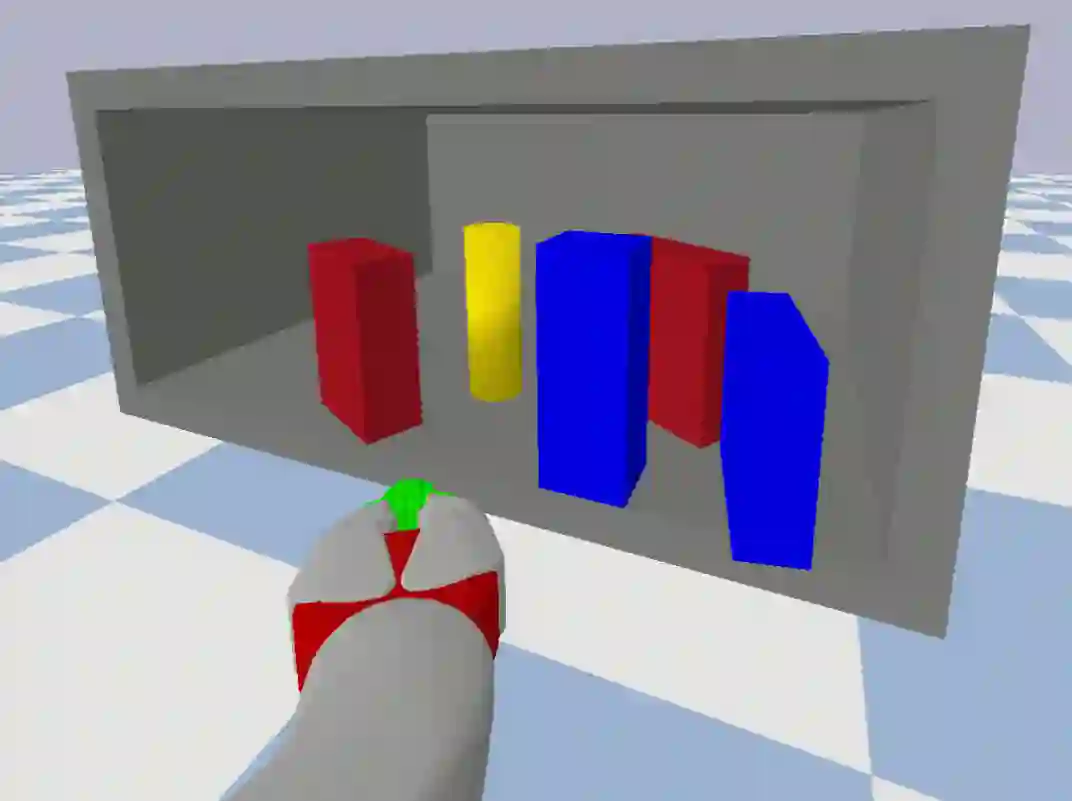
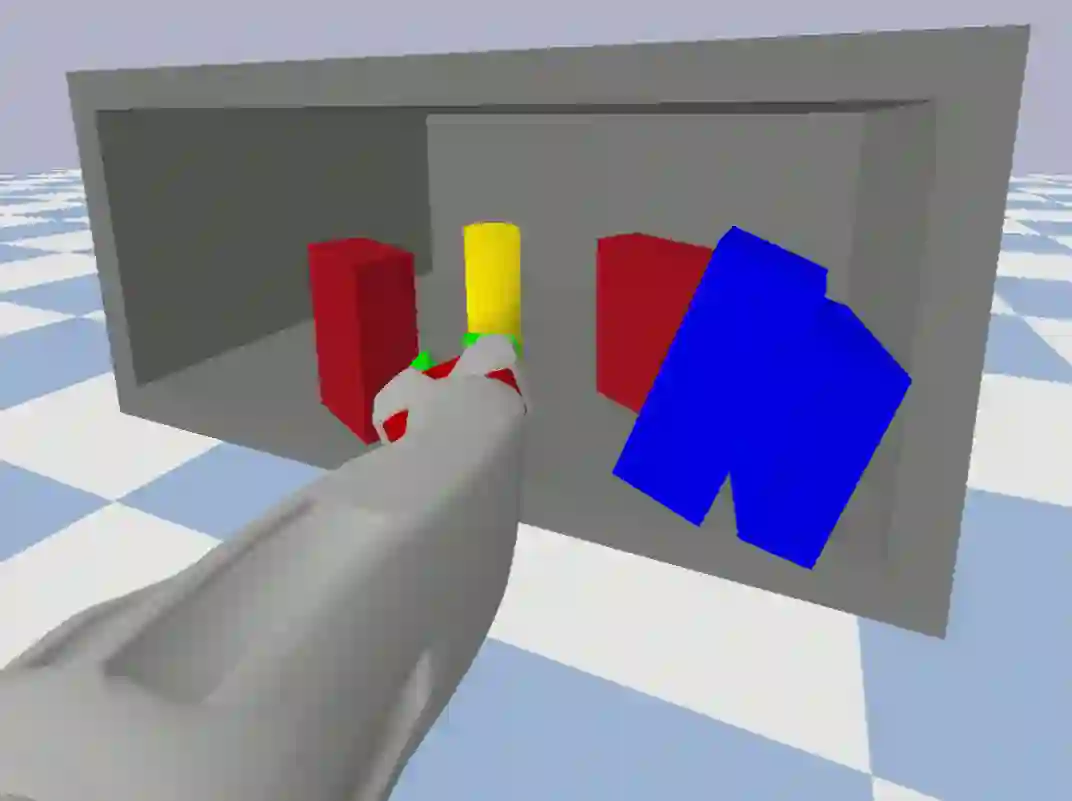
Real-world manipulation problems in heavy clutter require robots to reason about potential contacts with objects in the environment. We focus on pick-and-place style tasks to retrieve a target object from a shelf where some `movable' objects must be rearranged in order to solve the task. In particular, our motivation is to allow the robot to reason over and consider non-prehensile rearrangement actions that lead to complex robot-object and object-object interactions where multiple objects might be moved by the robot simultaneously, and objects might tilt, lean on each other, or topple. To support this, we query a physics-based simulator to forward simulate these interaction dynamics which makes action evaluation during planning computationally very expensive. To make the planner tractable, we establish a connection between the domain of Manipulation Among Movable Objects and Multi-Agent Pathfinding that lets us decompose the problem into two phases our M4M algorithm iterates over. First we solve a multi-agent planning problem that reasons about the configurations of movable objects but does not forward simulate a physics model. Next, an arm motion planning problem is solved that uses a physics-based simulator but does not search over possible configurations of movable objects. We run simulated and real-world experiments with the PR2 robot and compare against relevant baseline algorithms. Our results highlight that M4M generates complex 3D interactions, and solves at least twice as many problems as the baselines with competitive performance.
翻译:在重度杂乱环境中的现实操控问题要求机器人推理与环境中物体的潜在接触。我们聚焦于"拾放"类任务,即从货架中取出目标物体,其间需重新排列某些"可移动"物体以完成任务。特别地,我们的动机是让机器人能够推理并考虑非抓取式重排动作,这些动作会导致复杂的机器人-物体和物体-物体交互——机器人可能同时移动多个物体,物体可能倾斜、相互倚靠或倾倒。为此,我们调用基于物理的仿真器正向模拟这些交互动力学,这使得规划过程中的动作评估在计算上极为昂贵。为使规划器具备可行性,我们在"可移动物体操控"领域与多智能体路径规划之间建立联系,从而将问题分解为M4M算法迭代的两个阶段:首先求解一个多智能体规划问题,该问题推理可移动物体的构型而不正向模拟物理模型;其次求解一个机械臂运动规划问题,该问题使用基于物理的仿真器,但不对可移动物体的可能构型进行搜索。我们利用PR2机器人开展了仿真与真实世界实验,并与相关基线算法进行对比。结果表明,M4M算法能生成复杂的3D交互,且其解决问题的数量至少是基线算法的两倍,同时保持竞争性性能。




相关内容




 微信扫码咨询专知VIP会员