

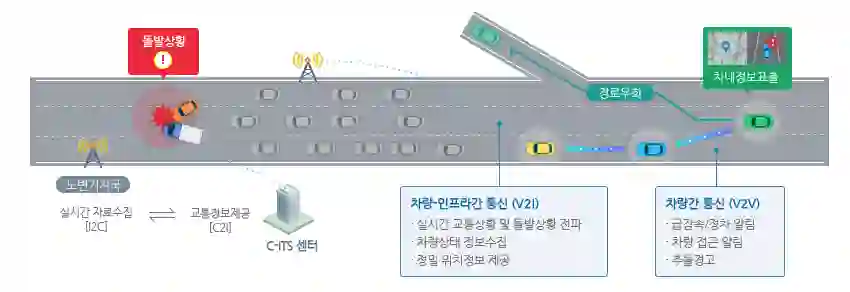
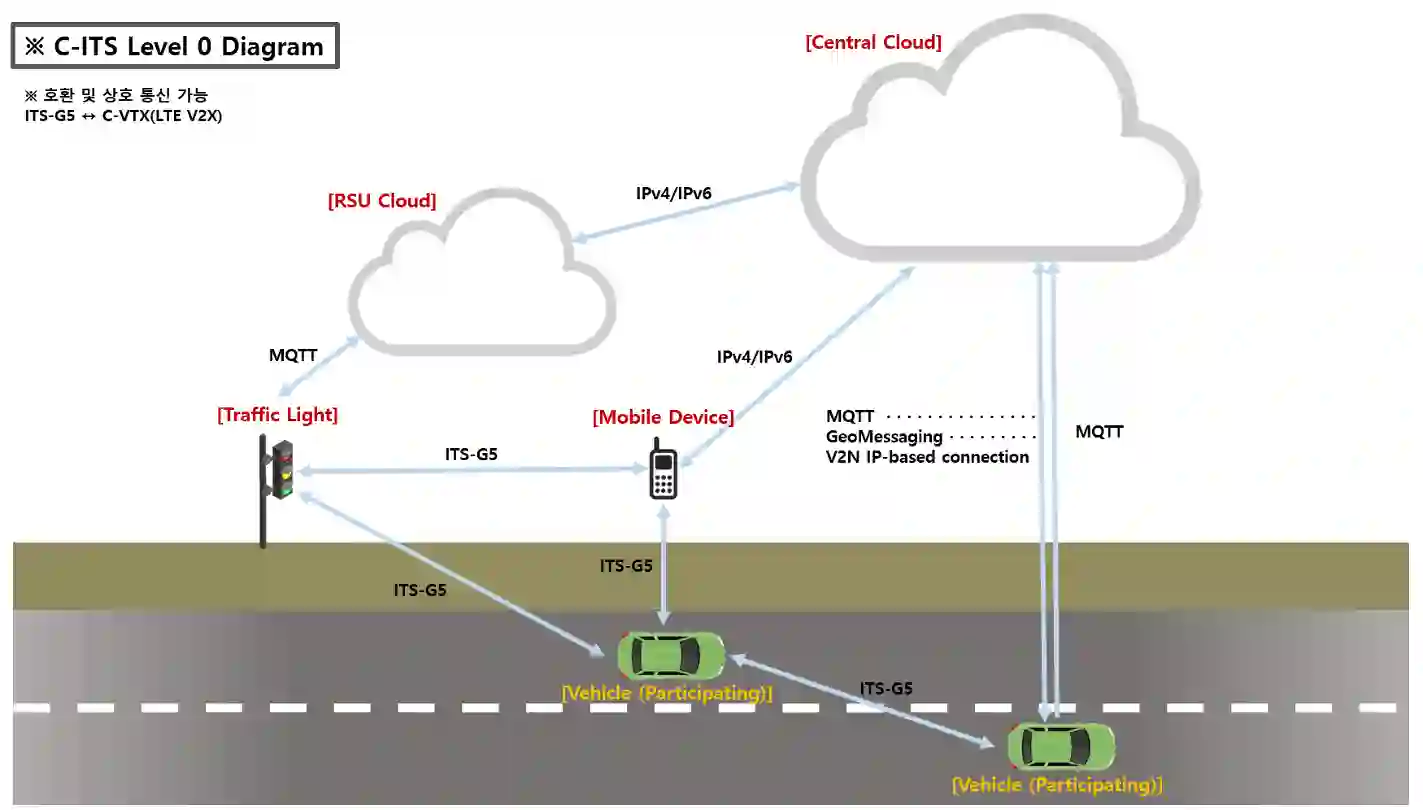
As technology advances, cities are evolving into smart cities, with the ability to process large amounts of data and the increasing complexity and diversification of various elements within urban areas. Among the core systems of a smart city is the Cooperative-Intelligent Transport Systems (C-ITS). C-ITS is a system where vehicles provide real-time information to drivers about surrounding traffic conditions, sudden stops, falling objects, and other accident risks through roadside base stations. It consists of road infrastructure, C-ITS centers, and vehicle terminals. However, as smart cities integrate many elements through networks and electronic control, they are susceptible to cybersecurity issues. In the case of cybersecurity problems in C-ITS, there is a significant risk of safety issues arising. This technical document aims to model the C-ITS environment and the services it provides, with the purpose of identifying the attack surface where security incidents could occur in a smart city environment. Subsequently, based on the identified attack surface, the document aims to construct attack scenarios and their respective stages. The document provides a description of the concept of C-ITS, followed by the description of the C-ITS environment model, service model, and attack scenario model defined by us.
翻译:随着技术的进步,城市正逐步向智慧城市演进,能够处理海量数据,且城市内各类要素的复杂性与多样性日益增加。智慧城市的核心系统之一是协作式智能交通系统(C-ITS)。C-ITS是一种通过路侧基站向驾驶员提供关于周围交通状况、急刹车、坠落物及其他事故风险的实时信息的系统,其构成包括道路基础设施、C-ITS中心及车载终端。然而,智慧城市通过网络与电子控制集成众多要素时,易面临网络安全问题。当C-ITS出现网络安全问题时,会引发重大安全隐患。本技术文档旨在对C-ITS环境及其所提供的服务进行建模,以识别智慧城市环境中可能发生安全事件的攻击面。在此基础上,本文进一步依据所识别的攻击面构建攻击场景及其各阶段。文档首先阐述了C-ITS的概念,随后描述了本文所定义的C-ITS环境模型、服务模型及攻击场景模型。




相关内容




 微信扫码咨询专知VIP会员