

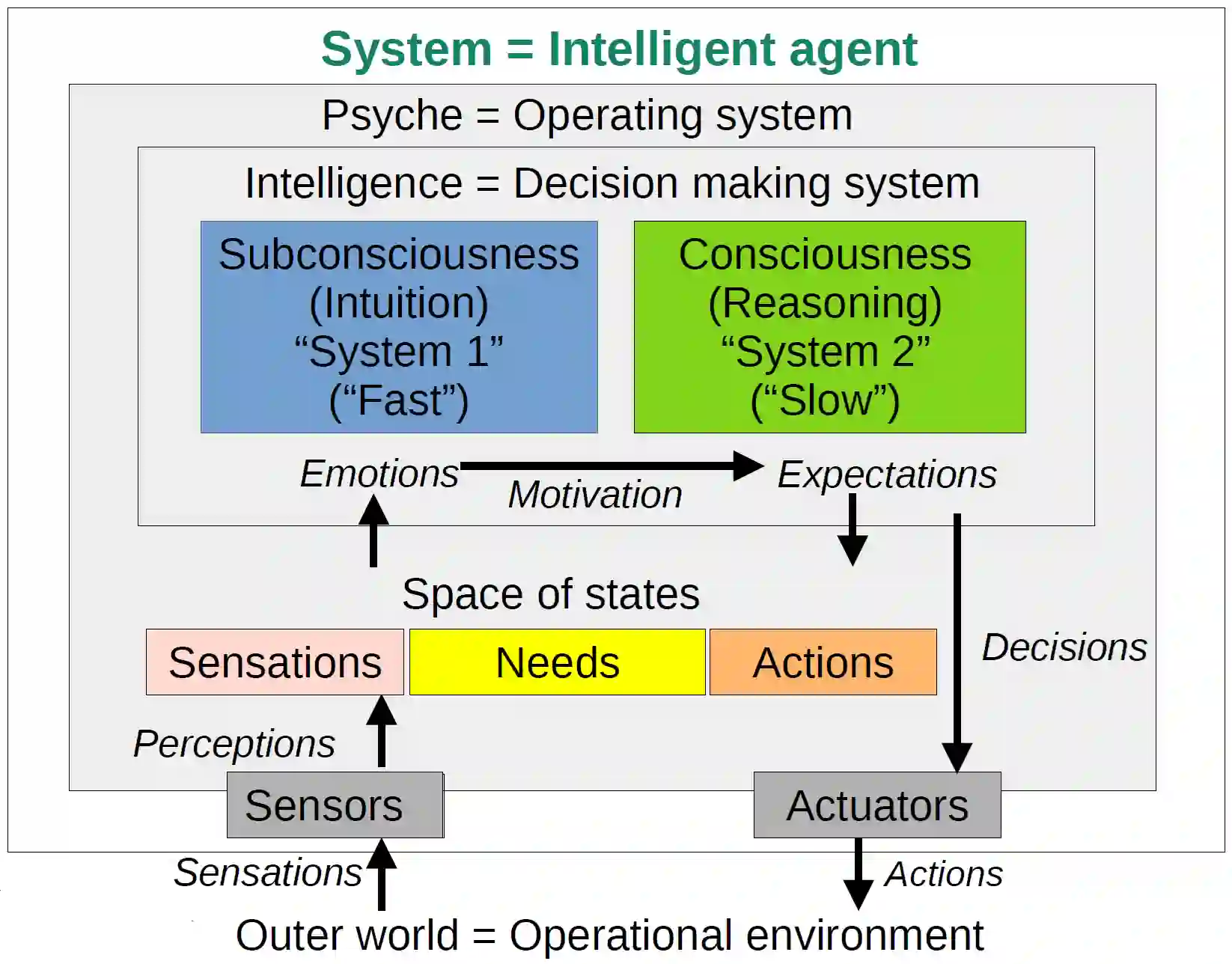
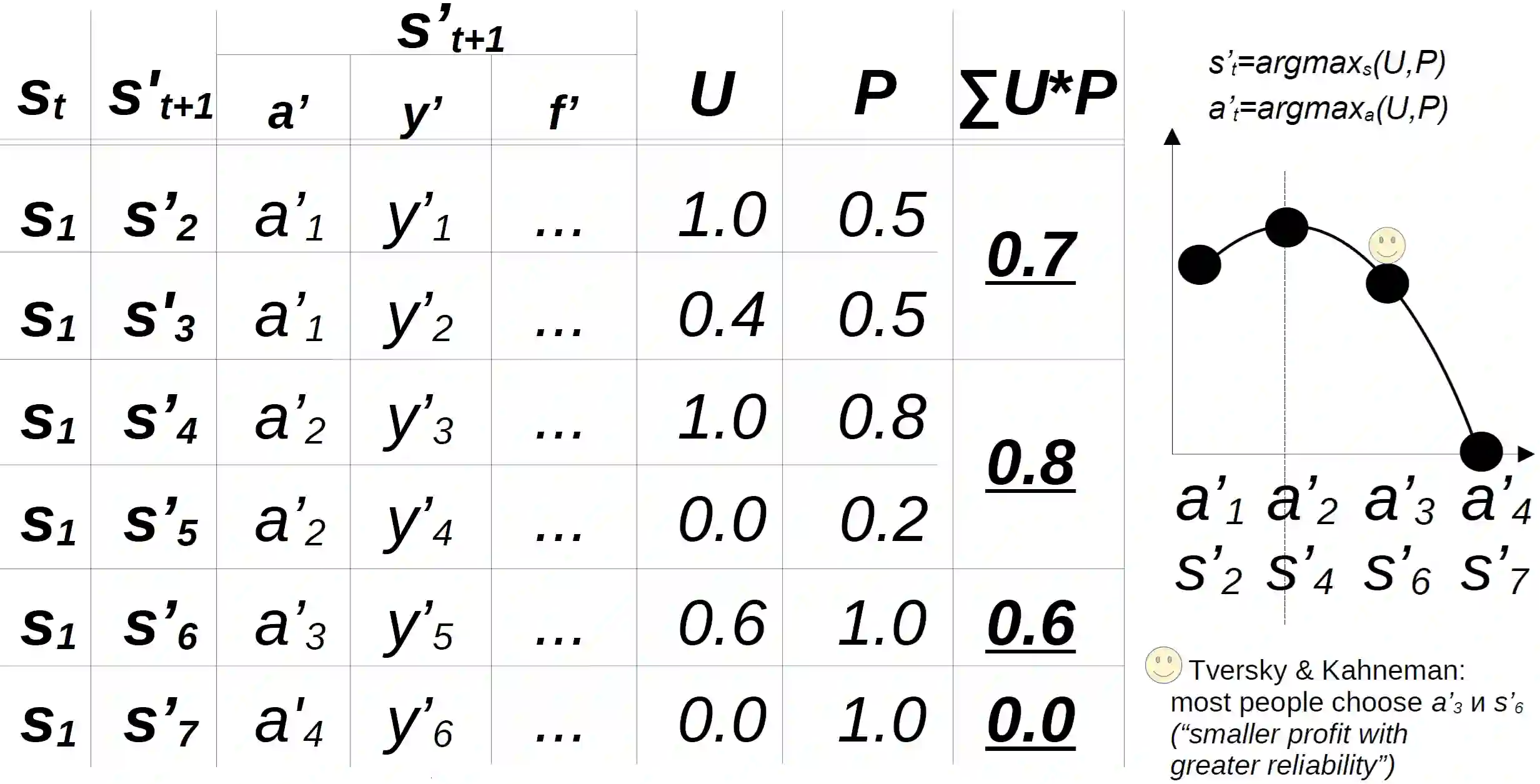
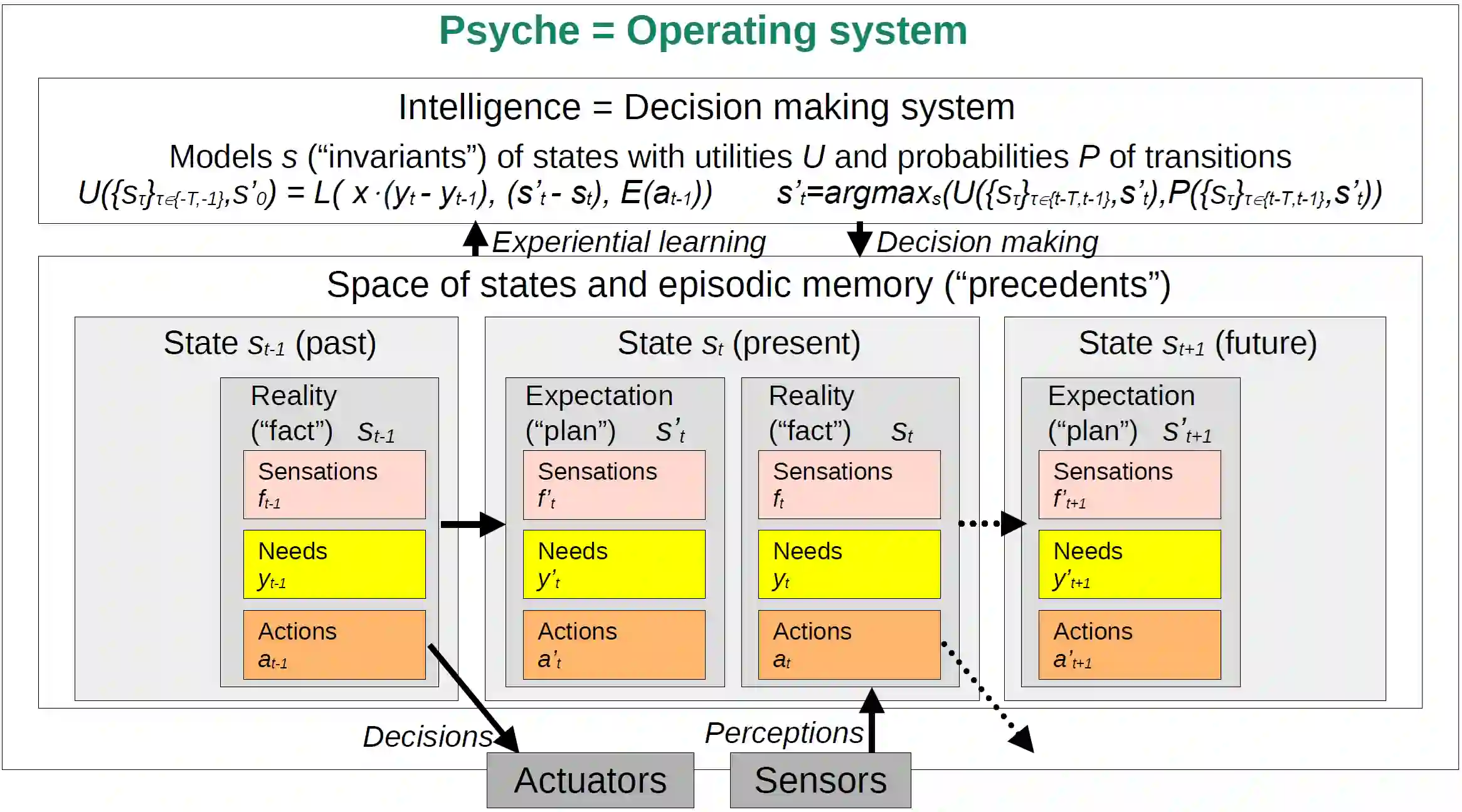
This article presents an overview of approaches to modeling the human psyche in the context of constructing an artificial one. Based on this overview, a concept of cognitive architecture is proposed, in which the psyche is viewed as the operating system of a living or artificial subject, comprising a space of states, including the state of needs that determine the meaning of a subject's being in relation to stimuli from the external world, and intelligence as a decision-making system regarding actions in this world to satisfy these needs. Based on this concept, a computational formalization is proposed for creating artificial general intelligence systems for an agent through experiential learning in a state space that includes agent's needs, taking into account their biological or existential significance for the intelligent agent, along with agent's sensations and actions. Thus, the problem of constructing artificial general intelligence is formalized as a system for making optimal decisions in the space of specific agent needs under conditions of uncertainty, maximizing success in achieving goals, minimizing existential risks, and maximizing energy efficiency. A minimal experimental implementation of the model is presented.
翻译:本文综述了在构建人工心灵背景下对人类心理建模的方法。基于此综述,本文提出了一种认知架构的概念,其中心灵被视为生命体或人工主体的操作系统,包含一个状态空间——包括决定主体存在意义的需求状态(这些需求与外部世界刺激相关),以及作为在此世界中采取行动以满足这些需求的决策系统的智能。基于这一概念,本文提出了一种计算形式化方法,用于通过包含主体需求的状态空间中的经验学习来创建智能体的人工通用智能系统,同时考虑这些需求对智能体的生物学或存在意义,以及主体的感知和行动。因此,构建人工通用智能的问题被形式化为:在特定智能体需求空间中进行最优决策的系统,该系统需在不确定性条件下最大化目标达成成功率、最小化存在性风险并最大化能量效率。本文还展示了该模型的最小实验实现。




相关内容


 微信扫码咨询专知VIP会员