

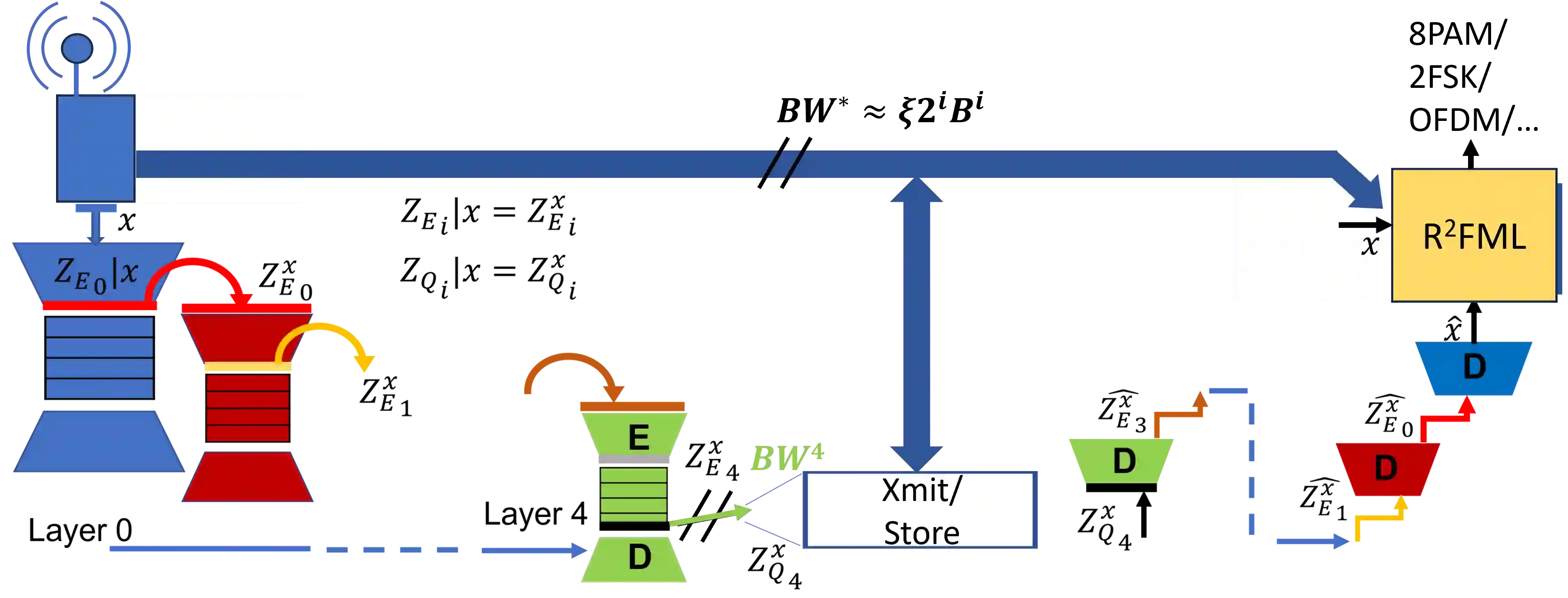
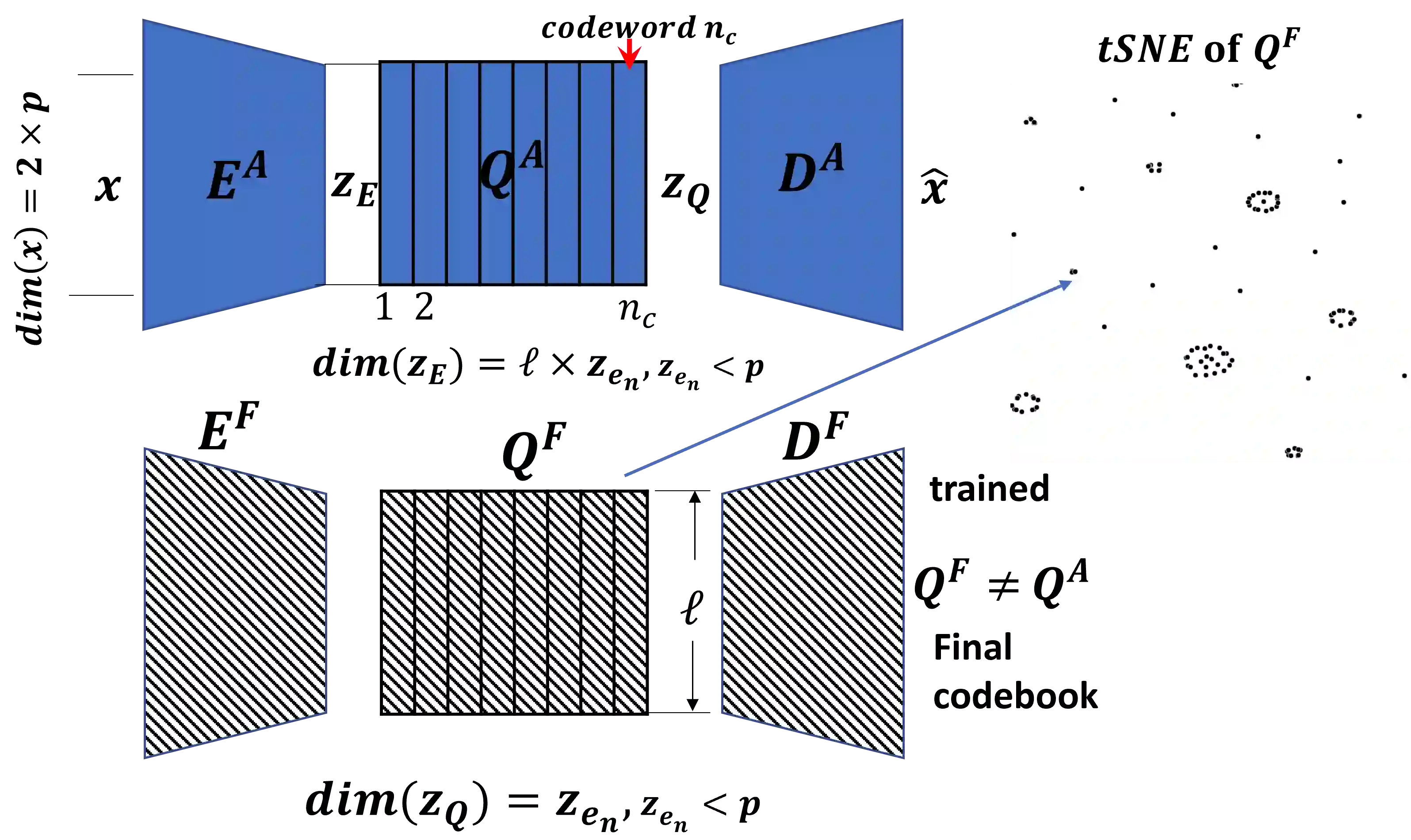
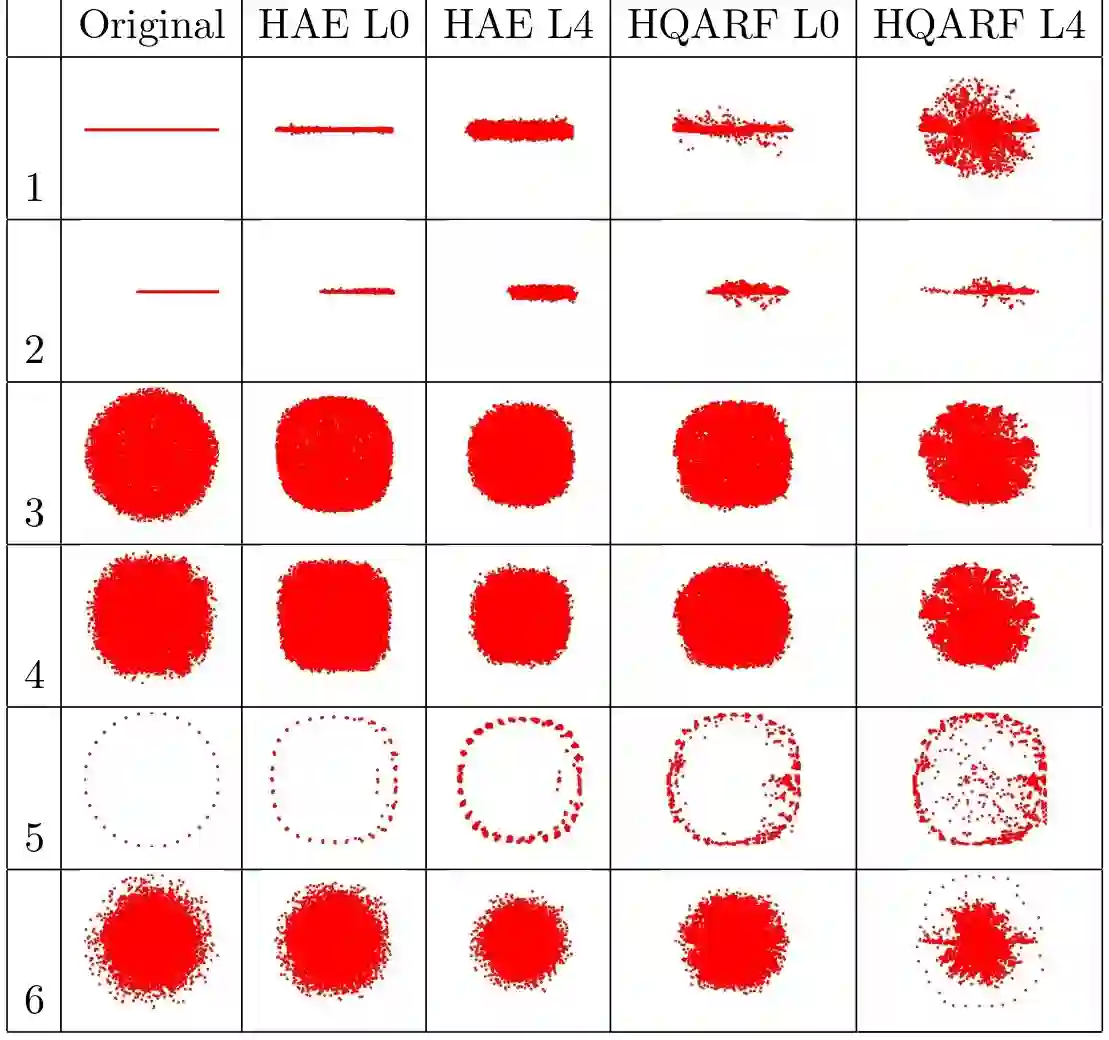
Next-generation cellular concepts rely on the processing of large quantities of radio-frequency (RF) samples. This includes Radio Access Networks (RAN) connecting the cellular front-end based on software defined radios (SDRs) and a framework for the AI processing of spectrum-related data. The RF data collected by the dense RAN radio units and spectrum sensors may need to be jointly processed for intelligent decision making. Moving large amounts of data to AI agents may result in significant bandwidth and latency costs. We propose a deep learned compression (DLC) model, HQARF, based on learned vector quantization (VQ), to compress the complex-valued samples of RF signals comprised of 6 modulation classes. We are assessing the effects of HQARF on the performance of an AI model trained to infer the modulation class of the RF signal. Compression of narrow-band RF samples for the training and off-the-site inference will allow for an efficient use of the bandwidth and storage for non-real-time analytics, and for a decreased delay in real-time applications. While exploring the effectiveness of the HQARF signal reconstructions in modulation classification tasks, we highlight the DLC optimization space and some open problems related to the training of the VQ embedded in HQARF.
翻译:下一代蜂窝概念依赖大量射频样本的处理,这包括基于软件定义无线电(SDR)的蜂窝前端连接的无线接入网(RAN),以及面向频谱相关数据的人工智能处理框架。密集RAN无线电单元和频谱传感器收集的射频数据可能需要联合处理以实现智能决策。将大量数据传输至AI智能体可能导致显著的带宽和时延成本。我们提出基于学习型矢量量化(VQ)的深度学习压缩(DLC)模型HQARF,用于压缩包含6种调制类别的射频信号复值样本。本文评估了HQARF对训练用于推断射频信号调制类别的AI模型性能的影响。对窄带射频样本的压缩,能有效利用非实时分析场景下的带宽与存储资源,并降低实时应用中的延迟。在探究HQARF信号重构对调制分类任务有效性的同时,我们揭示了DLC的优化空间以及与HQARF中嵌入的矢量量化训练相关的若干开放性问题。




相关内容





 微信扫码咨询专知VIP会员