

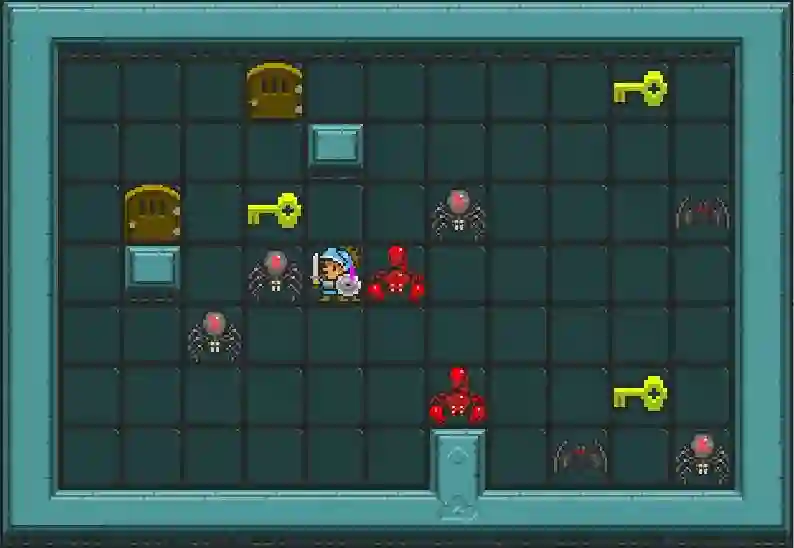
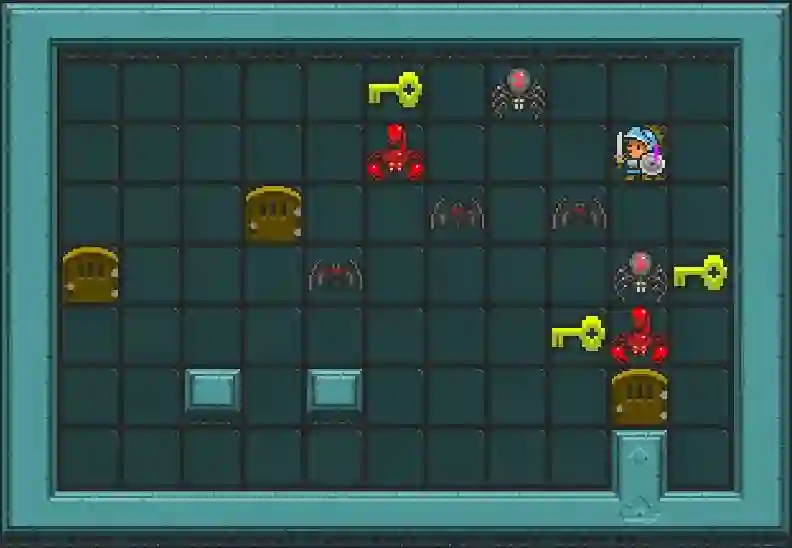
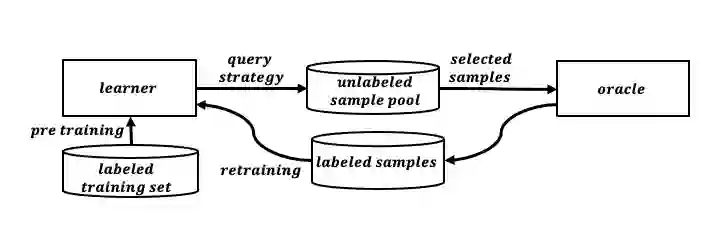
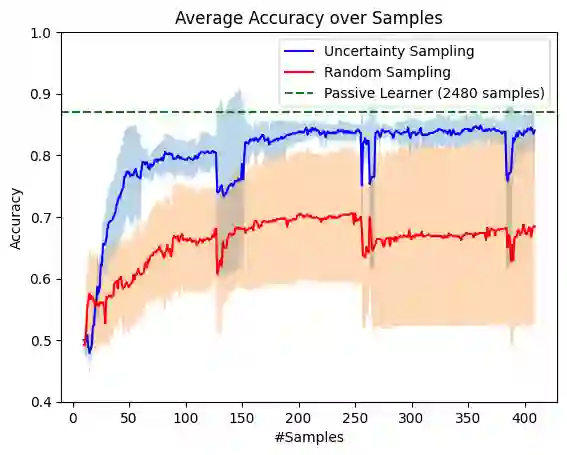
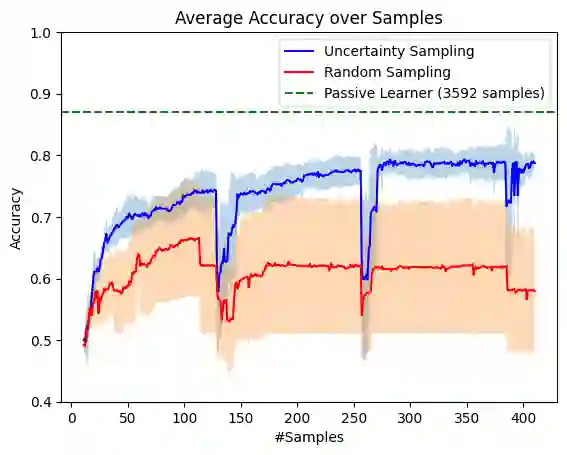
Determining the completability of levels generated by procedural generators such as machine learning models can be challenging, as it can involve the use of solver agents that often require a significant amount of time to analyze and solve levels. Active learning is not yet widely adopted in game evaluations, although it has been used successfully in natural language processing, image and speech recognition, and computer vision, where the availability of labeled data is limited or expensive. In this paper, we propose the use of active learning for learning level completability classification. Through an active learning approach, we train deep-learning models to classify the completability of generated levels for Super Mario Bros., Kid Icarus, and a Zelda-like game. We compare active learning for querying levels to label with completability against random queries. Our results show using an active learning approach to label levels results in better classifier performance with the same amount of labeled data.
翻译:由机器学习模型等程序化生成器生成的关卡,其可通性判定往往具有挑战性,因为通常需要借助求解器代理花费大量时间对关卡进行分析与求解。尽管主动学习在标记数据有限或成本高昂的自然语言处理、图像与语音识别及计算机视觉领域已成功应用,但在游戏评估中尚未得到广泛采用。本文提出将主动学习用于关卡可通性分类任务。通过主动学习策略,我们训练深度学习模型对《超级马里奥兄弟》《光神话》及类《塞尔达传说》游戏生成关卡的可通性进行分类。我们对比了基于主动学习的关卡标注查询与随机查询的效果。实验结果表明,在标记数据量相同的情况下,采用主动学习策略进行关卡标注能使分类器获得更优的性能。




相关内容




 微信扫码咨询专知VIP会员