

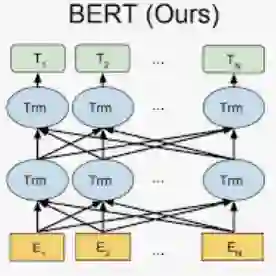
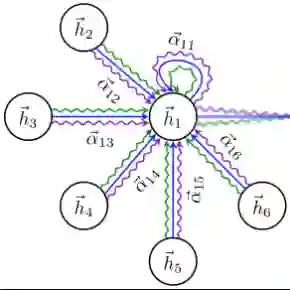
Although syntactic information is beneficial for many NLP tasks, combining it with contextual information between words to solve the coreference resolution problem needs to be further explored. In this paper, we propose an end-to-end parser that combines pre-trained BERT with a Syntactic Relation Graph Attention Network (RGAT) to take a deeper look into the role of syntactic dependency information for the coreference resolution task. In particular, the RGAT model is first proposed, then used to understand the syntactic dependency graph and learn better task-specific syntactic embeddings. An integrated architecture incorporating BERT embeddings and syntactic embeddings is constructed to generate blending representations for the downstream task. Our experiments on a public Gendered Ambiguous Pronouns (GAP) dataset show that with the supervision learning of the syntactic dependency graph and without fine-tuning the entire BERT, we increased the F1-score of the previous best model (RGCN-with-BERT) from 80.3% to 82.5%, compared to the F1-score by single BERT embeddings from 78.5% to 82.5%. Experimental results on another public dataset - OntoNotes 5.0 demonstrate that the performance of the model is also improved by incorporating syntactic dependency information learned from RGAT.
翻译:尽管句法信息对许多自然语言处理任务有益,但如何将其与词语间的上下文信息相结合以解决指代消解问题仍需深入探索。本文提出一种端到端解析器,将预训练的BERT与句法关系图注意力网络(RGAT)相结合,深入探究句法依存信息在指代消解任务中的作用。具体而言,我们首次提出RGAT模型,用于理解句法依存图并学习更优的任务特定句法嵌入。通过构建融合BERT嵌入与句法嵌入的集成架构,为下游任务生成混合表示。在公开的性别模糊代词(GAP)数据集上的实验表明:在句法依存图的监督学习下且无需微调整个BERT模型,我们将此前最优模型(RGCN-with-BERT)的F1分数从80.3%提升至82.5%,相较于单一BERT嵌入的78.5%基线提升至82.5%。另一公开数据集OntoNotes 5.0上的实验结果进一步证明,融入从RGAT学习到的句法依存信息也能有效提升模型性能。




相关内容



 微信扫码咨询专知VIP会员