

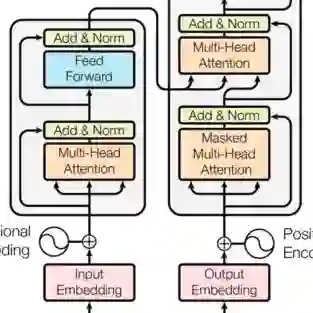
Indoor localization in challenging non-line-of-sight (NLOS) environments often leads to poor accuracy with traditional approaches. Deep learning (DL) has been applied to tackle these challenges; however, many DL approaches overlook computational complexity, especially for floating-point operations (FLOPs), making them unsuitable for resource-limited devices. Transformer-based models have achieved remarkable success in natural language processing (NLP) and computer vision (CV) tasks, motivating their use in wireless applications. However, their use in indoor localization remains nascent, and directly applying Transformers for indoor localization can be both computationally intensive and exhibit limitations in accuracy. To address these challenges, in this work, we introduce a novel tokenization approach, referred to as Sensor Snapshot Tokenization (SST), which preserves variable-specific representations of power delay profile (PDP) and enhances attention mechanisms by effectively capturing multi-variate correlation. Complementing this, we propose a lightweight Swish-Gated Linear Unit-based Transformer (L-SwiGLU-T) model, designed to reduce computational complexity without compromising localization accuracy. Together, these contributions mitigate the computational burden and dependency on large datasets, making Transformer models more efficient and suitable for resource-constrained scenarios. Experimental results on simulated and real-world datasets demonstrate that SST and L-SwiGLU-T achieve substantial accuracy and efficiency gains, outperforming larger Transformer and CNN baselines by over 40% while using significantly fewer FLOPs and training samples.
翻译:在具有挑战性的非视距(NLOS)环境中,传统室内定位方法通常精度较差。深度学习(DL)已被应用于应对这些挑战;然而,许多DL方法忽视了计算复杂度,特别是浮点运算(FLOPs)方面,使其不适用于资源受限的设备。基于Transformer的模型在自然语言处理(NLP)和计算机视觉(CV)任务中取得了显著成功,这推动了其在无线应用中的使用。然而,其在室内定位中的应用仍处于起步阶段,直接将Transformer用于室内定位可能计算密集且在精度上存在局限。为应对这些挑战,本研究引入了一种新颖的标记化方法,称为传感器快照标记化(SST),该方法保留了功率延迟分布(PDP)的变量特定表示,并通过有效捕获多变量相关性来增强注意力机制。作为补充,我们提出了一种轻量级的基于Swish门控线性单元的Transformer(L-SwiGLU-T)模型,旨在降低计算复杂度而不损害定位精度。这些贡献共同减轻了计算负担和对大型数据集的依赖,使Transformer模型更高效且更适合资源受限的场景。在模拟和真实数据集上的实验结果表明,SST和L-SwiGLU-T在显著减少FLOPs和训练样本使用量的同时,实现了可观的精度和效率提升,其性能超过较大的Transformer和CNN基线模型40%以上。


相关内容

 微信扫码咨询专知VIP会员