

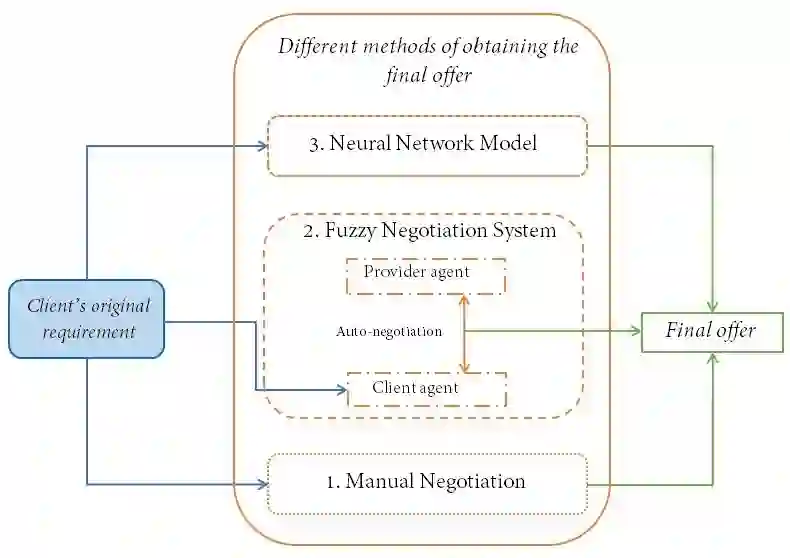
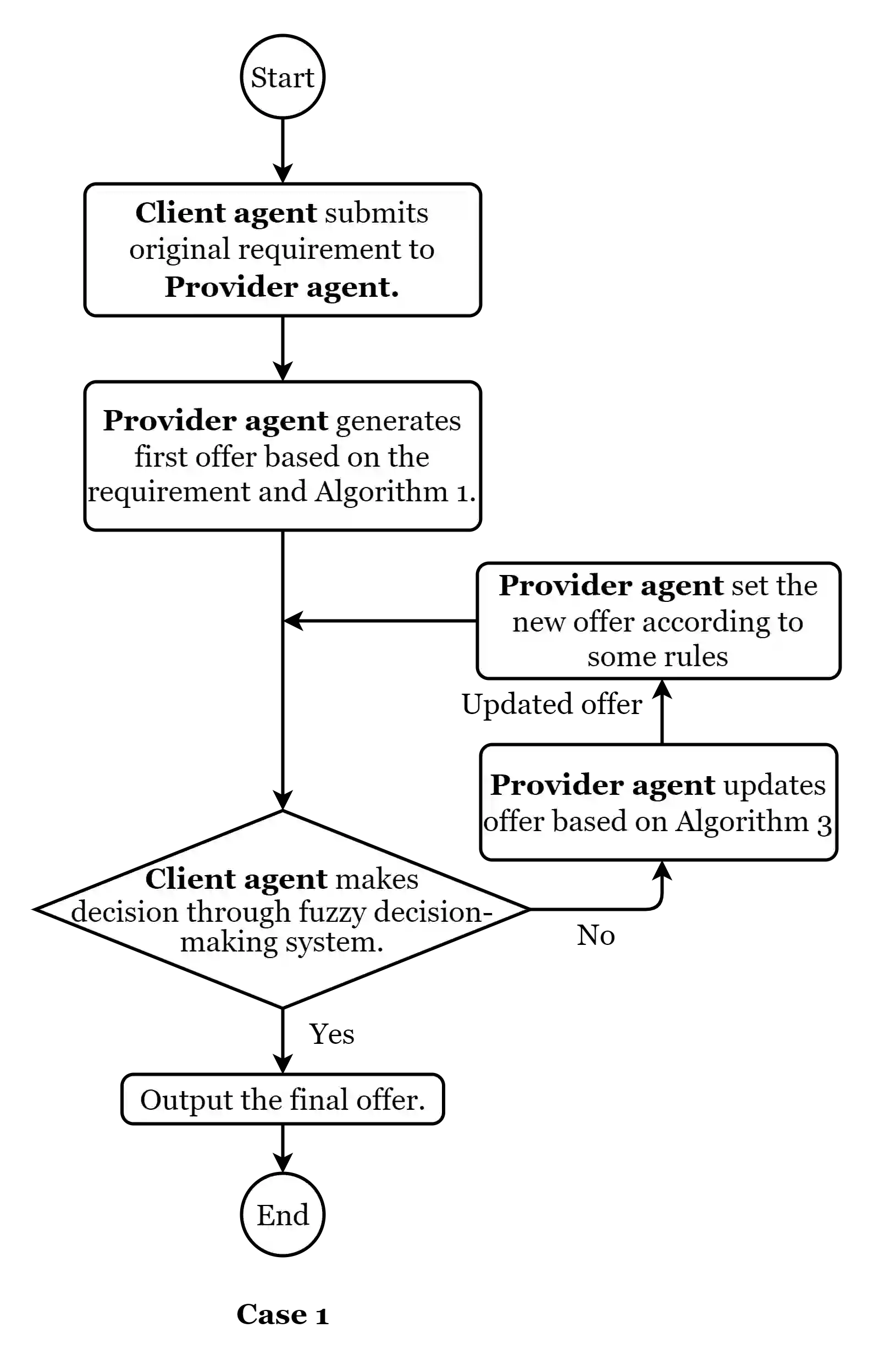
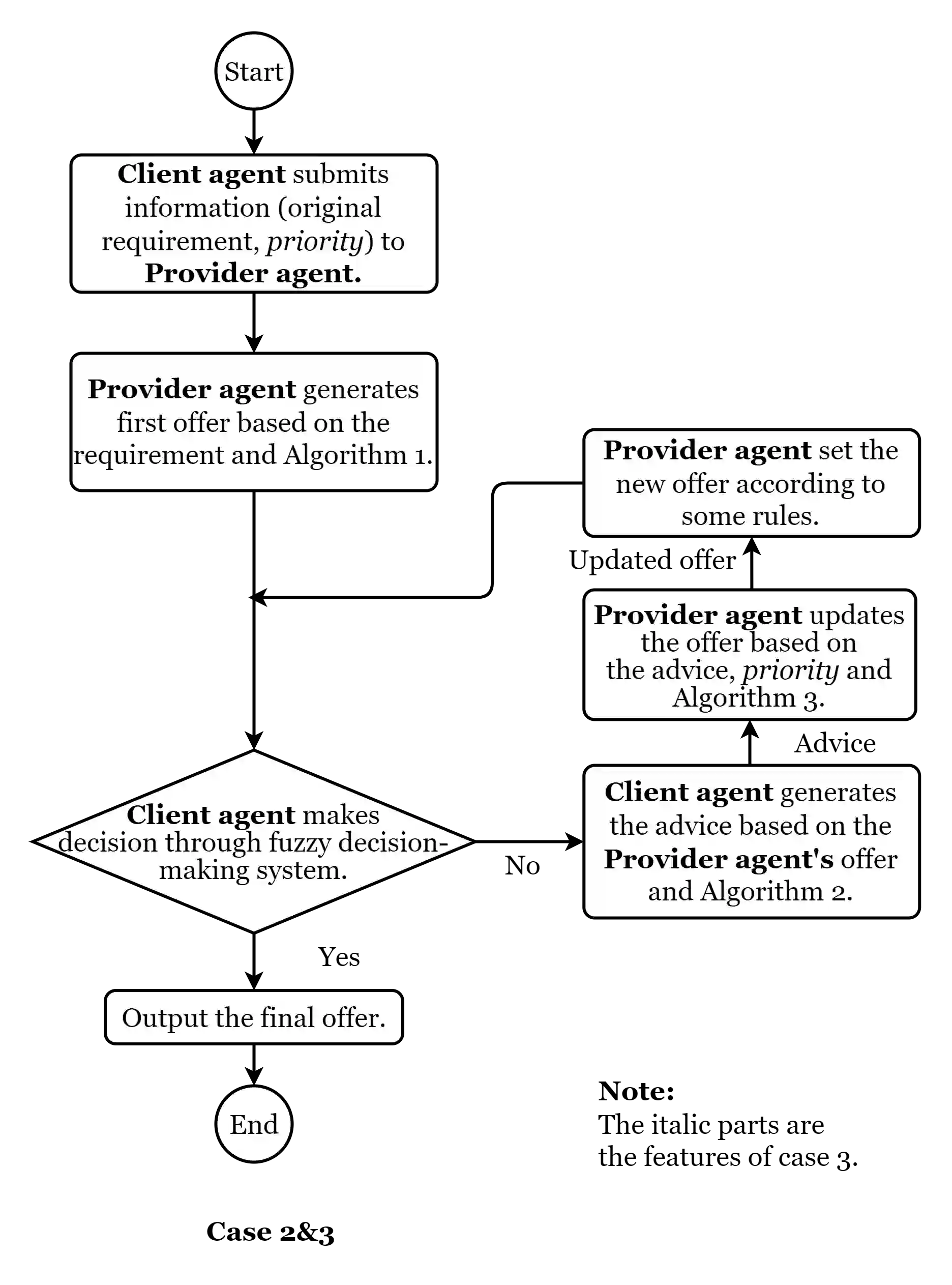
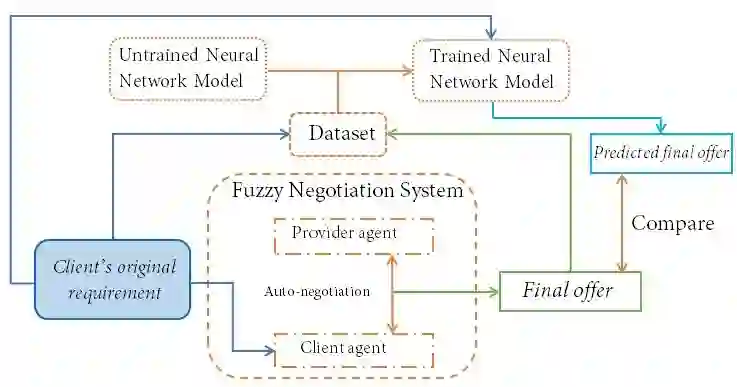
In the past few decades, the rapid development of information and internet technologies has spawned massive amounts of data and information. The information explosion drives many enterprises or individuals to seek to rent cloud computing infrastructure to put their applications in the cloud. However, the agreements reached between cloud computing providers and clients are often not efficient. Many factors affect the efficiency, such as the idleness of the providers' cloud computing infrastructure, and the additional cost to the clients. One possible solution is to introduce a comprehensive, bargaining game (a type of negotiation), and schedule resources according to the negotiation results. We propose an agent-based auto-negotiation system for resource scheduling based on fuzzy logic. The proposed method can complete a one-to-one auto-negotiation process and generate optimal offers for the provider and client. We compare the impact of different member functions, fuzzy rule sets, and negotiation scenario cases on the offers to optimize the system. It can be concluded that our proposed method can utilize resources more efficiently and is interpretable, highly flexible, and customizable. We successfully train machine learning models to replace the fuzzy negotiation system to improve processing speed. The article also highlights possible future improvements to the proposed system and machine learning models. All the codes and data are available in the open-source repository.
翻译:在过去几十年里,信息与互联网技术的飞速发展催生了海量数据与信息。信息爆炸促使许多企业或个人寻求租用云计算基础设施,将其应用程序部署于云端。然而,云计算提供商与客户之间达成的协议往往效率不高。诸多因素影响着效率,例如提供商云计算基础设施的闲置,以及客户承担的额外成本。一种可行的解决方案是引入综合性的讨价还价博弈(一种协商类型),并根据协商结果进行资源调度。我们提出了一种基于模糊逻辑的智能体自动协商资源调度系统。该方法能够完成一对一自动协商过程,并为提供商和客户生成最优报价。我们比较了不同隶属函数、模糊规则集以及协商场景案例对报价的影响,以优化系统。结论表明,我们提出的方法能够更有效地利用资源,且具有可解释性、高度灵活性和可定制性。我们成功训练了机器学习模型来替代模糊协商系统,从而提升处理速度。本文还指出了该系统和机器学习模型未来可能的改进方向。所有代码和数据均在开源仓库中公开。




相关内容





 微信扫码咨询专知VIP会员