Large language models (LLMs) achieve promising results on medical question answering benchmarks, yet their use in public health is constrained by hallucinations and the rapid evolution of official guidance. Retrieval-Augmented Generation (RAG) mitigates these risks by grounding responses in an explicitly maintained corpus, but end-to-end performance depends critically on retrieval configuration and on evaluation beyond multiple-choice formats. We extend PubHealthBench, a question answering (QA) benchmark of 7,929 questions derived from UK Government public health guidance, into a retrieval-augmented setting and systematically evaluate retrieval and generation choices. We compare dense, sparse, and hybrid retrieval across multiple embedding models and corpus variants, and show that hybrid retrieval consistently improves recall and ranking quality, with chunk length and topic interacting with ranking performance. Providing retrieved context substantially increases multiple-choice accuracy across a diverse set of LLMs, enabling smaller open-weight models to match or outperform larger models used without retrieval, with gains primarily driven by retrieval quality and careful context selection. To assess realistic free-form answering, we introduce a rubric-based LLM-as-a-judge covering faithfulness, completeness, clarity, and factual consistency, and validate it against dual human annotations. Judge-human agreement is strongest for faithfulness and completeness, while factual consistency and clarity are less reliably reproduced, motivating caution when interpreting those dimensions at scale. Overall, our results highlight retrieval as a primary lever for reliable public health QA and provide practical guidance for building and evaluating RAG systems grounded in official guidance.


翻译:暂无翻译

0
下载
关闭预览

相关内容

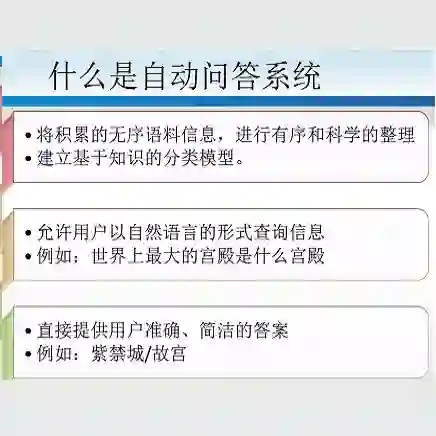
自动问答(Question Answering, QA)是指利用计算机自动回答用户所提出的问题以满足用户知识需求的任务。不同于现有搜索引擎,问答系统是信息服务的一种高级形式,系统返回用户的不再是基于关键词匹配排序的文档列表,而是精准的自然语言答案。近年来,随着人工智能的飞速发展,自动问答已经成为倍受关注且发展前景广泛的研究方向。

知识荟萃

精品入门和进阶教程、论文和代码整理等

更多

查看相关VIP内容、论文、资讯等
大型语言模型(LLM)赋能的知识图谱构建:综述
专知会员服务
56+阅读 · 2025年10月24日
LLMs与生成式智能体模拟:复杂系统研究的新范式
专知会员服务
30+阅读 · 2025年6月15日
投大模型岗?50道大型语言模型(LLM)面试问题汇总
专知会员服务
24+阅读 · 2025年6月7日
大型语言模型(LLMs),附Slides与视频
专知会员服务
71+阅读 · 2024年6月30日
WSDM 2024| LLMs助力图学习?基于大模型的图数据增强
专知会员服务
27+阅读 · 2023年11月19日
医疗健康领域的短文本解析探索----文本纠错
深度学习自然语言处理
10+阅读 · 2020年8月5日
Hierarchically Structured Meta-learning
CreateAMind
27+阅读 · 2019年5月22日
A Technical Overview of AI & ML in 2018 & Trends for 2019
待字闺中
18+阅读 · 2018年12月24日
disentangled-representation-papers
CreateAMind
26+阅读 · 2018年9月12日
论文浅尝 | Improved Neural Relation Detection for KBQA
开放知识图谱
13+阅读 · 2018年1月21日
论文浅尝 | Question Answering over Freebase
开放知识图谱
19+阅读 · 2018年1月9日
原创 | Attention Modeling for Targeted Sentiment
黑龙江大学自然语言处理实验室
25+阅读 · 2017年11月5日
国家自然科学基金
2+阅读 · 2015年12月31日
国家自然科学基金
2+阅读 · 2015年12月31日
国家自然科学基金
1+阅读 · 2015年12月31日
国家自然科学基金
2+阅读 · 2015年12月31日
国家自然科学基金
5+阅读 · 2015年12月31日
国家自然科学基金
0+阅读 · 2014年12月31日
国家自然科学基金
1+阅读 · 2014年12月31日
国家自然科学基金
0+阅读 · 2014年12月31日
国家自然科学基金
0+阅读 · 2014年12月31日
VIP会员
最新内容
俄罗斯如何拦截乌克兰无人机与巡航导弹
专知会员服务
7+阅读 · 10月15日
《武器-目标分配问题:精确与近似求解算法》
专知会员服务
8+阅读 · 10月15日
综述|谁来改进机器人?迈向物理递归自我改进
专知会员服务
9+阅读 · 10月14日
软件定义无人机蜂群给防空带来全新压力
专知会员服务
10+阅读 · 10月13日
《半自主无人地面战车的互操作性》66页
专知会员服务
13+阅读 · 10月13日
相关VIP内容
相关资讯
医疗健康领域的短文本解析探索----文本纠错
深度学习自然语言处理
10+阅读 · 2020年8月5日
Hierarchically Structured Meta-learning
CreateAMind
27+阅读 · 2019年5月22日
A Technical Overview of AI & ML in 2018 & Trends for 2019
待字闺中
18+阅读 · 2018年12月24日
disentangled-representation-papers
CreateAMind
26+阅读 · 2018年9月12日
论文浅尝 | Improved Neural Relation Detection for KBQA
开放知识图谱
13+阅读 · 2018年1月21日
论文浅尝 | Question Answering over Freebase
开放知识图谱
19+阅读 · 2018年1月9日
原创 | Attention Modeling for Targeted Sentiment
黑龙江大学自然语言处理实验室
25+阅读 · 2017年11月5日
相关基金
国家自然科学基金
2+阅读 · 2015年12月31日
国家自然科学基金
2+阅读 · 2015年12月31日
国家自然科学基金
1+阅读 · 2015年12月31日
国家自然科学基金
2+阅读 · 2015年12月31日
国家自然科学基金
5+阅读 · 2015年12月31日
国家自然科学基金
0+阅读 · 2014年12月31日
国家自然科学基金
1+阅读 · 2014年12月31日
国家自然科学基金
0+阅读 · 2014年12月31日
国家自然科学基金
0+阅读 · 2014年12月31日
Top
微信扫码咨询专知VIP会员