

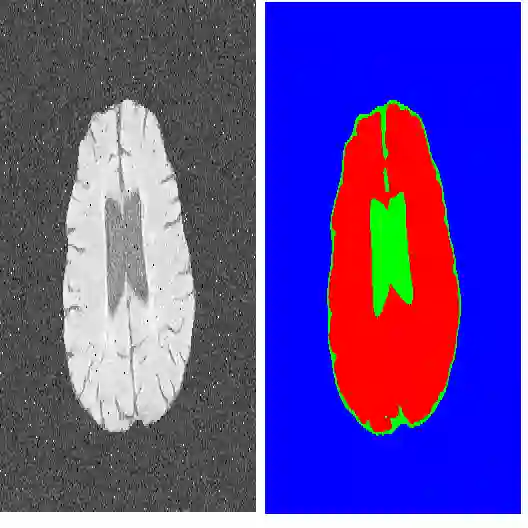
Medical image segmentation is widely used for disease detection but relies on sensitive data, raising privacy concerns as trained models can leak information. Differential privacy, typically implemented via Differential Private Stochastic Gradient Descent (DPSGD), provides a solution, though at the cost of reduced utility. Recent DPSGD variants, including Automatic clipping (Auto-S), Normalised SGD with perturbation (NSGD), and Per-sample adaptive clipping (PSAC), have shown promise in image classification, but their behavior in medical segmentation remains underexplored. We evaluate these methods across binary and multi-class tasks and analyze gradient alignment, showing that prior assumptions, particularly for PSAC, do not consistently hold. We further demonstrate that combining clipping strategies with morphological refinement improves segmentation quality under privacy constraints. Finally, we propose an adaptive DP-Morph variant that captures class-specific structures and enhances performance in multi-class settings.
翻译:暂无翻译




相关内容




 微信扫码咨询专知VIP会员