

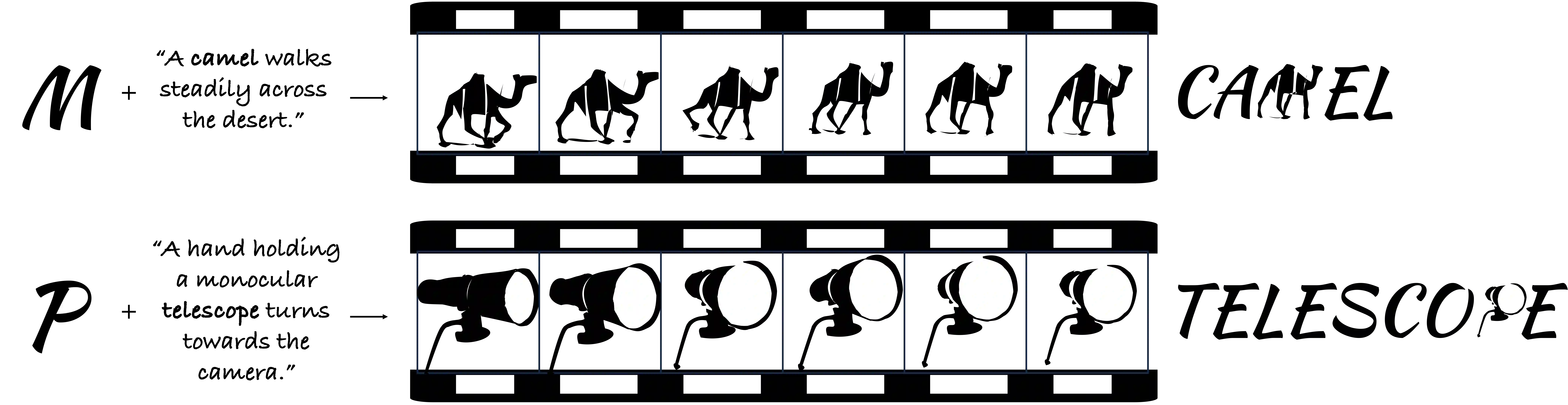
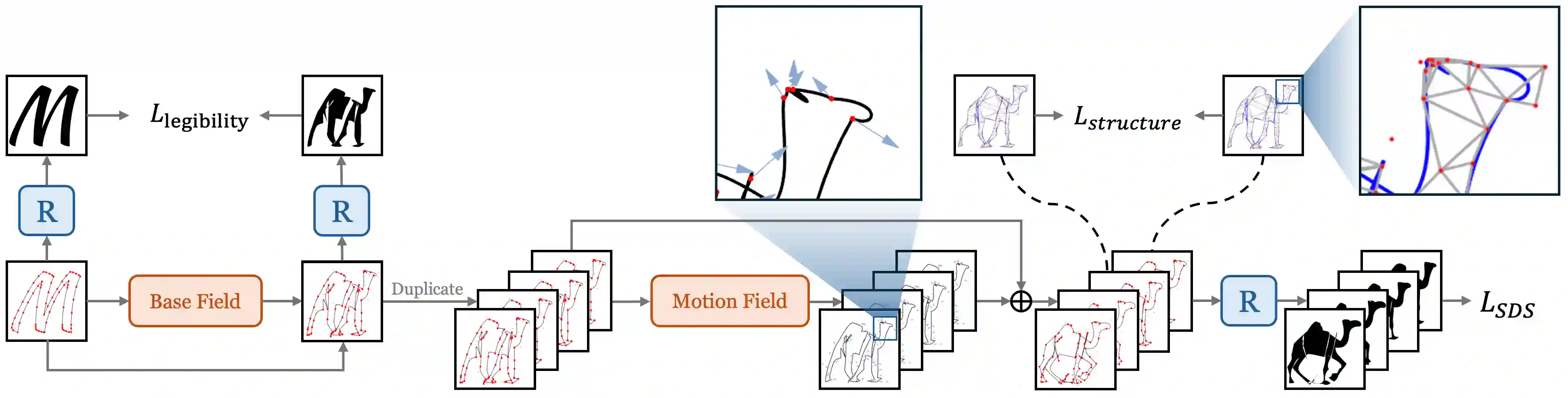
Text animation serves as an expressive medium, transforming static communication into dynamic experiences by infusing words with motion to evoke emotions, emphasize meanings, and construct compelling narratives. Crafting animations that are semantically aware poses significant challenges, demanding expertise in graphic design and animation. We present an automated text animation scheme, termed "Dynamic Typography", which combines two challenging tasks. It deforms letters to convey semantic meaning and infuses them with vibrant movements based on user prompts. Our technique harnesses vector graphics representations and an end-to-end optimization-based framework. This framework employs neural displacement fields to convert letters into base shapes and applies per-frame motion, encouraging coherence with the intended textual concept. Shape preservation techniques and perceptual loss regularization are employed to maintain legibility and structural integrity throughout the animation process. We demonstrate the generalizability of our approach across various text-to-video models and highlight the superiority of our end-to-end methodology over baseline methods, which might comprise separate tasks. Through quantitative and qualitative evaluations, we demonstrate the effectiveness of our framework in generating coherent text animations that faithfully interpret user prompts while maintaining readability. Our code is available at: https://animate-your-word.github.io/demo/.
翻译:文本动画作为一种富有表现力的媒介,通过赋予文字动态效果来唤起情感、强调意义并构建引人入胜的叙事,将静态的交流方式转变为动态体验。然而,创作具有语义感知能力的动画极具挑战性,需要掌握平面设计与动画的专业技能。我们提出了一种名为“动态排版”的自动化文本动画方案,该方案融合了两项复杂任务:既能变形字母以传达语义含义,又能根据用户提示为其注入生动的运动效果。我们的技术利用了矢量图形表示法与基于端到端优化的框架。该框架借助神经位移场将字母转换为基础形状,并对每一帧施加运动,以促进与预期文本概念的一致性。在整个动画过程中,我们采用形状保持技术与感知损失正则化来维护文本的可读性和结构完整性。我们展示了该方法在多种文生视频模型上的泛化能力,并强调了端到端方法论相比可能包含分离任务的基线方法的优越性。通过定量与定性评估,我们证明了该框架在生成忠实解读用户提示同时保持可读性的连贯文本动画方面的有效性。我们的代码已开源至:https://animate-your-word.github.io/demo/。




相关内容




 微信扫码咨询专知VIP会员