

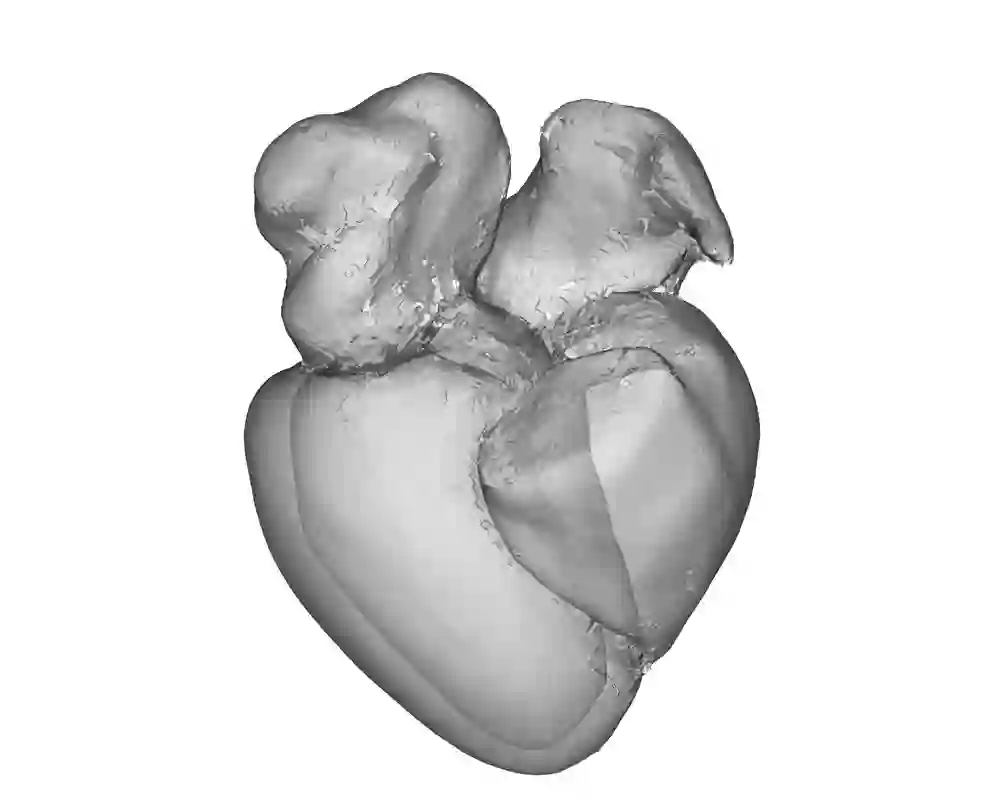
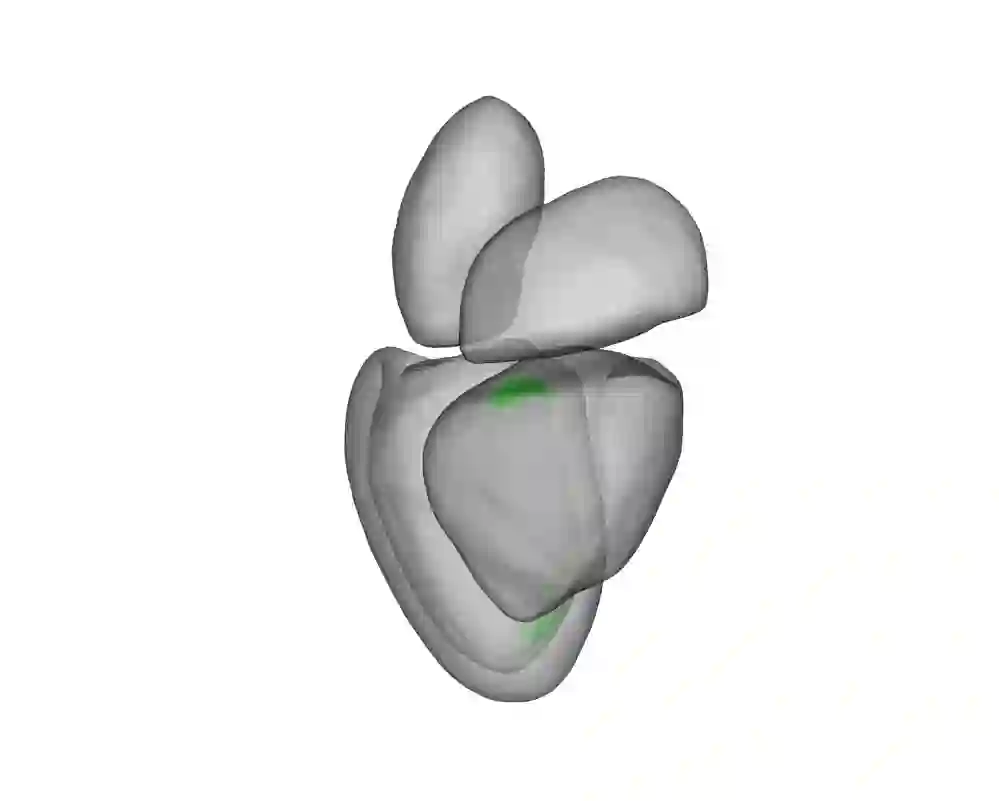
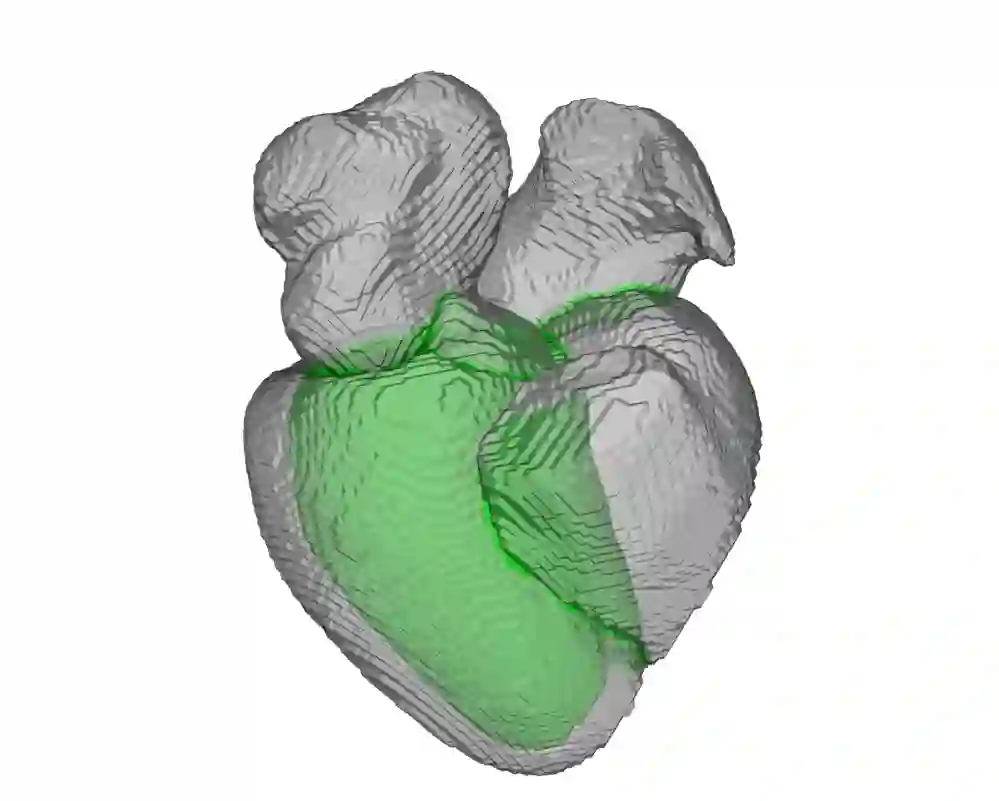
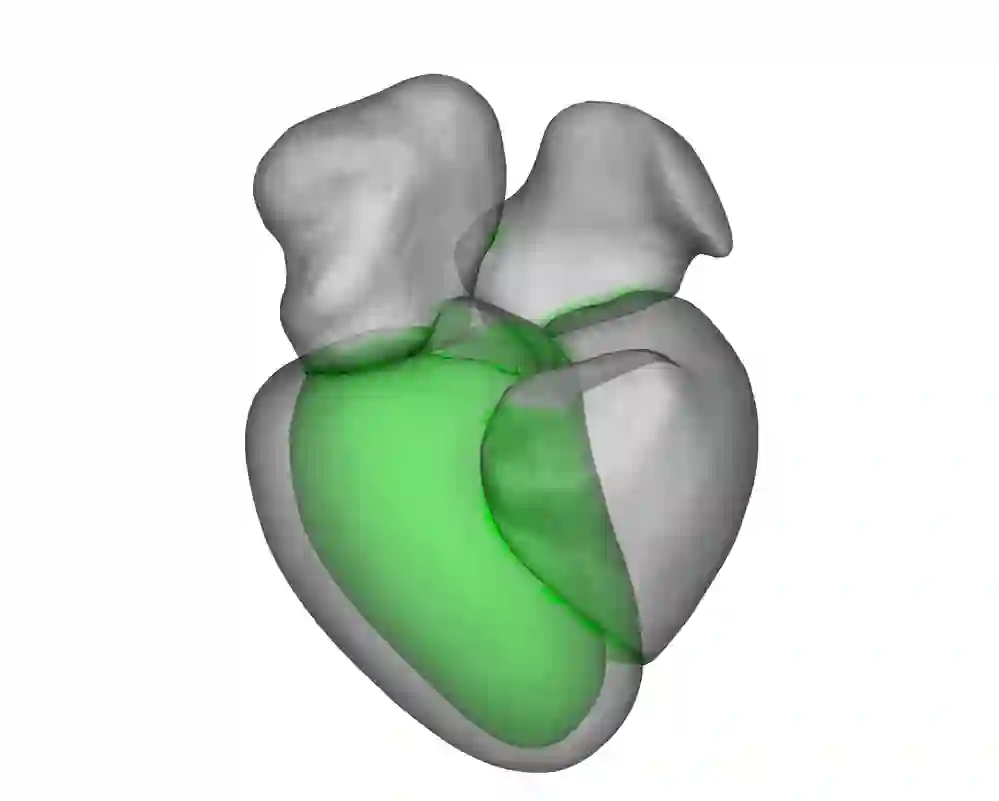
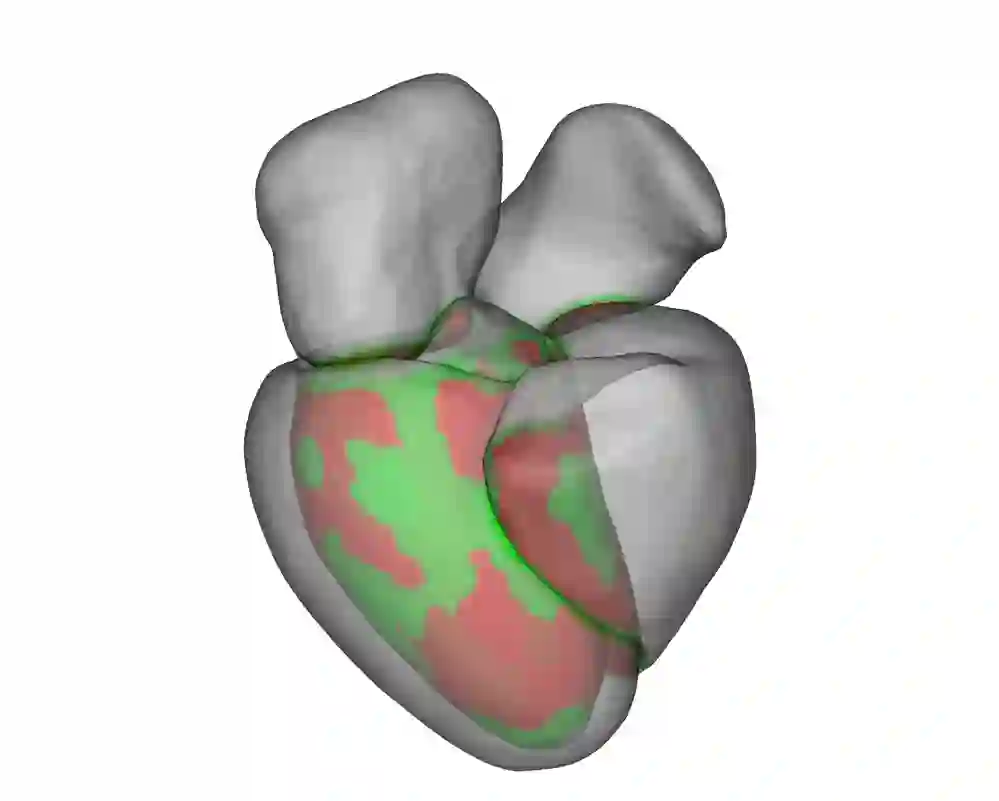
Accurate 3D models of the human heart require not only correct outer surfaces but also realistic inner structures, such as the ventricles, atria, and myocardial layers. Approaches relying on implicit surfaces, such as signed distance functions (SDFs), are primarily designed for single watertight surfaces, making them ill-suited for multi-layered anatomical structures. They often produce gaps or overlaps in shared boundaries. Unsigned distance functions (UDFs) can model non-watertight geometries but are harder to optimize, while voxel-based methods are limited in resolution and struggle to produce smooth, anatomically realistic surfaces. We introduce a pairwise-constrained SDF approach that models the heart as a set of interdependent SDFs, each representing a distinct anatomical component. By enforcing proper contact between adjacent SDFs, we ensure that they form anatomically correct shared walls, preserving the internal structure of the heart and preventing overlaps, or unwanted gaps. Our method significantly improves inner structure accuracy over single-SDF, UDF-based, voxel-based, and segmentation-based reconstructions. We further demonstrate its generalizability by applying it to a vertebrae dataset, preventing unwanted contact between structures.
翻译:精确的人类心脏三维模型不仅需要正确的外表面,还需要逼真的内部结构,如心室、心房和心肌层。依赖隐式表面的方法,例如有符号距离函数(SDFs),主要设计用于单一水密表面,使其不适合多层解剖结构。它们通常在共享边界处产生间隙或重叠。无符号距离函数(UDFs)可以建模非水密几何体但更难优化,而基于体素的方法则受限于分辨率,难以生成平滑、解剖学上逼真的表面。我们提出了一种成对约束的SDF方法,将心脏建模为一组相互依赖的SDFs,每个SDF代表一个独特的解剖组件。通过强制相邻SDFs之间的适当接触,我们确保它们形成解剖学上正确的共享壁,从而保留心脏的内部结构并防止重叠或不必要的间隙。我们的方法在内部结构准确性上显著优于单SDF、基于UDF、基于体素以及基于分割的重建方法。我们进一步通过将其应用于脊椎数据集来证明其泛化能力,防止了结构之间的非预期接触。




相关内容





 微信扫码咨询专知VIP会员