

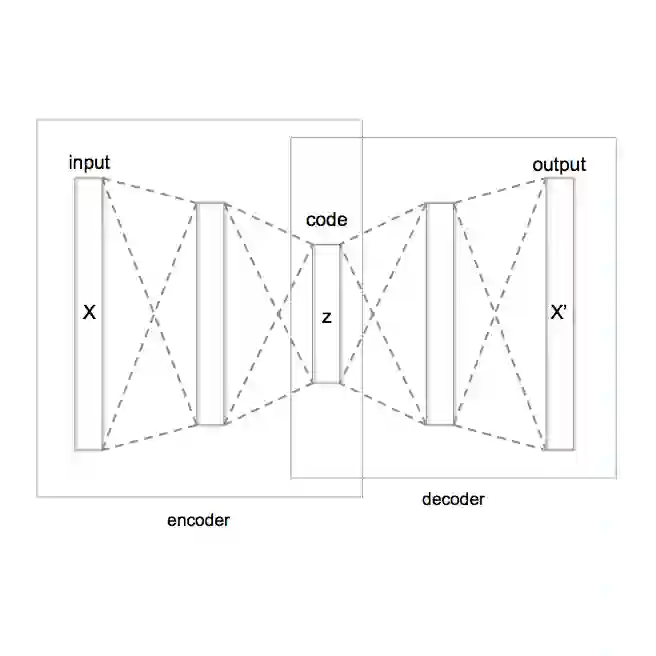
In recent years, there is an increasing interests in reconstruction based generative models for image One-Class Novelty Detection, most of which only focus on image-level information. While in this paper, we further exploit the latent space of Variational Auto-encoder (VAE), a typical reconstruction based model, and we innovatively divide it into three regions: Normal/Anomalous/Unknown-semantic-region. Based on this hypothesis, we propose a new VAE architecture, Recoding Semantic Consistency Based VAE (RSC-VAE), combining VAE with recoding mechanism and constraining the semantic consistency of two encodings. We come up with three training modes of RSC-VAE: 1. One-Class Training Mode, alleviating False Positive problem of normal samples; 2. Distributionally-Shifted Training Mode, alleviating False Negative problem of anomalous samples; 3. Extremely-Imbalanced Training Mode, introducing a small number of anomalous samples for training to enhance the second mode. The experimental results on multiple datasets demonstrate that our mechanism achieves state-of-the-art performance in various baselines including VAE.
翻译:近年来,基于重建的生成模型在图像单类异常检测中日益受到关注,但大多数方法仅关注图像级信息。本文进一步挖掘了典型重建模型——变分自编码器的潜在空间,并创新性地将其划分为三个区域:正常语义区、异常语义区和未知语义区。基于这一假设,我们提出了一种新的变分自编码器架构——基于语义一致性重编码的变分自编码器(RSC-VAE),该架构将变分自编码器与重编码机制相结合,并约束两次编码的语义一致性。我们提出了RSC-VAE的三种训练模式:1)单类训练模式,缓解正常样本的假阳性问题;2)分布偏移训练模式,缓解异常样本的假阴性问题;3)极端不平衡训练模式,引入少量异常样本进行训练以增强第二种模式。在多个数据集上的实验结果表明,我们的方法在包括变分自编码器在内的多种基线方法中均达到了最优性能。




相关内容


 微信扫码咨询专知VIP会员