

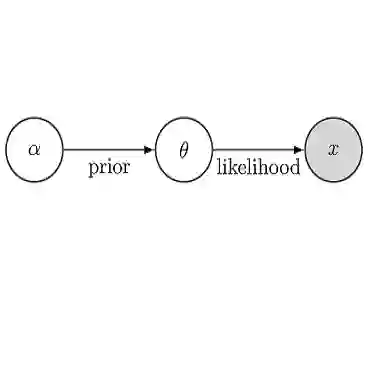
Bayesian statistics has gained popularity in psychological research due to its intuitive uncertainty quantification and convenient information-updating rules. In many applications, however, prior distributions are introduced merely as instruments to facilitate computation, rather than as representations of genuine subjective belief. Consequently, relying on standard Bayesian justifications for inferential procedures becomes conceptually ungrounded. In this paper, we recommend evaluating finite-sample performance over repeated sampling of data and parameters as an alternative justification for "pragmatic Bayes." We demonstrate a key vulnerability in the usual posterior-based inference: when analysts' chosen prior distribution mismatches the true parameter-generating process, Bayesian inference can be misleading. Given that this true process is rarely known in practice, we propose a safer alternative: calibrating Bayesian credible regions to achieve frequentist validity. This latter criterion is stronger and guarantees validity of Bayesian inference regardless of the underlying parameter-generating mechanism. To solve the calibration problem in practice, we propose a novel stochastic approximation algorithm. A Monte Carlo experiment is conducted and reported, in which we observe that uncalibrated Bayesian inference can be liberal under certain parameter-generating scenarios, whereas our calibrated solution consistently maintain validity. We also illustrate the proposed calibration procedure using a real-data example involving location-scale regression.
翻译:贝叶斯统计因其直观的不确定性量化与便捷的信息更新规则在心理学研究中日益普及。但在许多应用中,先验分布的引入仅作为简化计算的工具,而非真实主观信念的表征。因此,基于标准贝叶斯框架对推断程序进行论证便失去了概念根基。本文建议通过数据与参数重复抽样下的有限样本表现评估,为"实用贝叶斯"提供替代性论证。我们揭示了基于后验推断的关键隐患:当研究者选定的先验分布与真实参数生成过程不匹配时,贝叶斯推断可能产生误导性结论。鉴于实践中真实过程鲜为人知,我们提出更安全的替代方案——校准贝叶斯可信区间以实现频率学派有效性。这一更强准则能确保贝叶斯推断在任意参数生成机制下均保持有效性。为解决实际中的校准问题,我们提出新型随机逼近算法。通过蒙特卡洛实验发现,在特定参数生成场景下未校准的贝叶斯推断可能过于宽松,而我们的校准方案始终维持有效性。最后利用位置尺度回归的真实数据实例说明所提校准流程。




相关内容



 微信扫码咨询专知VIP会员