

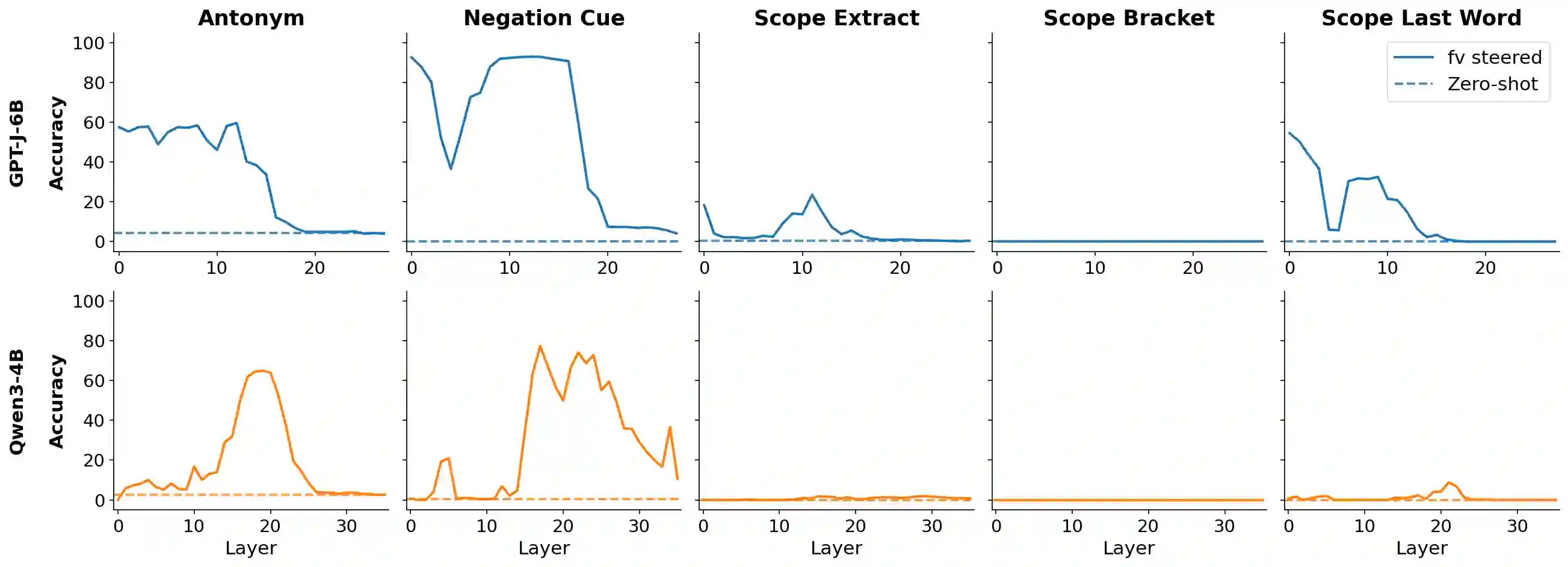
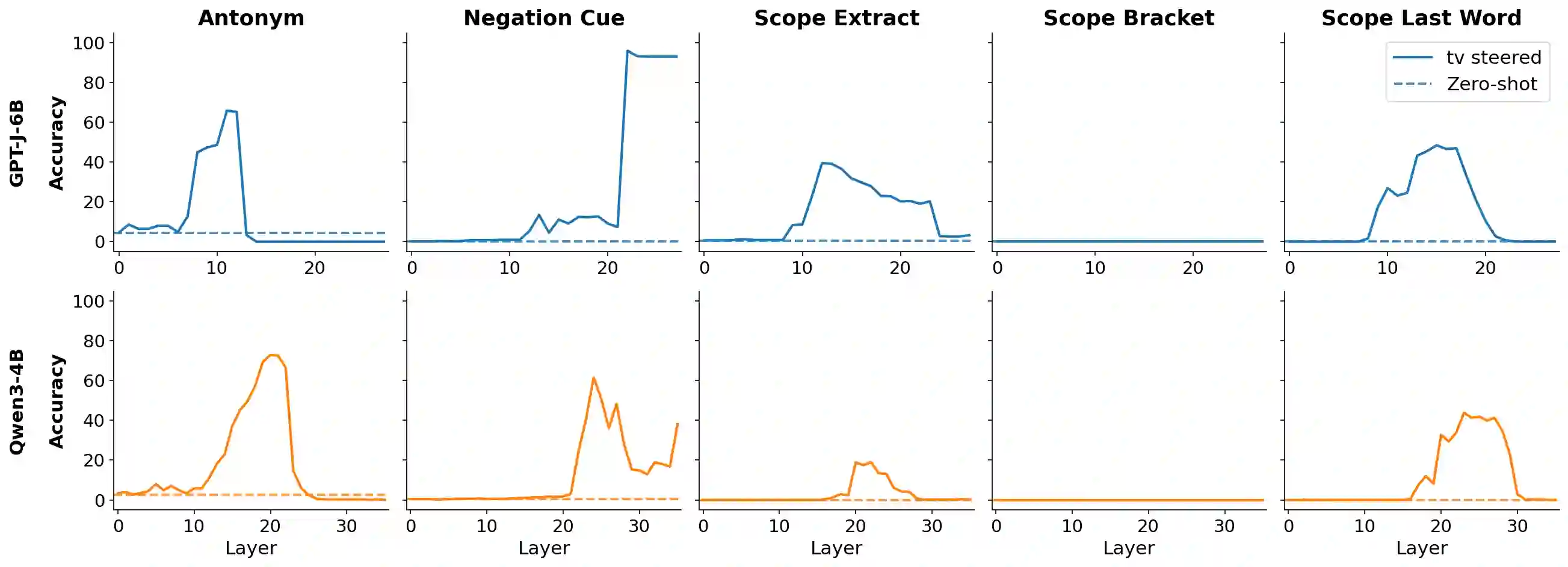
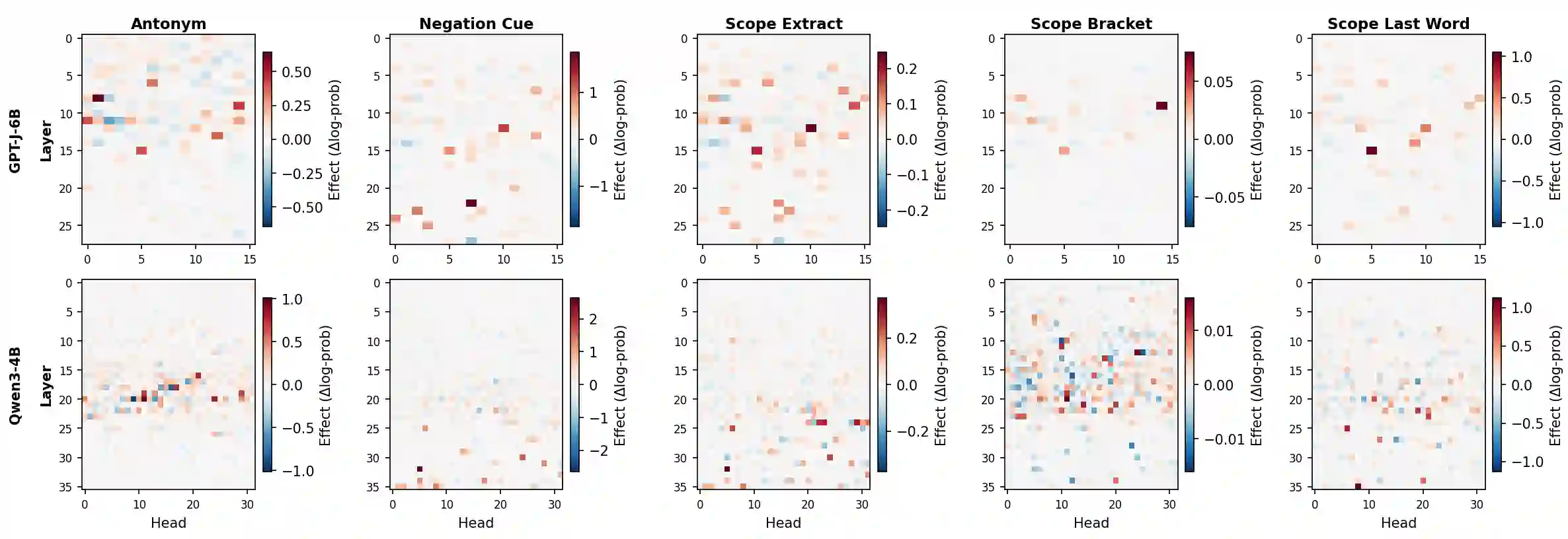
Understanding the meaning of negated sentences remains one of the challenges for language models, even in the era of large language models (LLMs). We analyze systematicity regarding LLM understanding of negation from two perspectives: behavioral systematicity and representational systematicity. For behavioral systematicity, we confirm that through demonstrations and in-context learning, LLMs can recognize negation expressions and scope within sentences to some extent, but they fail to achieve perfect performance. In particular, the difficulty of the negation scope recognition for models varies depending on the output format. For representational systematicity, we analyze the extent to which function vectors can be robustly constructed from in-context examples for tasks that are essential to understanding negation. The experiments suggest that while function vectors can be composed for negation cue extraction tasks, extracting function vectors for recognizing scope is more challenging.
翻译:理解否定句的含义仍然是语言模型面临的挑战之一,即使在大语言模型时代也是如此。我们从两个角度分析了语言模型对否定理解的系统性:行为系统性和表征系统性。在行为系统性方面,我们验证了通过示范和情境学习,大语言模型能在一定程度上识别句子中的否定表达和否定范围,但未能达到完美表现。特别地,模型识别否定范围的难度因输出格式而异。在表征系统性方面,我们分析了对于理解否定至关重要的任务,如何从情境示例中稳健地构建功能向量。实验表明,虽然可以为否定线索提取任务组合功能向量,但为识别否定范围提取功能向量更具挑战性。




相关内容

 微信扫码咨询专知VIP会员