

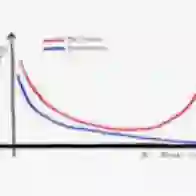
On near-term quantum hardware, estimating a Born probability requires repeated circuit executions. A quantum learning experiment with a fixed measurement budget $B$ must therefore decide how many distinct training states $n$ to use and how many shots $S$ to spend on each. We study this trade-off for binary quantum classifiers whose measurement operator $M$ is learned from the training data and evaluated with fresh measurement outcomes. We prove a distribution-free generalization bound for bounded, $L$-Lipschitz losses with a sample term of order $\sqrt{d/n}$ and a shot term of order $\sqrt{(\log n)/S}$; under $B=nS$ the two terms move in opposite directions. Minimizing a closed-form surrogate of the bound gives the allocation rule $n^* = 2\sqrt{2dB/\log(4B/δ)}$, $S^* = B/n^*$, whose bound value is within 0.1% of the exact numerical minimum on all budgets we evaluate, and a worst-case rate of $B^{-1/4}$. PennyLane simulations with 2- and 4-qubit variational circuits on nine synthetic benchmarks show that the empirical gap stays below the bound in all configurations, although the bound is vacuous at the simulated budgets and becomes non-vacuous only for larger budgets (e.g., $B \gtrsim 5000$ for $d=4$). For a loss that is concave in the score, the empirical gap is U-shaped under a fixed budget and the measured shot contribution matches its analytical value; for the absolute loss, shot noise is unbiased and no shot-limited regime appears. The rule can be used to plan finite-shot evaluations before an experiment is run.
翻译:暂无翻译


相关内容



 微信扫码咨询专知VIP会员