

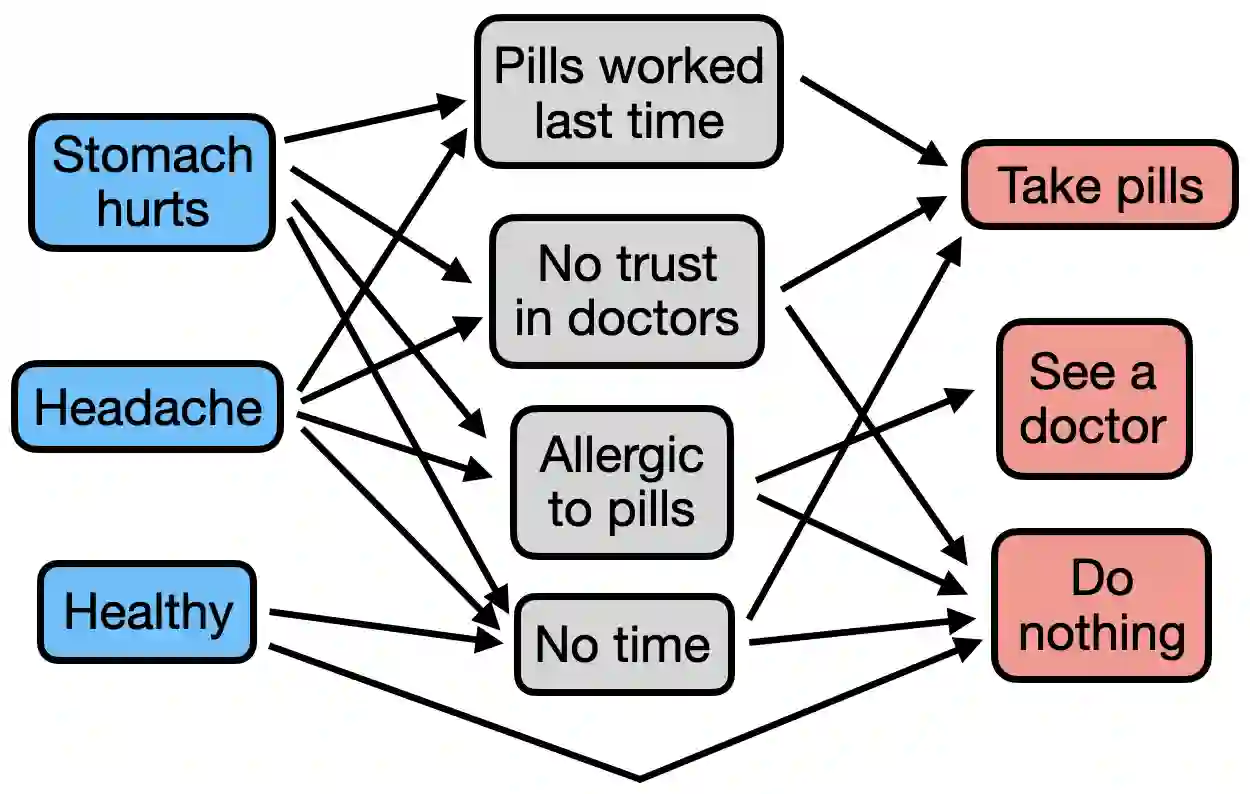
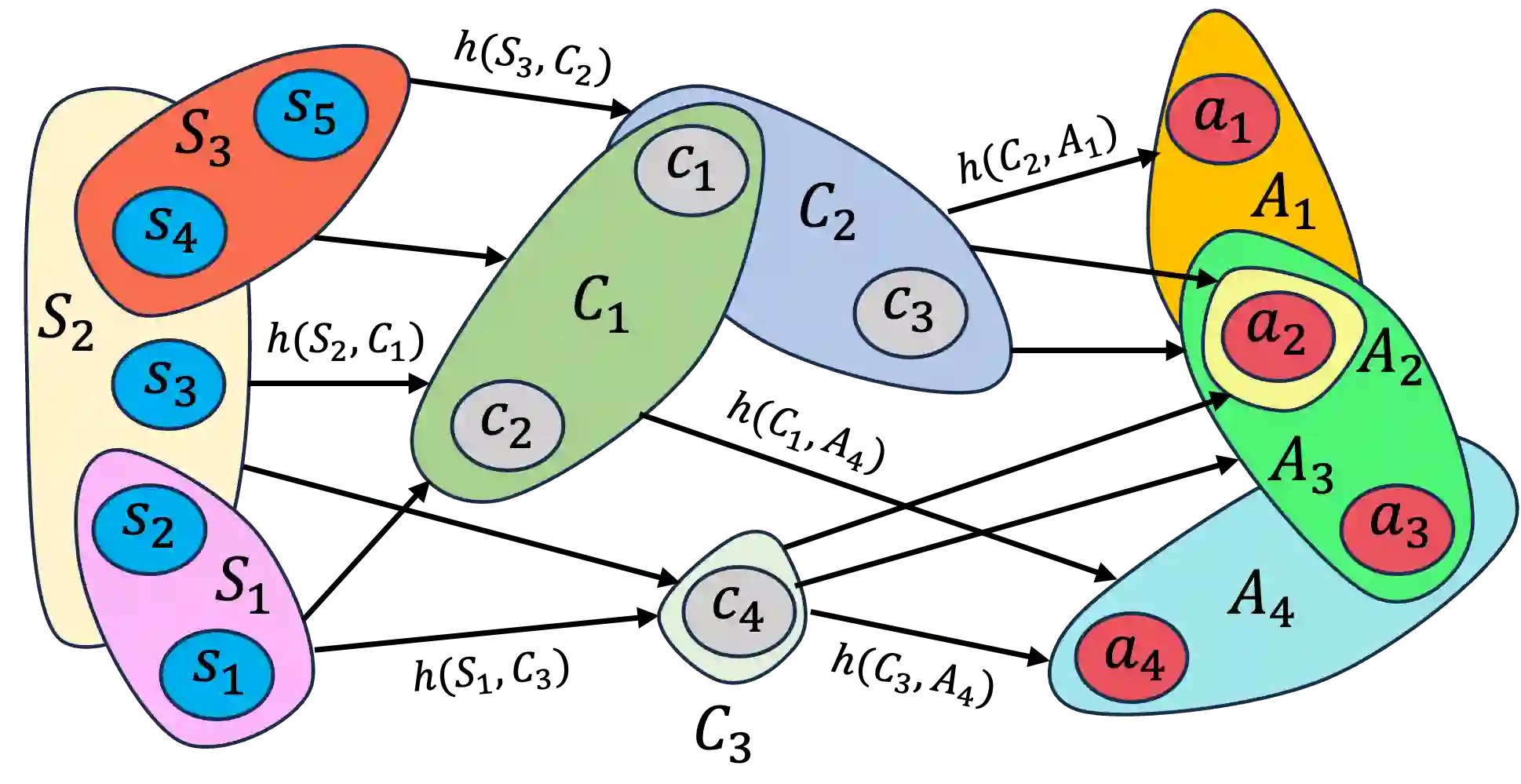
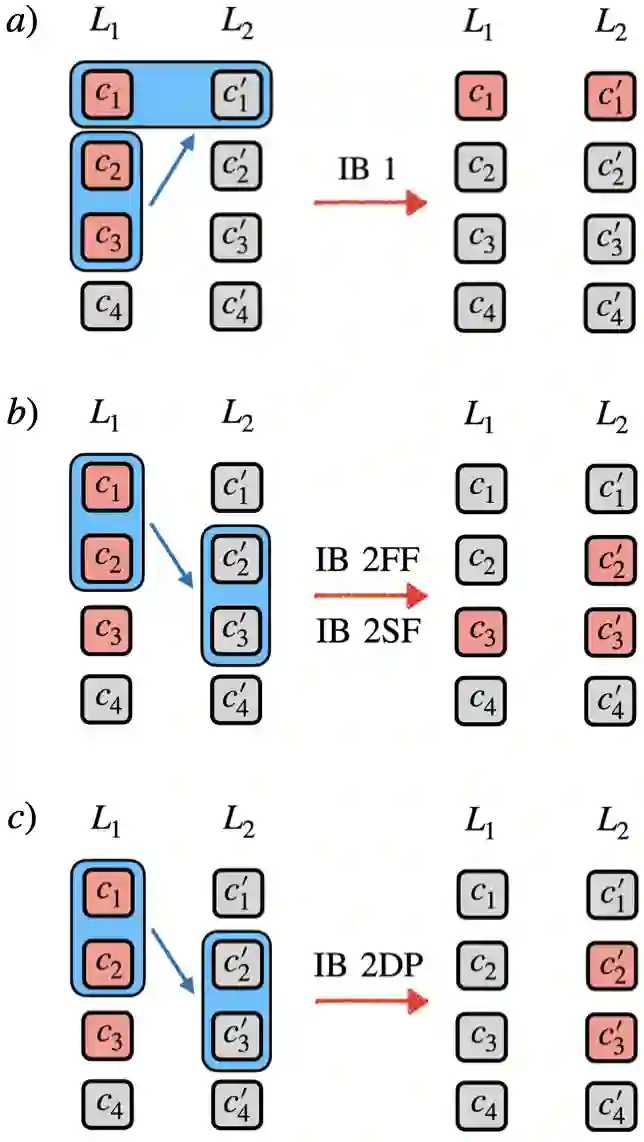
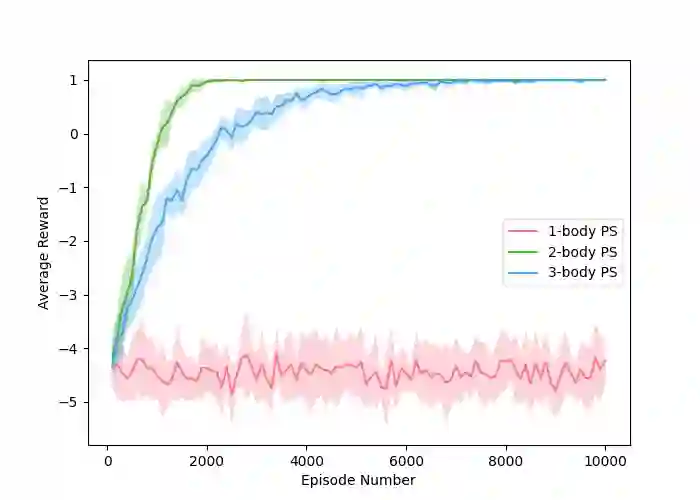
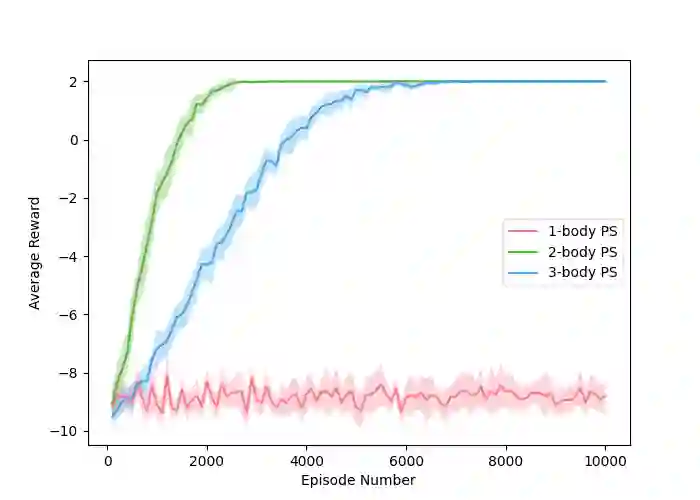
With the impressive progress of deep learning, applications relying on machine learning are increasingly being integrated into daily life. However, most deep learning models have an opaque, oracle-like nature making it difficult to interpret and understand their decisions. This problem led to the development of the field known as eXplainable Artificial Intelligence (XAI). One method in this field known as Projective Simulation (PS) models a chain-of-thought as a random walk of a particle on a graph with vertices that have concepts attached to them. While this description has various benefits, including the possibility of quantization, it cannot be naturally used to model thoughts that combine several concepts simultaneously. To overcome this limitation, we introduce Multi-Excitation Projective Simulation (mePS), a generalization that considers a chain-of-thought to be a random walk of several particles on a hypergraph. A definition for a dynamic hypergraph is put forward to describe the agent's training history along with applications to AI and hypergraph visualization. An inductive bias inspired by the remarkably successful few-body interaction models used in quantum many-body physics is formalized for our classical mePS framework and employed to tackle the exponential complexity associated with naive implementations of hypergraphs. We prove that our inductive bias reduces the complexity from exponential to polynomial, with the exponent representing the cutoff on how many particles can interact. We numerically apply our method to two toy environments and a more complex scenario modelling the diagnosis of a broken computer. These environments demonstrate the resource savings provided by an appropriate choice of inductive bias, as well as showcasing aspects of interpretability. A quantum model for mePS is also briefly outlined and some future directions for it are discussed.
翻译:随着深度学习的显著进展,依赖机器学习的技术日益融入日常生活。然而,大多数深度学习模型具有不透明的"神谕"特性,导致其决策过程难以解释与理解。这一问题催生了名为"可解释人工智能(XAI)"的研究领域。其中,投影模拟(PS)方法将思维链建模为粒子在带有概念标签的图结构顶点上的随机游走。尽管该描述具备量子化等优势,但无法自然建模同时整合多个概念的思维过程。为突破这一局限,我们提出多激发投影模拟(mePS)——一种将思维链泛化为多个粒子在超图上随机游走的框架。我们定义了动态超图来描述智能体的训练历史,并探讨了其在人工智能与超图可视化中的应用。受量子多体物理中极为成功的少体相互作用模型启发,我们为经典mePS框架形式化了一种归纳偏置,用以应对超图朴素实现带来的指数级复杂度。我们证明,该归纳偏置能将复杂度从指数级降低至多项式级,其中指数代表可相互作用粒子数的截断阈值。我们将该方法应用于两个玩具环境及一个模拟计算机故障诊断的复杂场景,验证了合理选择归纳偏置带来的资源节约与可解释性优势。此外,还简要概述了mePS的量子模型并讨论了其未来发展方向。




相关内容




 微信扫码咨询专知VIP会员