

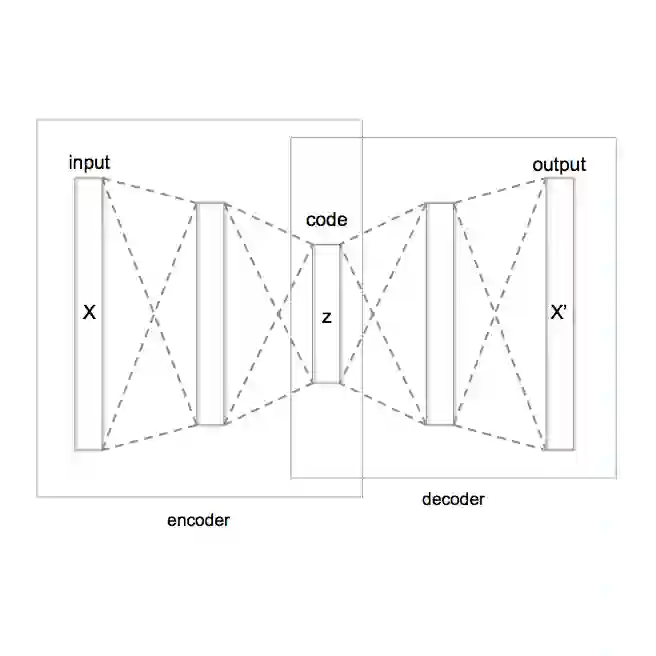
We present a dimension-reduced KRnet map approach (DR-KRnet) for high-dimensional inverse problems, which is based on an explicit construction of a map that pushes forward the prior measure to the posterior measure in the latent space. Our approach consists of two main components: data-driven VAE prior and density approximation of the posterior of the latent variable. In reality, it may not be trivial to initialize a prior distribution that is consistent with available prior data; in other words, the complex prior information is often beyond simple hand-crafted priors. We employ variational autoencoder (VAE) to approximate the underlying distribution of the prior dataset, which is achieved through a latent variable and a decoder. Using the decoder provided by the VAE prior, we reformulate the problem in a low-dimensional latent space. In particular, we seek an invertible transport map given by KRnet to approximate the posterior distribution of the latent variable. Moreover, an efficient physics-constrained surrogate model without any labeled data is constructed to reduce the computational cost of solving both forward and adjoint problems involved in likelihood computation. Numerical experiments are implemented to demonstrate the validity, accuracy, and efficiency of DR-KRnet.
翻译:本文提出了一种面向高维逆问题的降维KRnet映射方法(DR-KRnet),该方法基于显式构造一个将隐空间中的先验测度推送到后验测度的映射。我们的方法包含两个主要组成部分:数据驱动的VAE先验与隐变量后验的密度近似。实际应用中,初始化一个与现有先验数据一致的先验分布通常并非易事;换言之,复杂的先验信息往往超出简单的先验手工设计范畴。我们采用变分自编码器(VAE)来逼近先验数据集的潜在分布,这通过隐变量与解码器实现。利用VAE先验提供的解码器,我们在低维隐空间中重构问题。特别地,我们寻求由KRnet给出的可逆传输映射来逼近隐变量的后验分布。此外,我们构建了一个无需任何标注数据的高效物理约束代理模型,以降低似然计算中涉及的求解正问题与伴随问题的计算成本。数值实验验证了DR-KRnet的有效性、精确性与高效性。




相关内容

 微信扫码咨询专知VIP会员