

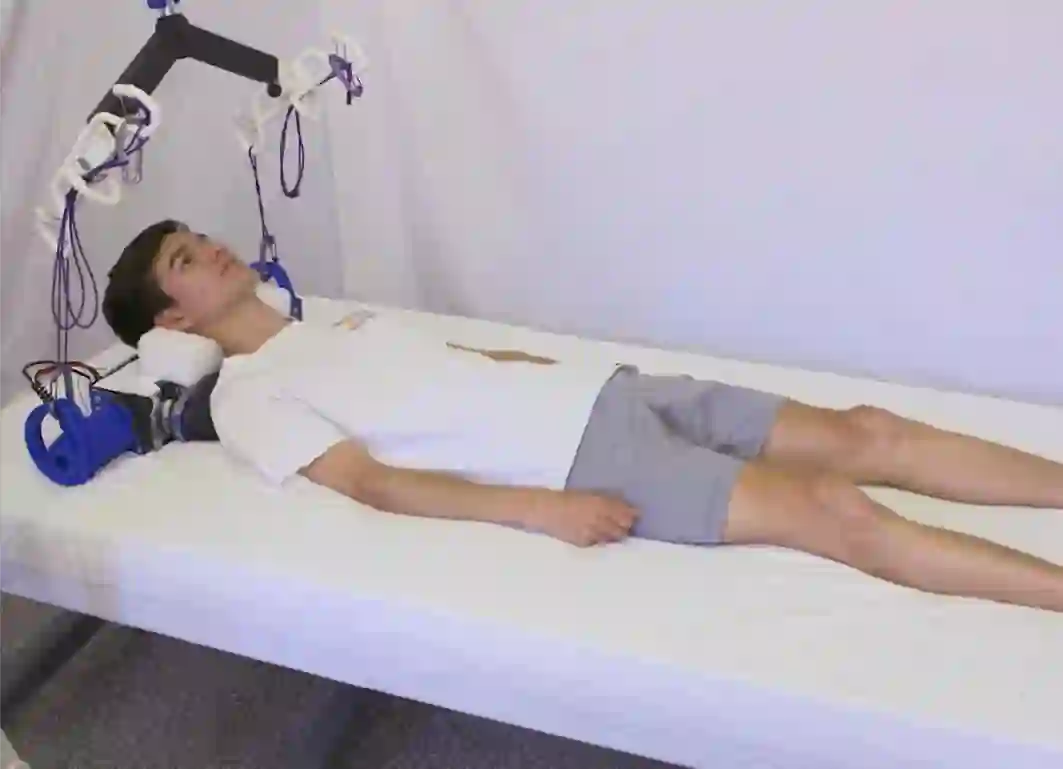
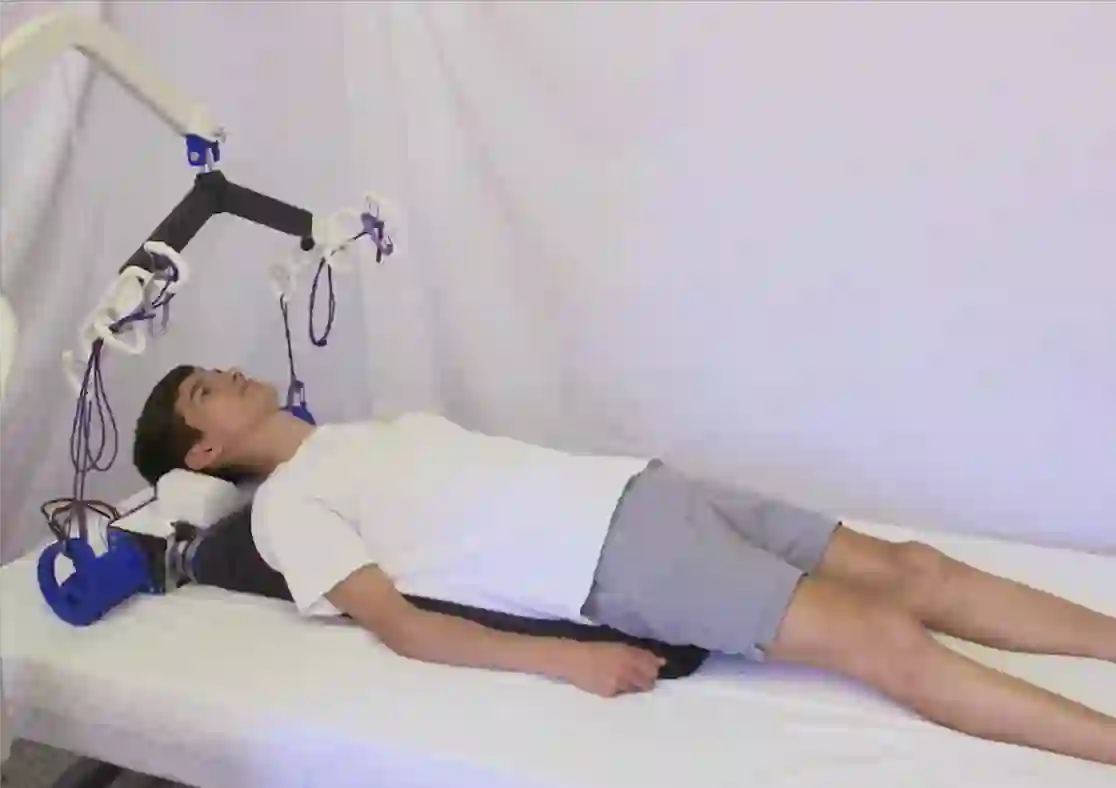
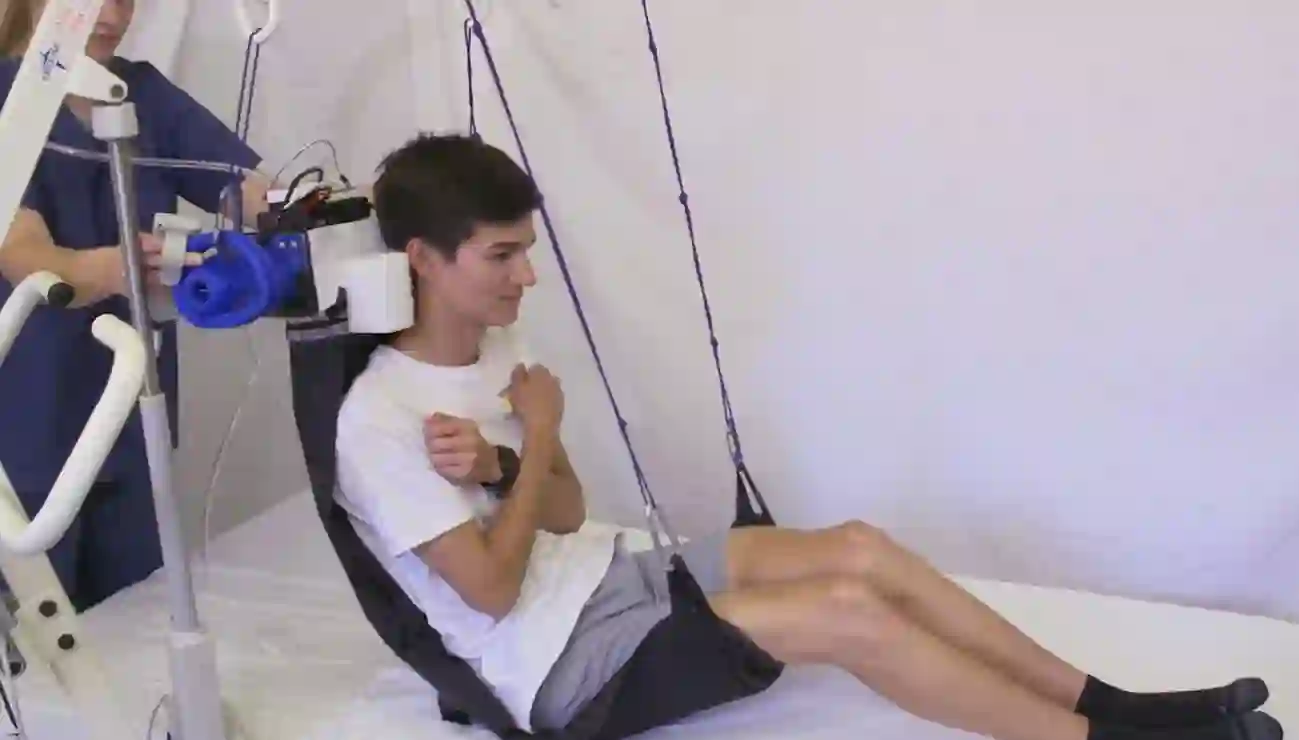
Pneumatic soft everting robotic structures have the potential to facilitate human transfer tasks due to their ability to grow underneath humans without sliding friction and their utility as a flexible sling when deflated. Tubular structures naturally yield circular cross-sections when inflated, whereas a robotic sling must be both thin enough to grow between them and their resting surface and wide enough to cradle the human. Recent works have achieved flattened cross-sections by including rigid components into the structure, but this reduces conformability to the human. We present a method of mechanically programming the cross-section of soft everting robotic structures using flexible strips that constrain radial expansion between points along the outer membrane. Our method enables simultaneously wide and thin profiles while maintaining the full multi-axis flexibility of traditional slings. We develop and validate a model relating the geometric design specifications to the fabrication parameters, and experimentally characterize their effects on growth rate. Finally, we prototype a soft growing robotic sling system and demonstrate its use for assisting a single caregiver in bed-to-chair patient transfer.
翻译:气动软体翻转机器人结构因其能在人体下方无滑动摩擦生长,并在放气后作为柔性吊带使用,在辅助人体转运任务中具有潜力。管状结构充气时自然形成圆形横截面,而机器人吊带需兼具足够薄以在人体与支撑面间生长,以及足够宽以承托人体的特性。近期研究通过引入刚性组件实现扁平化横截面,但这会降低对人体轮廓的适应性。本文提出一种利用柔性条带约束外膜特定点位径向扩张的机械编程方法,可调控软体翻转机器人结构的横截面形状。该方法在保持传统吊带全向柔性的同时,实现了宽薄兼备的截面形态。我们建立并验证了将几何设计参数与制造参数相关联的模型,并通过实验量化了其对生长速率的影响。最后,我们研制了软体生长机器人吊带系统原型,并演示了其在单人协助下完成床椅间患者转运的应用。






相关内容




 微信扫码咨询专知VIP会员