

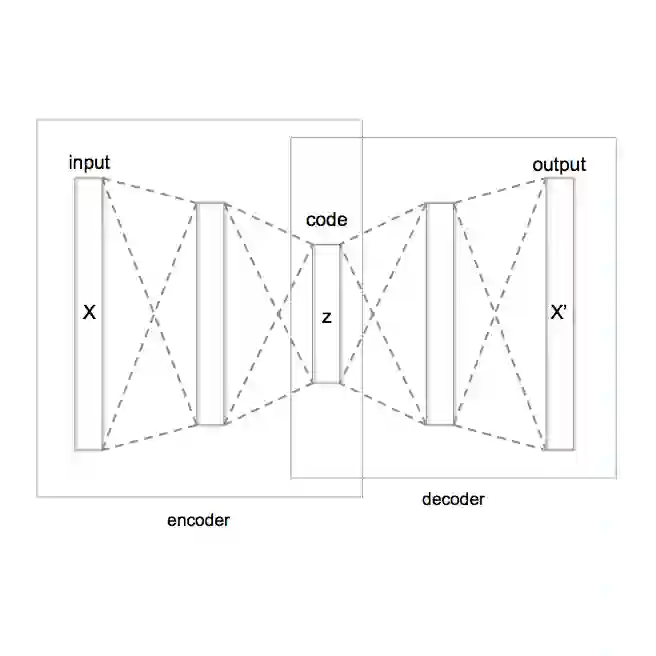
Independent component analysis is a core framework within blind source separation for recovering latent source signals from observed mixtures under statistical independence assumptions. In this work, we propose PDGMM-VAE, a source-oriented variational autoencoder in which each latent dimension, interpreted explicitly as an individual source component, is assigned its own adaptive Gaussian mixture model prior. The proposed framework imposes heterogeneous per-dimension prior constraints, enabling different latent dimensions to model different non-Gaussian source marginals within a unified probabilistic encoder-decoder architecture. The parameters of these source-specific GMM priors are not fixed in advance, but are jointly learned together with the encoder and decoder under the overall training objective. Beyond the model construction itself, we provide a theoretical analysis clarifying why adaptive per-dimension prior design is meaningful in this setting. In particular, we show that heterogeneous per-dimension priors reduce latent permutation symmetry relative to homogeneous shared priors, and we further show that the KL regularization induced by the adaptive GMM prior creates source-specific attraction behavior that helps explain source-wise specialization during training. We also clarify the relation of the proposed model to the standard VAE and provide a weak recovery statement in an idealized linear low-noise regime. Experimental results on both linear and nonlinear mixing problems show that PDGMM-VAE can recover latent source signals and fit source-specific non-Gaussian marginals effectively. These results suggest that adaptive per-dimension mixture-prior design provides a principled and promising direction for VAE-based ICA and source-oriented generative modeling.
翻译:独立成分分析是盲源分离中的核心框架,旨在统计独立性假设下从观测混合信号中恢复潜在源信号。本文提出PDGMM-VAE——一种面向源的变分自编码器,其中每个潜在维度被明确解释为独立的源分量,并为每个维度分配其自适应的高斯混合模型先验。该框架施加异质性逐维先验约束,使不同潜在维度能够在统一的概率编码器-解码器架构内对不同的非高斯源边缘分布建模。这些源特定GMM先验的参数并非预先固定,而是在整体训练目标下与编码器和解码器联合学习。除模型构建本身外,我们提供理论分析阐明自适应逐维先验设计在此场景中的意义。特别地,我们证明相较于同质共享先验,异质性逐维先验能降低潜在排列对称性,并进一步表明自适应GMM先验诱导的KL正则化产生源特定吸引行为,有助于解释训练期间源的专化现象。我们还阐明了所提模型与标准VAE的关系,并在理想化线性低噪声条件下给出弱恢复性证明。在线性和非线性混合问题上的实验结果表明,PDGMM-VAE能有效恢复潜在源信号并拟合源特定的非高斯边缘分布。这些结果提示,自适应逐维混合先验设计为基于VAE的ICA和面向源的生成建模提供了具有原则性和前景的研究方向。




相关内容



 微信扫码咨询专知VIP会员