

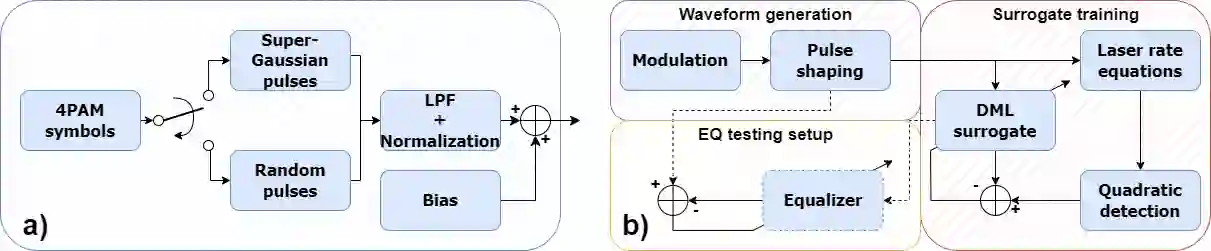
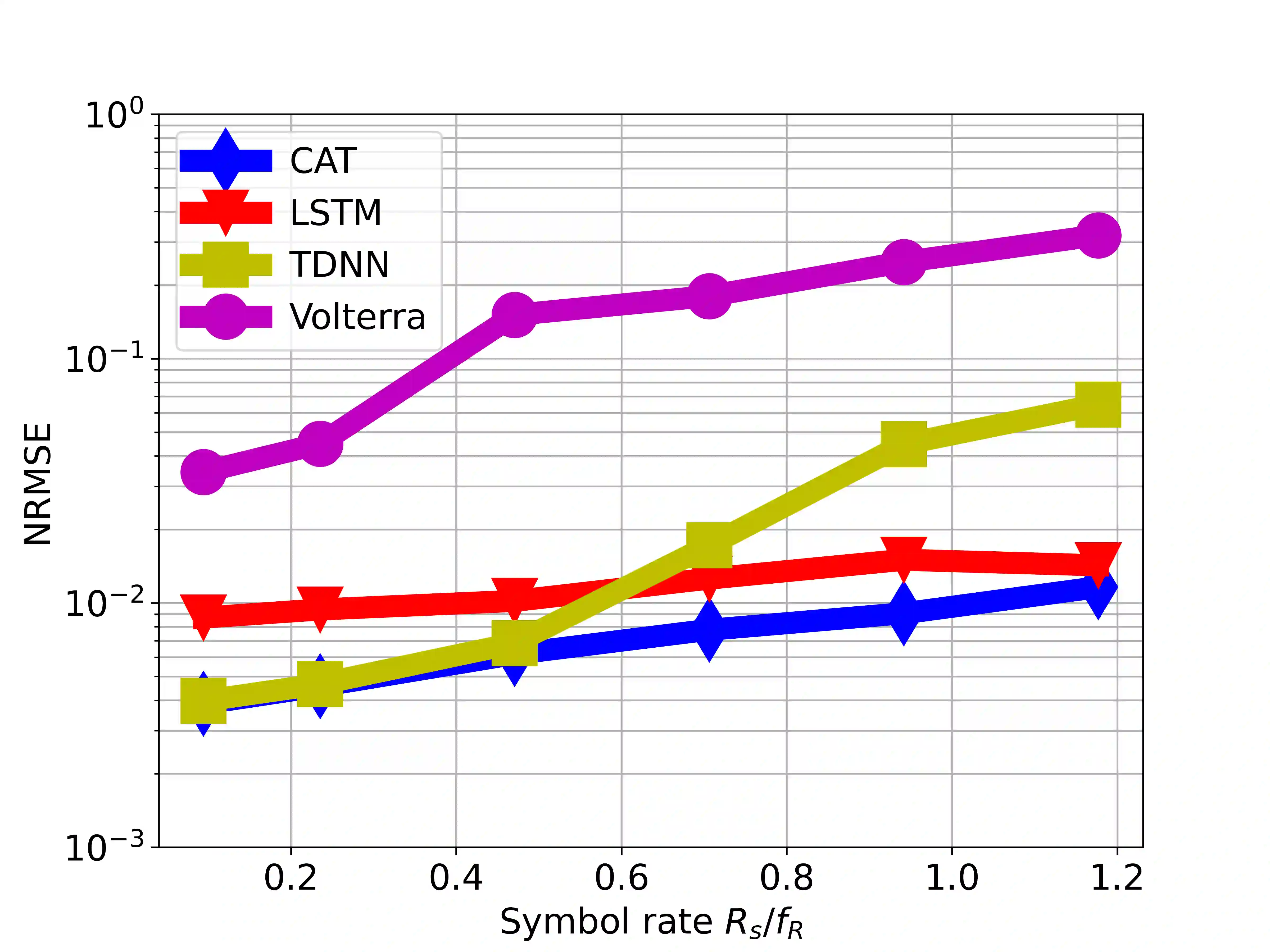
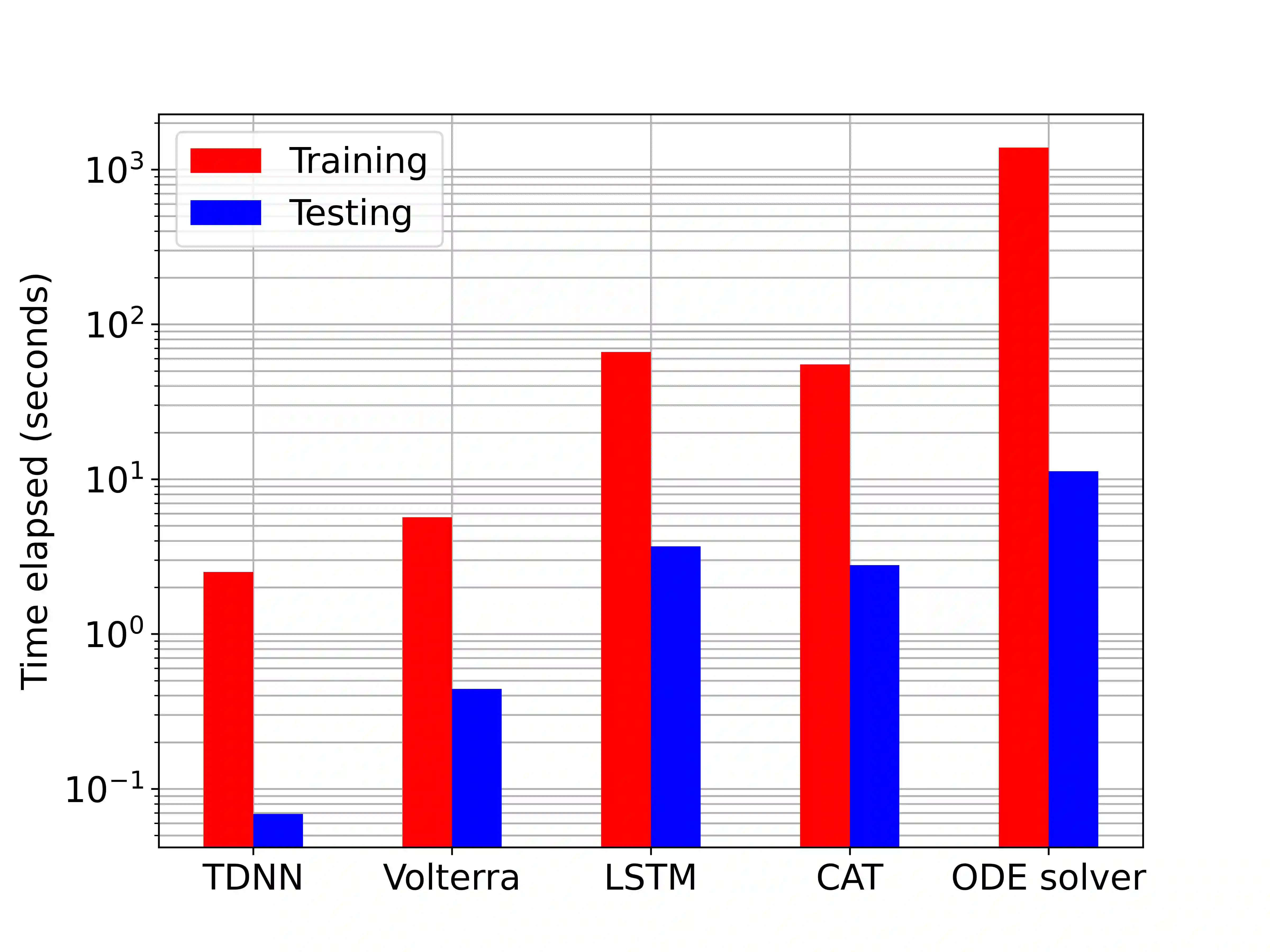
End-to-end learning has become a popular method for joint transmitter and receiver optimization in optical communication systems. Such approach may require a differentiable channel model, thus hindering the optimization of links based on directly modulated lasers (DMLs). This is due to the DML behavior in the large-signal regime, for which no analytical solution is available. In this paper, this problem is addressed by developing and comparing differentiable machine learning-based surrogate models. The models are quantitatively assessed in terms of root mean square error and training/testing time. Once the models are trained, the surrogates are then tested in a numerical equalization setup, resembling a practical end-to-end scenario. Based on the numerical investigation conducted, the convolutional attention transformer is shown to outperform the other models considered.
翻译:端到端学习已成为光通信系统中联合发射机与接收机优化的流行方法。此类方法需要可微分的信道模型,因此阻碍了基于直接调制激光器(DML)的链路优化。这是由于DML在大信号状态下的行为缺乏解析解。本文通过开发并比较基于可微机器学习的代理模型来解决该问题。这些模型均以均方根误差及训练/测试时间进行定量评估。模型训练完成后,代理模型将在模拟实际端到端场景的数值均衡设置中进行测试。基于开展的数值研究,卷积注意力变换器优于其他考虑的模型。






相关内容



 微信扫码咨询专知VIP会员