

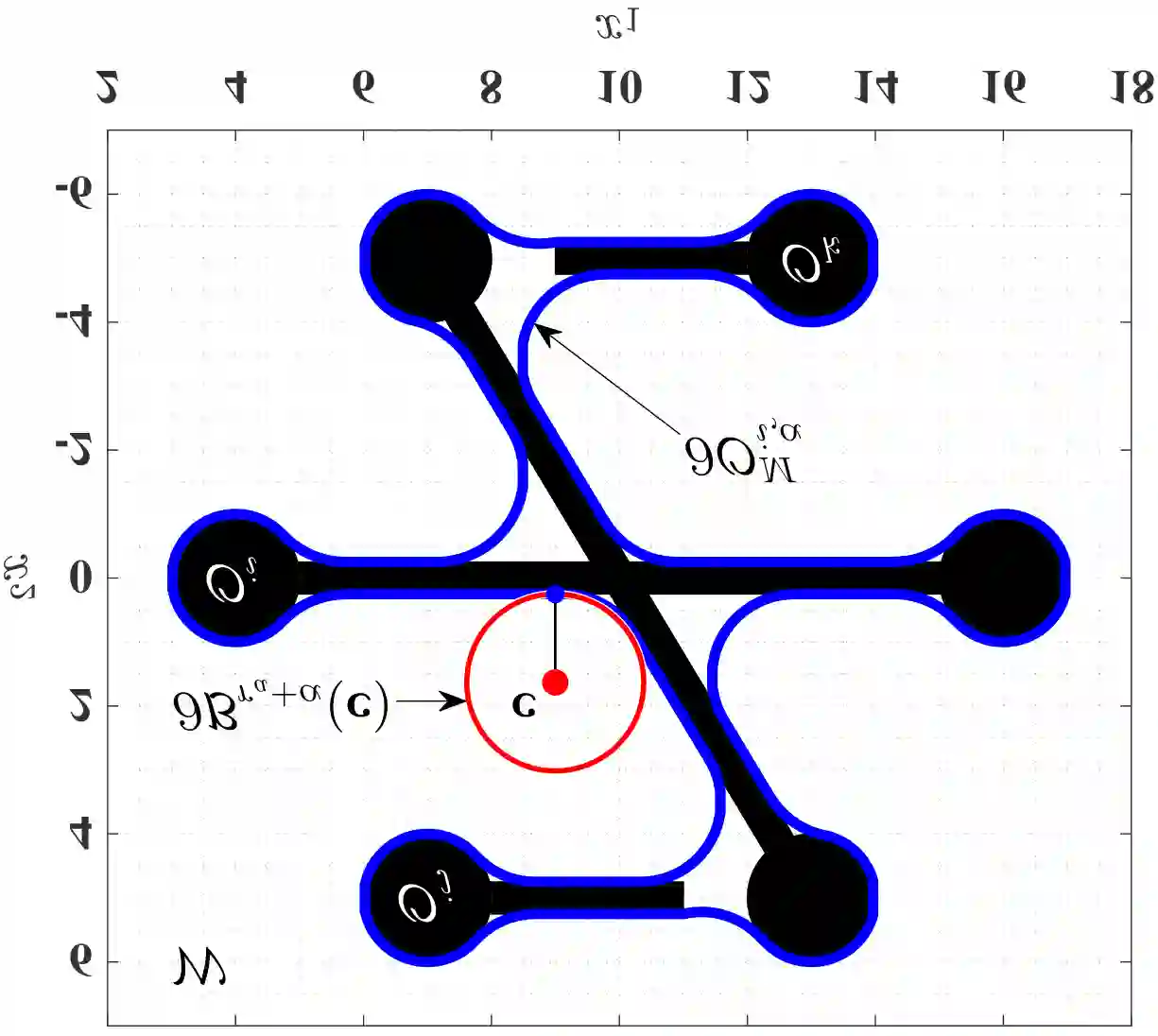
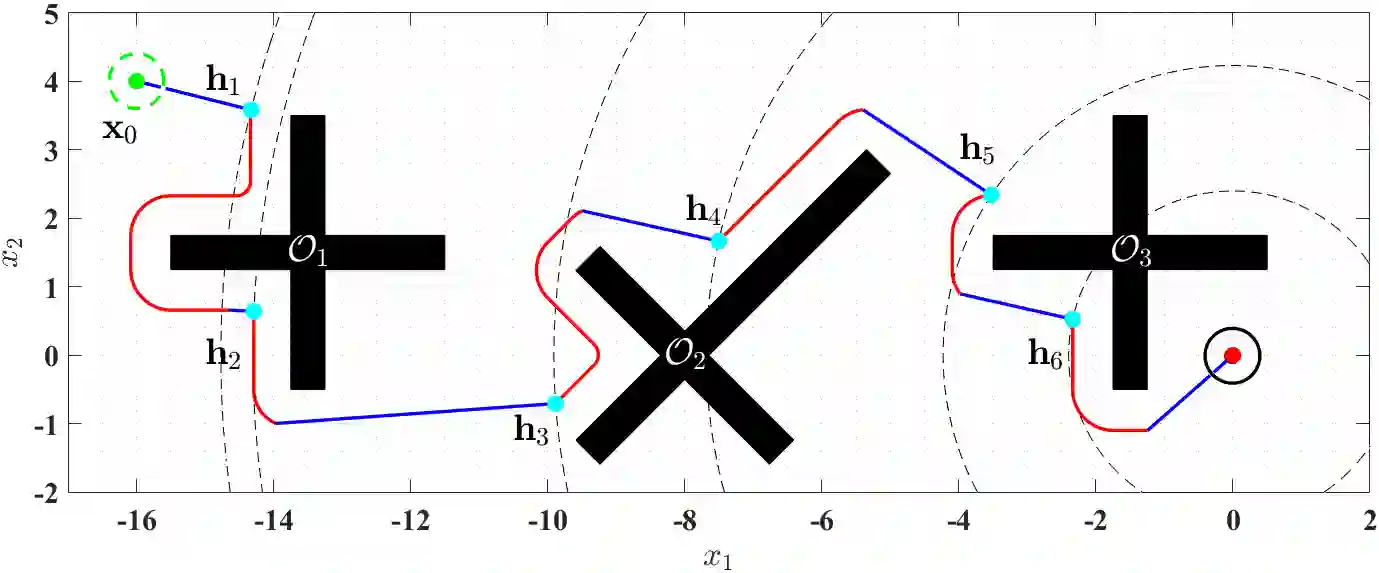
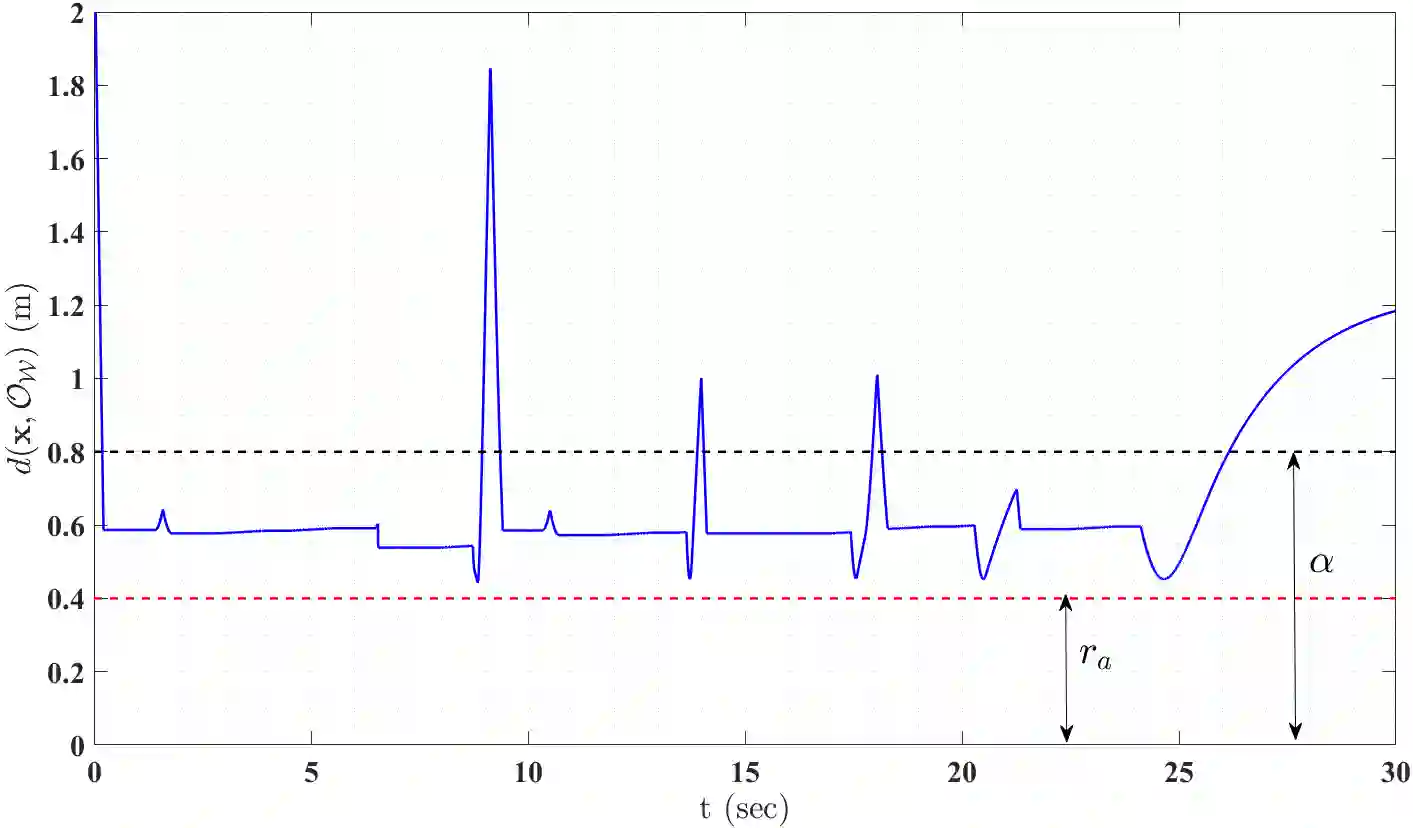
We develop an autonomous navigation algorithm for a robot operating in two-dimensional environments containing obstacles, with arbitrary non-convex shapes, which can be in close proximity with each other, as long as there exists at least one safe path connecting the initial and the target location. The proposed navigation approach relies on a hybrid feedback guaranteeing asymptotic stability of target location while ensuring the forward invariance of the obstacle-free workspace. The proposed hybrid feedback controller guarantees Zeno-free switching between the move-to-target mode and the obstacle-avoidance mode based on the proximity of the robot with respect to the obstacle-occupied workspace. An instrumental transformation that reshapes (virtually) the non-convex obstacles, in a non-conservative manner, is introduced to facilitate the design of the obstacle-avoidance strategy. Finally, we provide an algorithmic procedure for the sensor-based implementation of the proposed hybrid controller and validate its effectiveness via some numerical simulations.
翻译:我们针对在二维环境中运行的机器人开发了一种自主导航算法,该环境包含任意非凸形状的障碍物,且当存在至少一条连接初始位置与目标位置的安全路径时,这些障碍物可彼此紧密邻近。所提出的导航方法依赖于一种混合反馈机制,该机制在确保无障碍工作空间正向不变性的同时,保证目标位置的渐近稳定性。所提出的混合反馈控制器基于机器人相对于障碍物占据空间的邻近性,确保在"向目标移动"模式与"障碍物规避"模式之间实现无Zeno现象的切换。引入了一种非保守的变换方法,以虚拟方式重塑非凸障碍物,从而便于障碍物规避策略的设计。最后,我们给出了该混合控制器基于传感器的实现算法流程,并通过数值仿真验证了其有效性。






相关内容




 微信扫码咨询专知VIP会员