

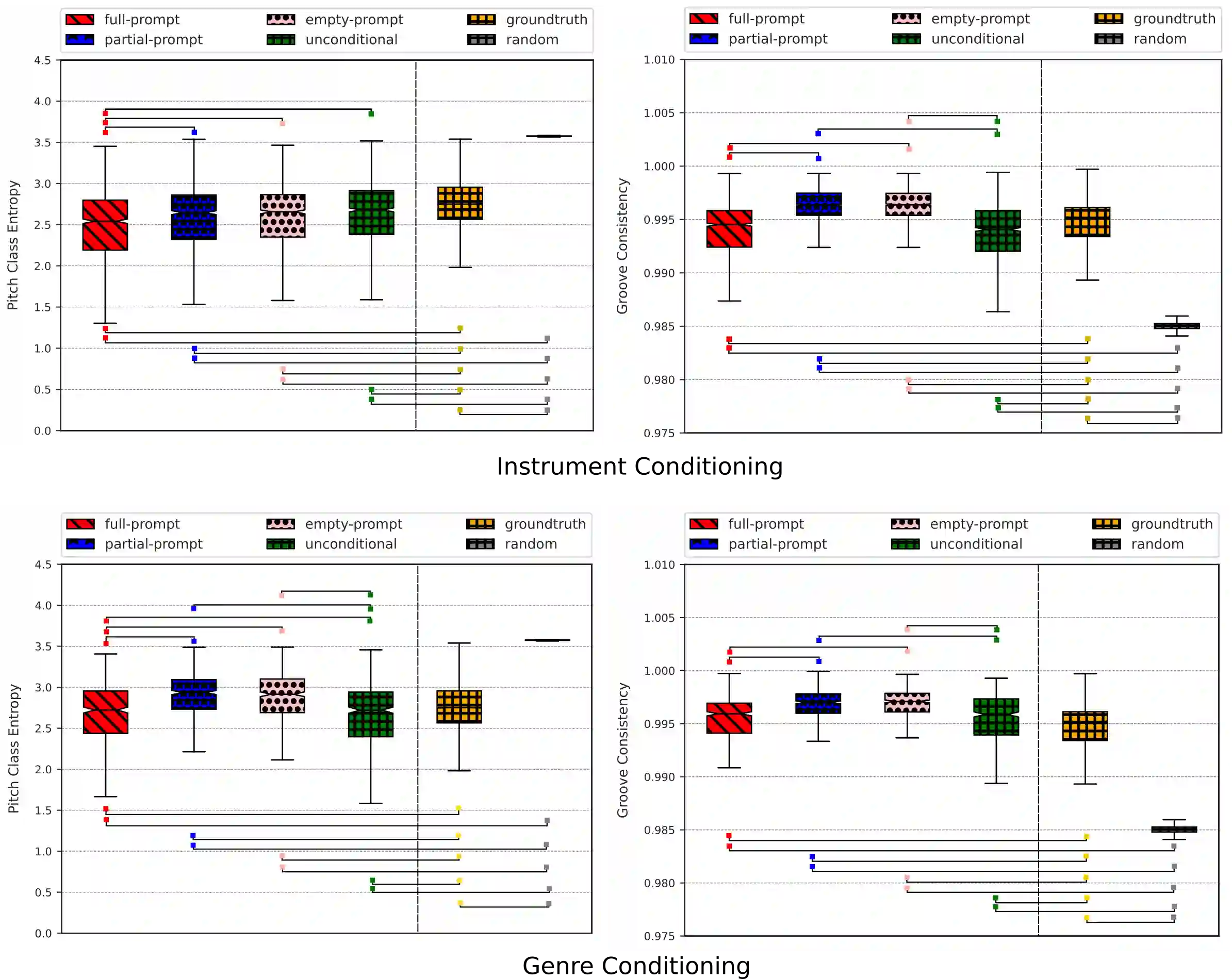
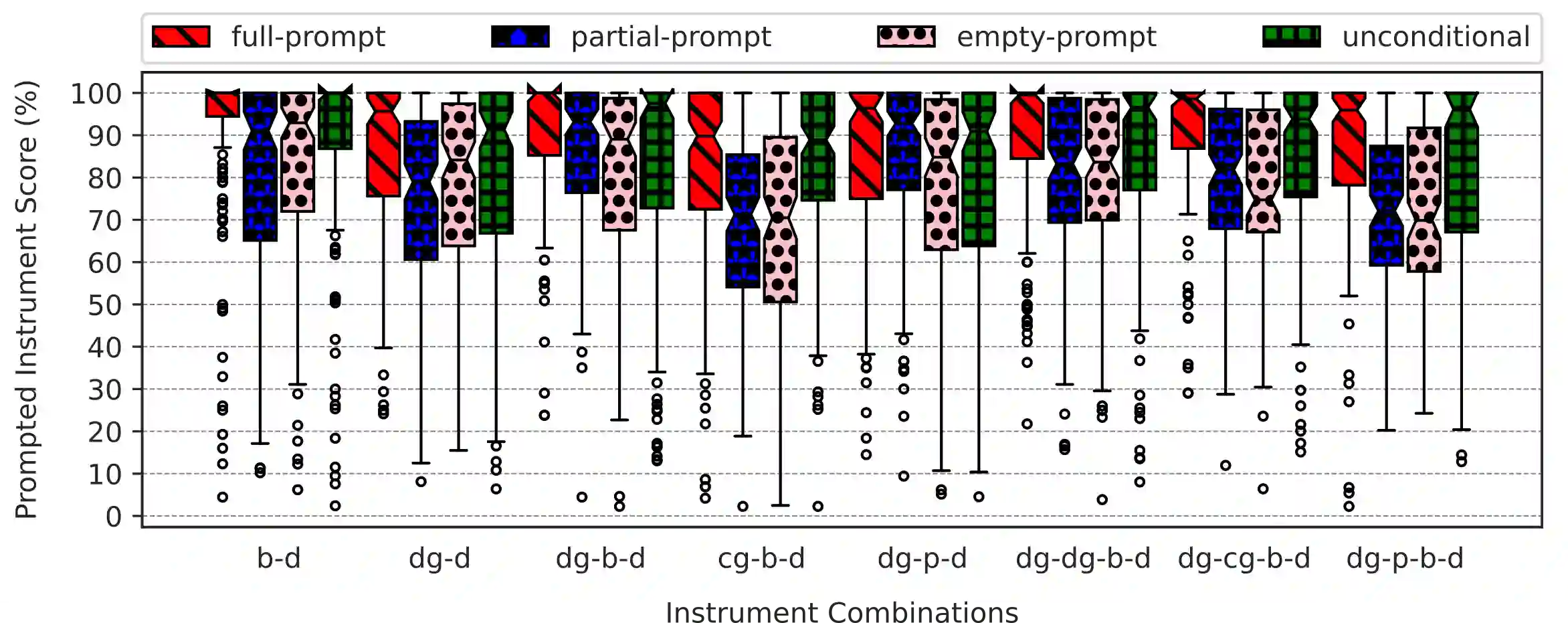
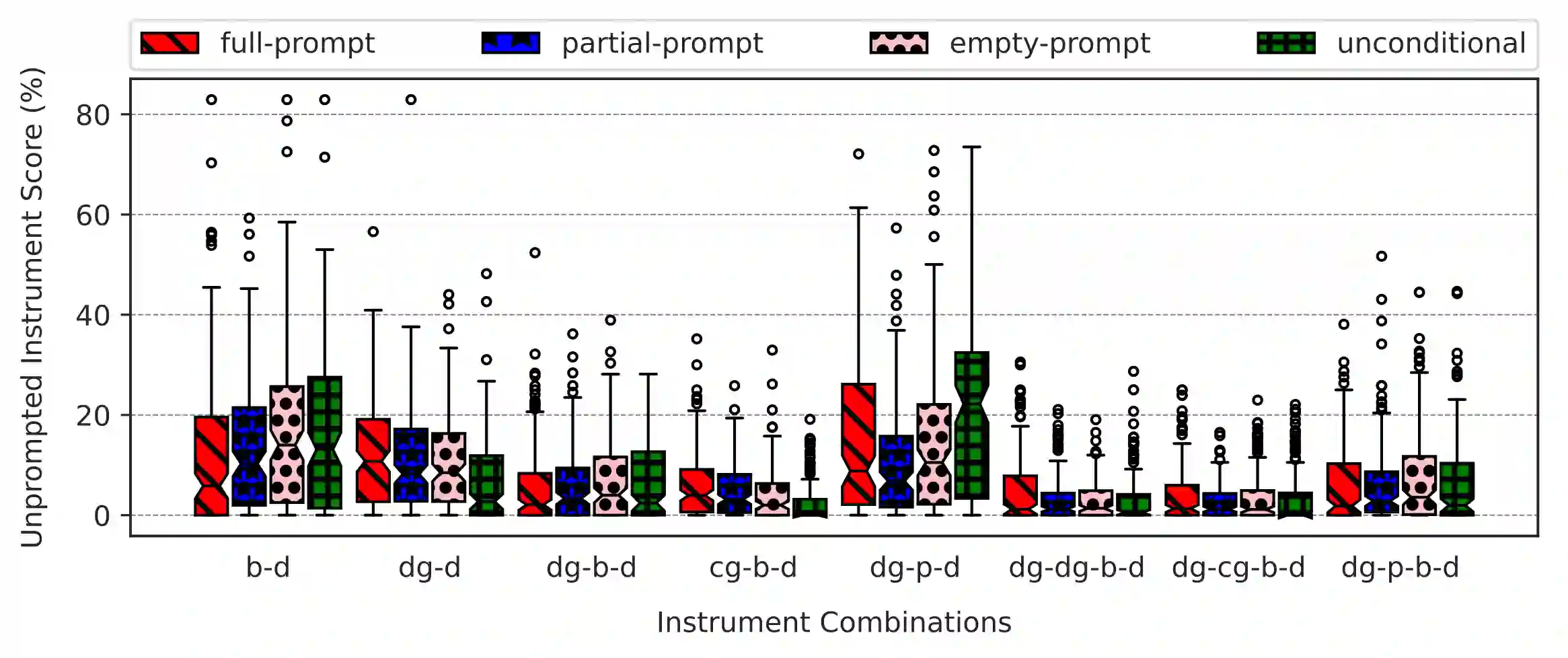
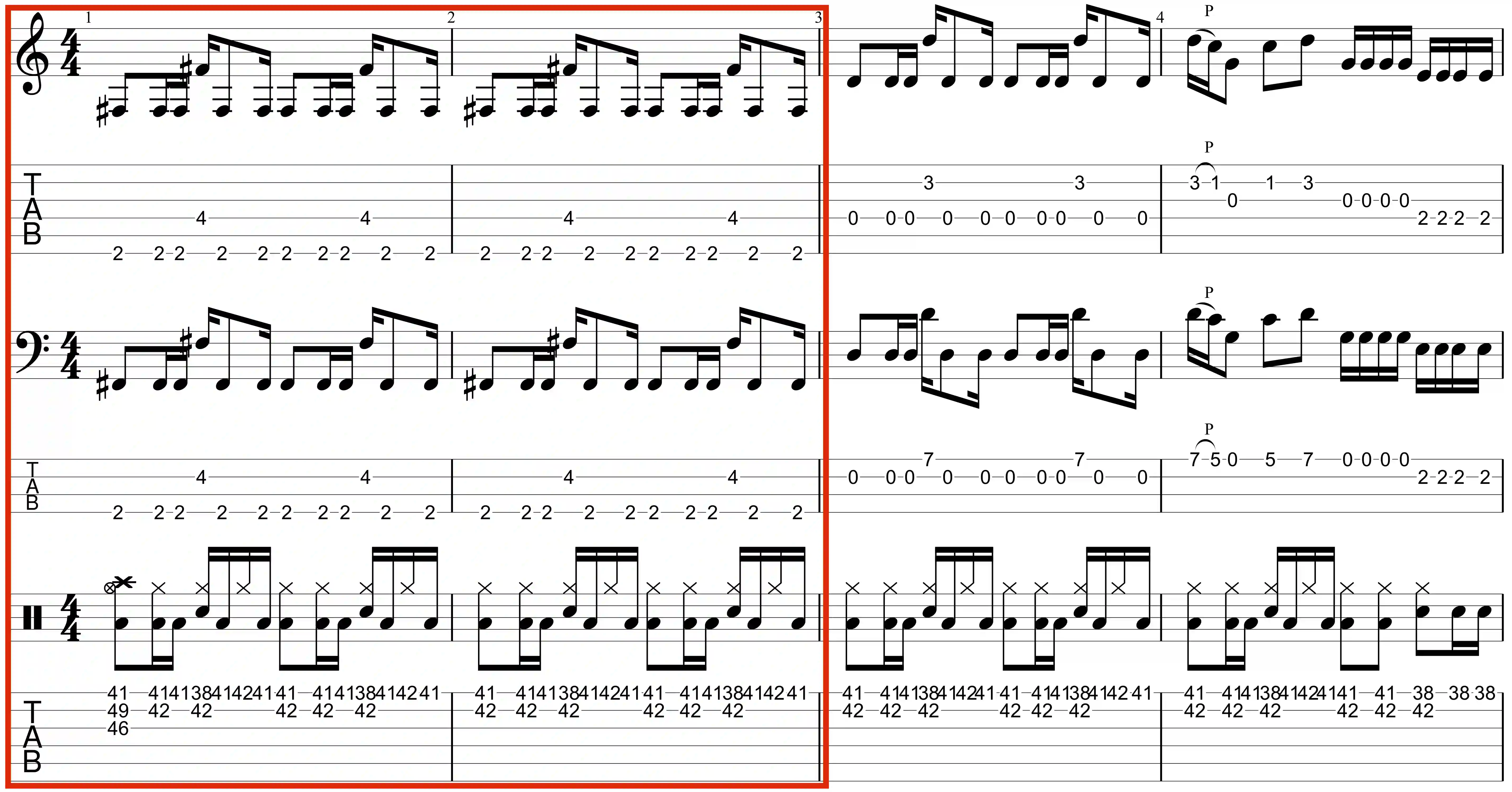
Recently, symbolic music generation with deep learning techniques has witnessed steady improvements. Most works on this topic focus on MIDI representations, but less attention has been paid to symbolic music generation using guitar tablatures (tabs) which can be used to encode multiple instruments. Tabs include information on expressive techniques and fingerings for fretted string instruments in addition to rhythm and pitch. In this work, we use the DadaGP dataset for guitar tab music generation, a corpus of over 26k songs in GuitarPro and token formats. We introduce methods to condition a Transformer-XL deep learning model to generate guitar tabs (GTR-CTRL) based on desired instrumentation (inst-CTRL) and genre (genre-CTRL). Special control tokens are appended at the beginning of each song in the training corpus. We assess the performance of the model with and without conditioning. We propose instrument presence metrics to assess the inst-CTRL model's response to a given instrumentation prompt. We trained a BERT model for downstream genre classification and used it to assess the results obtained with the genre-CTRL model. Statistical analyses evidence significant differences between the conditioned and unconditioned models. Overall, results indicate that the GTR-CTRL methods provide more flexibility and control for guitar-focused symbolic music generation than an unconditioned model.
翻译:近年来,利用深度学习技术的符号音乐生成取得了稳步进展。该领域多数研究聚焦于MIDI表示,但较少关注可编码多乐器的吉他指法谱(tabs)在符号音乐生成中的应用。指法谱除了包含节奏和音高信息外,还涵盖了有品弦乐器演奏技法与指法的详细信息。本研究采用DadaGP数据集进行吉他指法谱音乐生成——该语料库包含超过26,000首歌曲,以GuitarPro格式和token表示形式存储。我们提出了一种针对Transformer-XL深度学习模型的条件控制方法(GTR-CTRL),使其能够基于目标乐器配置(inst-CTRL)和音乐风格(genre-CTRL)生成吉他指法谱。具体通过在训练语料库每首歌曲开头附加特殊控制token实现。我们评估了有无条件控制下模型的性能,并提出乐器存在度指标以衡量inst-CTRL模型对给定乐器提示的响应能力。同时训练了用于下游风格分类的BERT模型,并借此评估genre-CTRL模型的生成结果。统计分析表明,条件控制模型与非条件控制模型之间存在显著差异。总体而言,GTR-CTRL方法相比非条件控制模型,为面向吉他的符号音乐生成提供了更高的灵活性与可控性。




相关内容




 微信扫码咨询专知VIP会员