

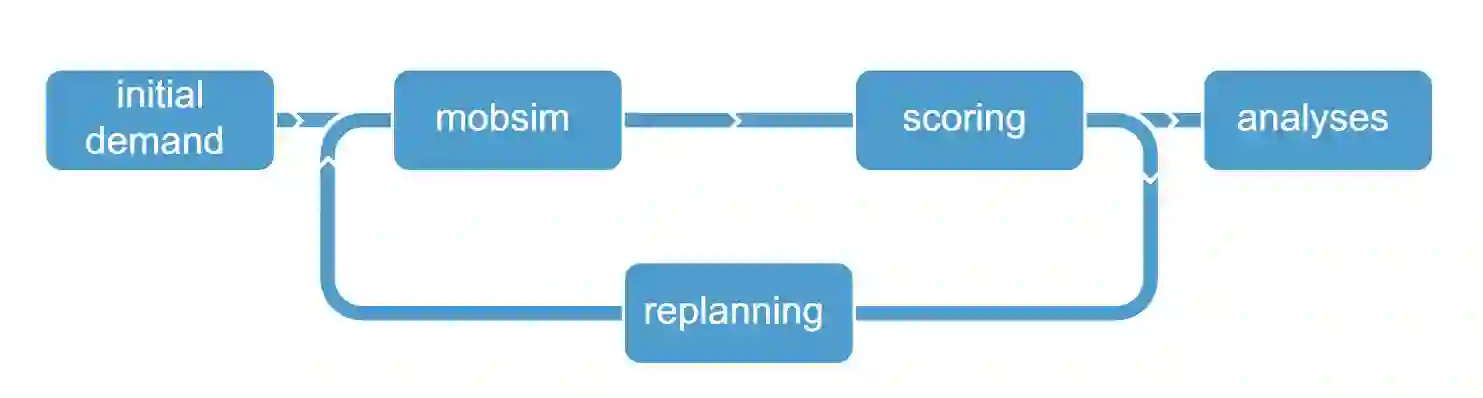
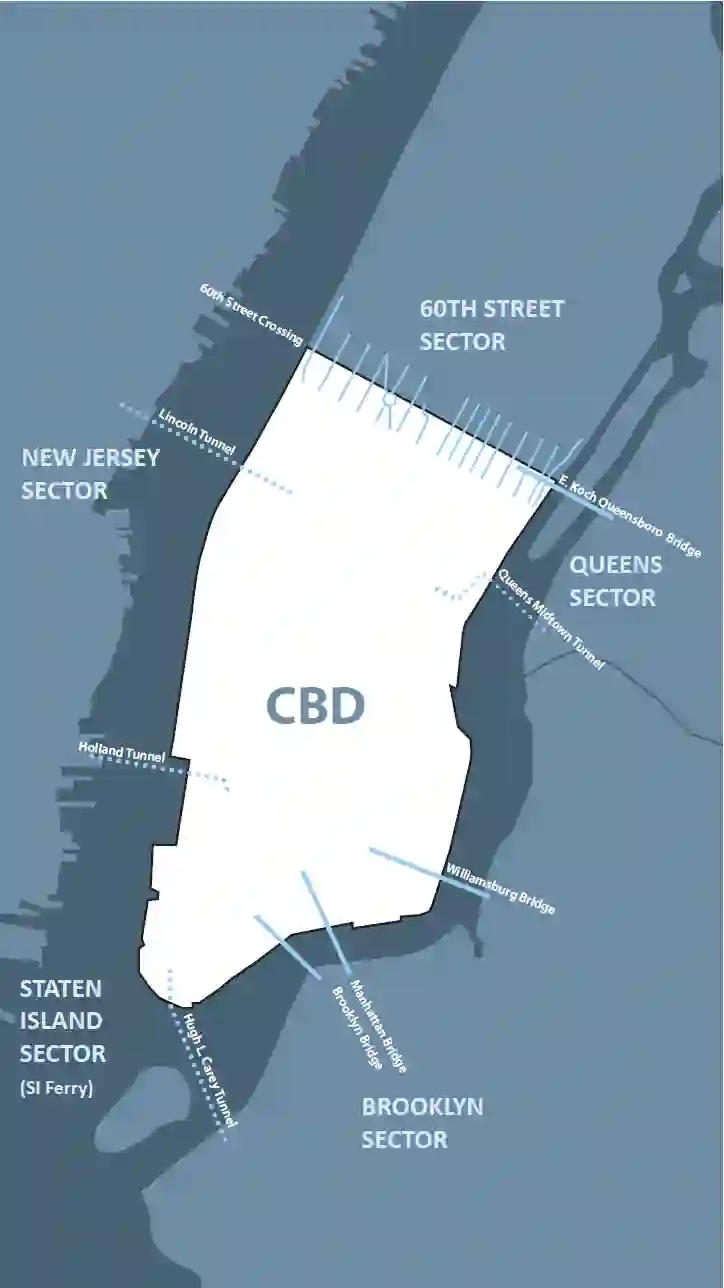
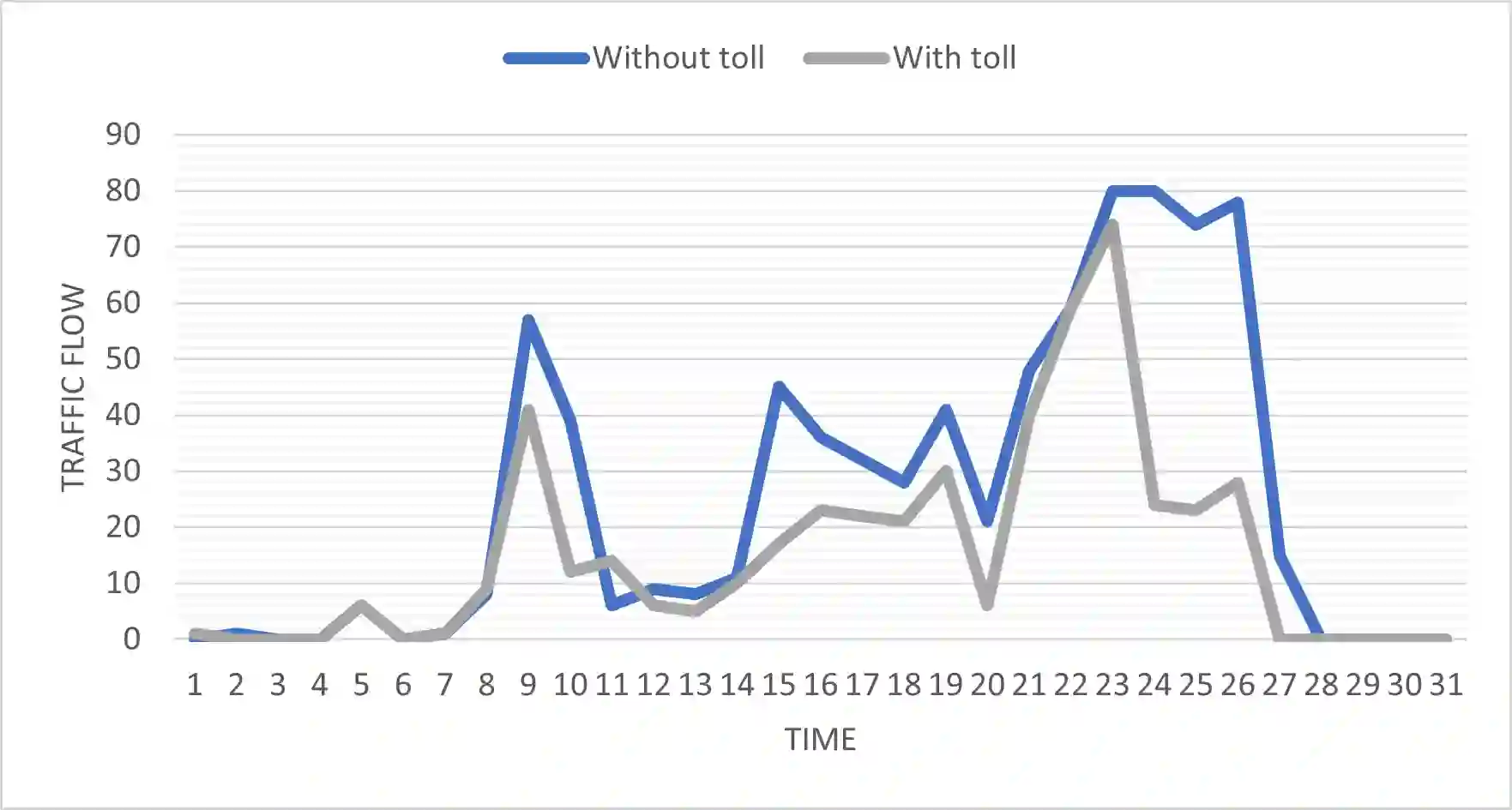
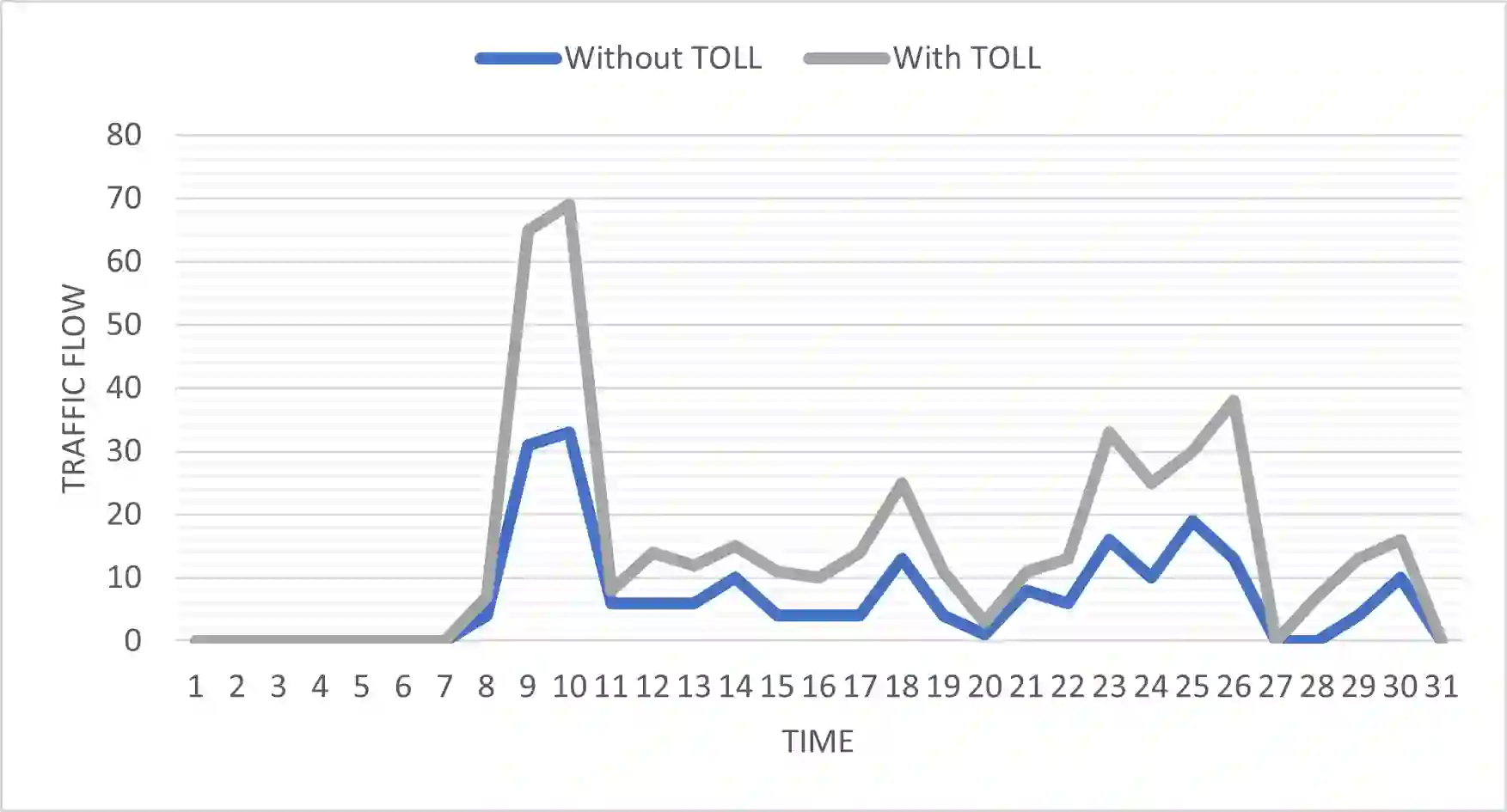
Congestion tollings have been widely developed and adopted as an effective tool to mitigate urban traffic congestion and enhance transportation system sustainability. Nevertheless, these tolling schemes are often tailored on a city-by-city or even area-by-area basis, and the cost of conducting field experiments often makes the design and evaluation process challenging. In this work, we leverage MATSim, a simulation platform that provides microscopic behaviors at the agent level, to evaluate performance on tolling schemes. Specifically, we conduct a case study of the Manhattan Central Business District (CBD) in New York City (NYC) using a fine-granularity traffic network model in the large-scale agent behavior setting. The flexibility of MATSim enables the implementation of a customized tolling policy proposed yet not deployed by the NYC agency while providing detailed interpretations. The quantitative and qualitative results indicate that the tested tolling program can regulate the personal vehicle volume in the CBD area and encourage the usage of public transportation, which proves to be a practical move towards sustainable transportation systems. More importantly, our work demonstrates that agent-based simulation helps better understand the travel pattern change subject to tollings in dense and complex urban environments, and it has the potential to facilitate efficient decision-making for the devotion to sustainable traffic management.
翻译:拥堵收费作为一种缓解城市交通拥堵、提升交通系统可持续性的有效工具,已被广泛开发和应用。然而,这些收费方案往往需针对不同城市甚至不同区域进行个性化设计,而现场试验的高昂成本常使设计与评估过程面临挑战。本研究利用MATSim这一提供智能体层面微观行为的仿真平台,评估收费方案的性能。具体而言,我们以纽约市曼哈顿中央商务区为案例,在大规模智能体行为场景下,采用精细化交通网络模型开展研究。MATSim的灵活性使我们能够实现纽约市交通部门提出但尚未部署的定制化收费政策,并提供详细解读。定量与定性结果表明,该测试收费方案可有效调控中央商务区私家车流量,并促进公共交通使用,这被证明是迈向可持续交通系统的务实举措。更重要的是,我们的工作表明,基于智能体的仿真有助于更深入地理解密集复杂城市环境中收费政策对出行模式的影响,并有望为可持续交通管理的科学决策提供支持。




相关内容


 微信扫码咨询专知VIP会员