

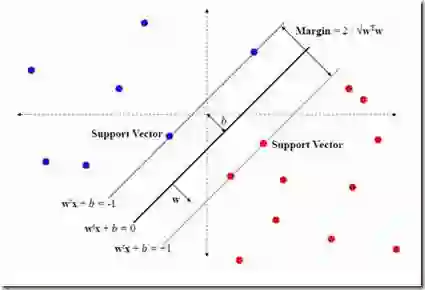
Major depressive disorder (MDD) is a complex psychiatric disorder that affects the lives of hundreds of millions of individuals around the globe. Even today, researchers debate if morphological alterations in the brain are linked to MDD, likely due to the heterogeneity of this disorder. The application of deep learning tools to neuroimaging data, capable of capturing complex non-linear patterns, has the potential to provide diagnostic and predictive biomarkers for MDD. However, previous attempts to demarcate MDD patients and healthy controls (HC) based on segmented cortical features via linear machine learning approaches have reported low accuracies. Here, we used globally representative data from the ENIGMA-MDD working group containing 7,012 participants from 30 sites (N=2,772 MDD and N=4,240 HC), which allows a comprehensive analysis with generalizable results. Based on the hypothesis that integration of vertex-wise cortical features can improve classification performance, we evaluated the classification of a DenseNet and a Support Vector Machine (SVM), with the expectation that the former would outperform the latter. We found that both classifiers exhibited close to chance performance (balanced accuracy DenseNet: 51%; SVM: 53%), when estimated on unseen sites. Slightly higher classification performance (balanced accuracy DenseNet: 58%; SVM: 55%) was found when the cross-validation folds contained subjects from all sites, indicating site effect. In conclusion, the integration of vertex-wise morphometric features and the use of the non-linear classifier did not lead to the differentiability between MDD and HC. Our results support the notion that MDD classification on this combination of such features and classifiers is unfeasible. Perhaps more sophisticated integration of multimodal information may lead to a higher performance in this diagnostic task.
翻译:重度抑郁症(MDD)是一种复杂的精神疾病,全球数亿人的生活受其影响。直至今日,研究者仍在探讨大脑形态学改变是否与MDD相关,这很可能源于该疾病的异质性。深度学习工具能够捕捉复杂的非线性模式,将其应用于神经影像数据,有望为MDD提供诊断性和预测性生物标志物。然而,先前基于线性机器学习方法对分割皮层特征进行MDD患者与健康对照(HC)区分的尝试均报告了较低的准确率。本研究使用了来自ENIGMA-MDD工作组的全球代表性数据,涵盖30个中心的7,012名参与者(N=2,772 MDD,N=4,240 HC),该数据集支持具有可推广结果的综合分析。基于“顶点级皮层特征整合可提升分类性能”的假设,我们评估了DenseNet与支持向量机(SVM)的分类表现,预期前者将优于后者。结果发现,在未见过的中心进行估计时,两种分类器均表现出接近随机水平的性能(DenseNet平衡准确率:51%;SVM平衡准确率:53%)。当交叉验证折包含所有中心的受试者时,分类性能略有提升(DenseNet平衡准确率:58%;SVM平衡准确率:55%),这表明存在中心效应。综上所述,顶点级形态测量特征的整合与非线性分类器的使用并未实现MDD与HC的有效区分。我们的结果支持以下观点:基于此类特征与分类器组合的MDD分类尚不可行。或许更复杂的多模态信息整合方法可能在此诊断任务中实现更高的性能。




相关内容


 微信扫码咨询专知VIP会员