

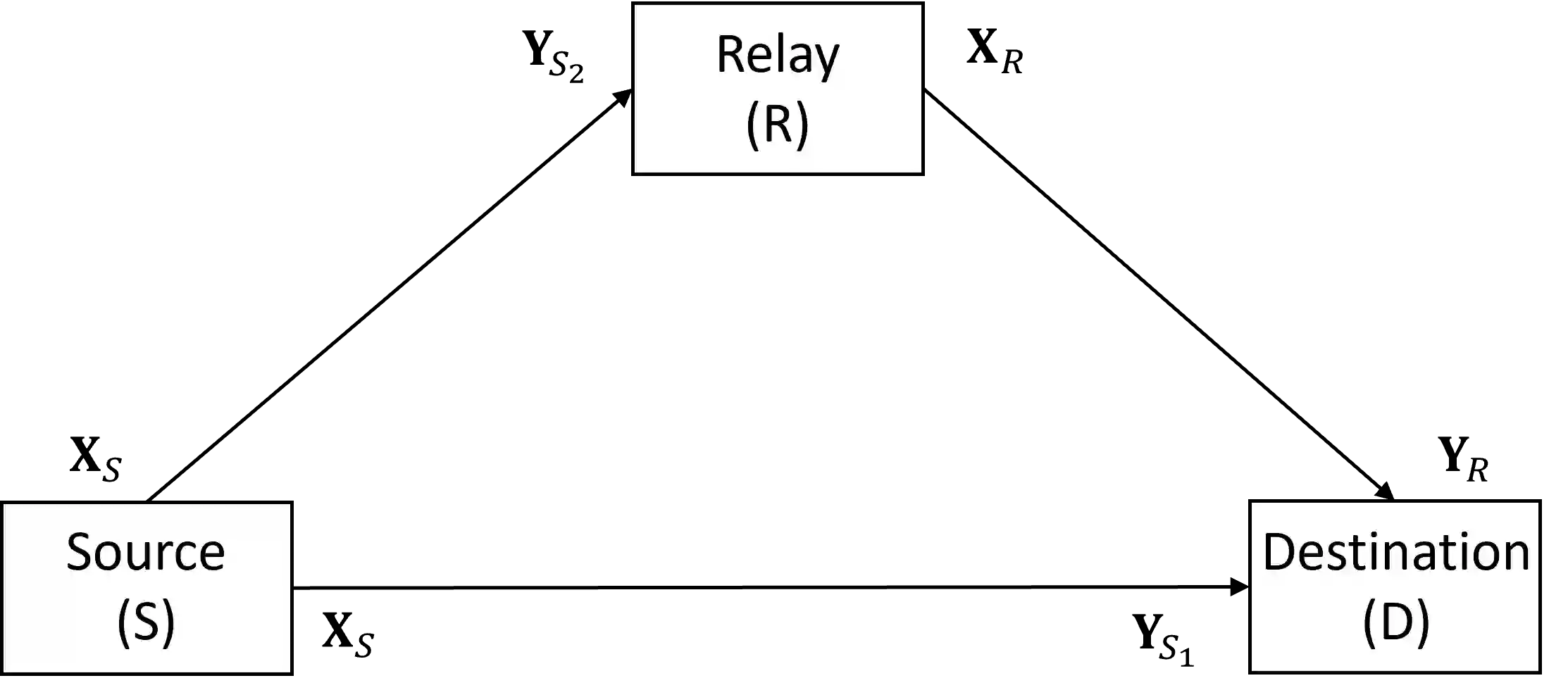
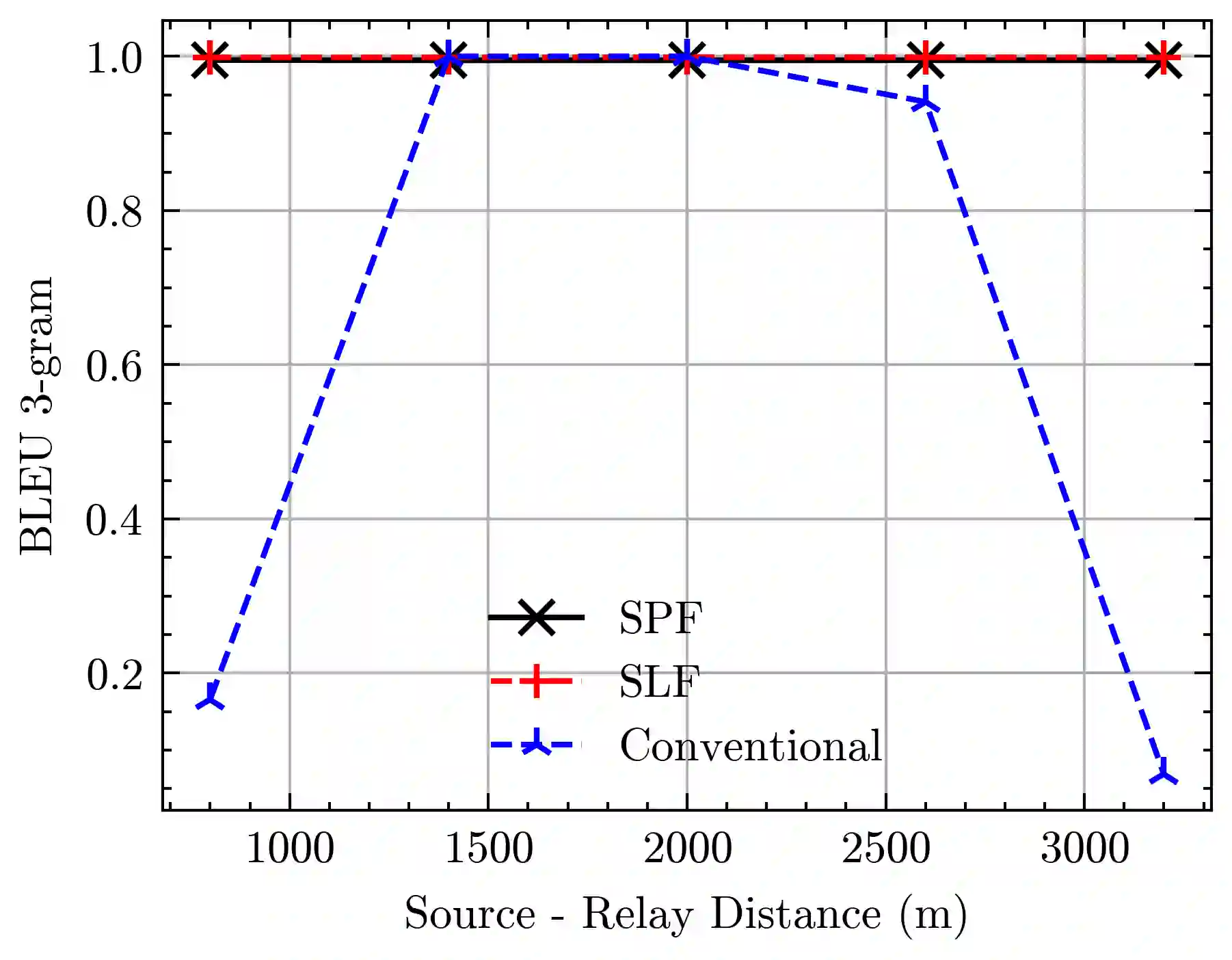
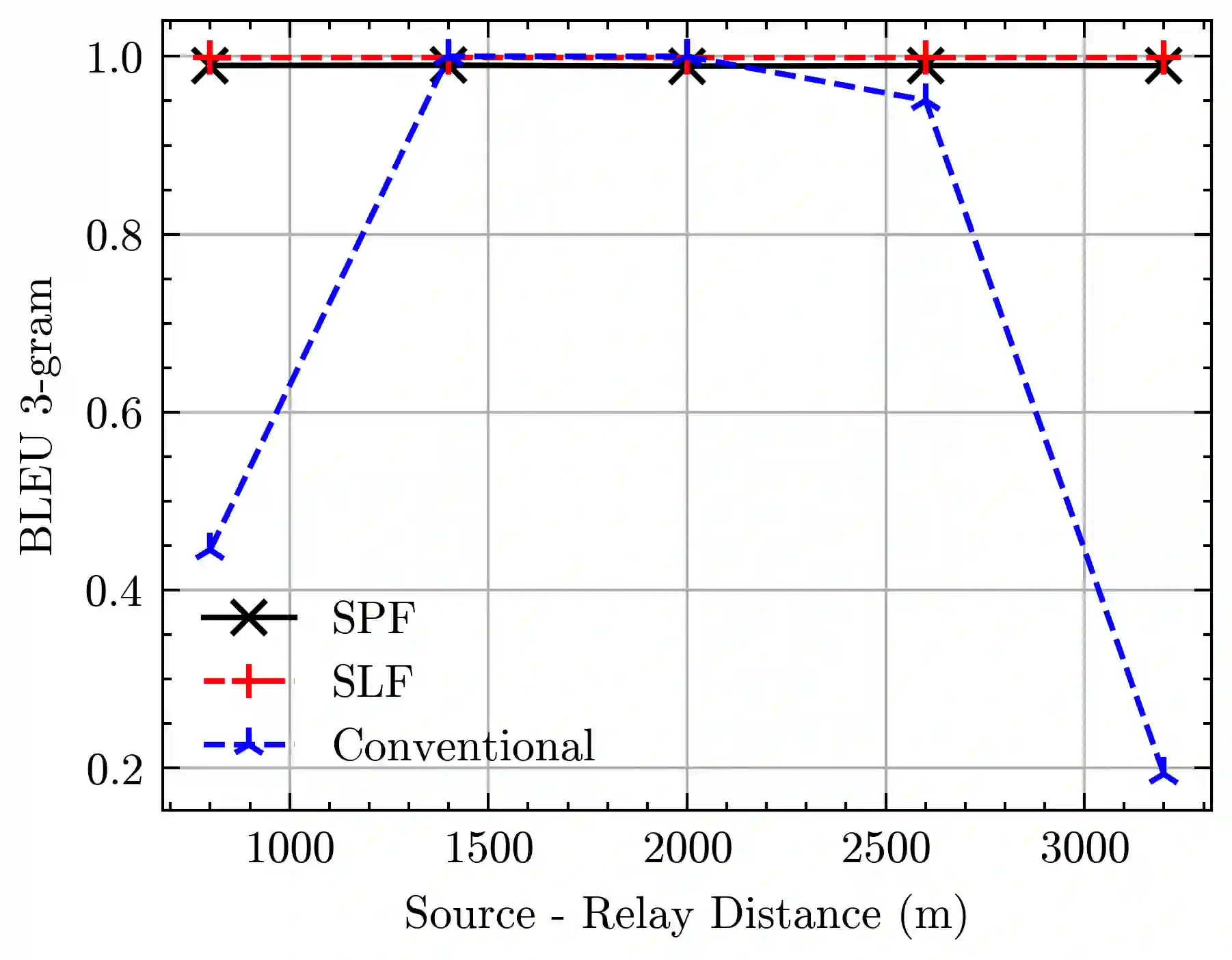
We consider cooperative semantic text communications facilitated by a relay node. We propose two types of semantic forwarding: semantic lossy forwarding (SLF) and semantic predict-and-forward (SPF). Both are machine learning aided approaches, and, in particular, utilize attention mechanisms at the relay to establish a dynamic semantic state, updated upon receiving a new source signal. In the SLF model, the semantic state is used to decode the received source signal; whereas in the SPF model, it is used to predict the next source signal, enabling proactive forwarding. Our proposed forwarding schemes do not need any channel state information and exhibit consistent performance regardless of the relay's position. Our results demonstrate that the proposed semantic forwarding techniques outperform conventional semantic-agnostic baselines.
翻译:我们考虑由中继节点辅助的协作式语义文本通信。我们提出两种类型的语义转发:语义有损转发(SLF)和语义预测转发(SPF)。两者均为机器学习辅助方法,特别地,利用中继处的注意力机制建立动态语义状态,并在接收到新的源信号时进行更新。在SLF模型中,语义状态用于解码接收到的源信号;而在SPF模型中,语义状态用于预测下一个源信号,从而实现主动转发。我们提出的转发方案不需要任何信道状态信息,且无论中继位置如何,均表现出稳定的性能。实验结果表明,所提出的语义转发技术优于传统忽略语义的基线方法。






相关内容





 微信扫码咨询专知VIP会员