

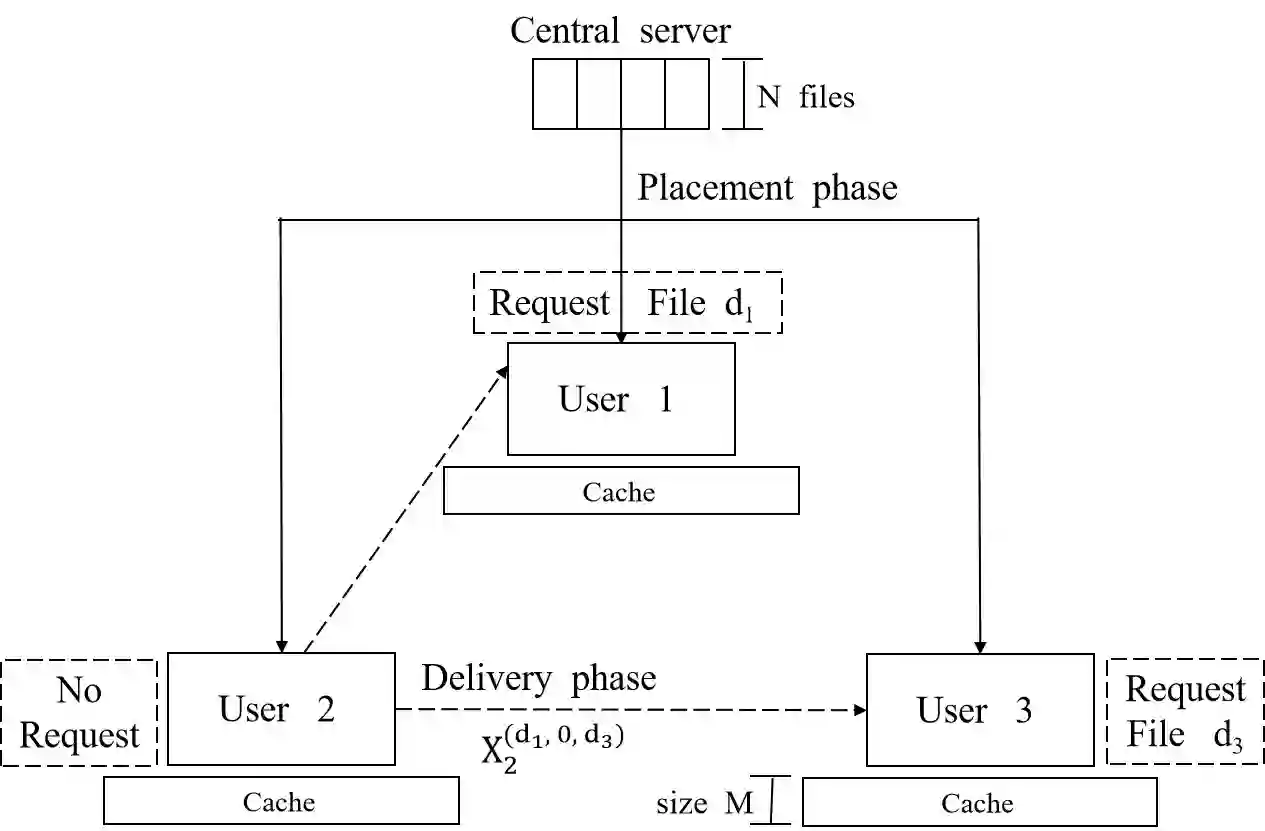
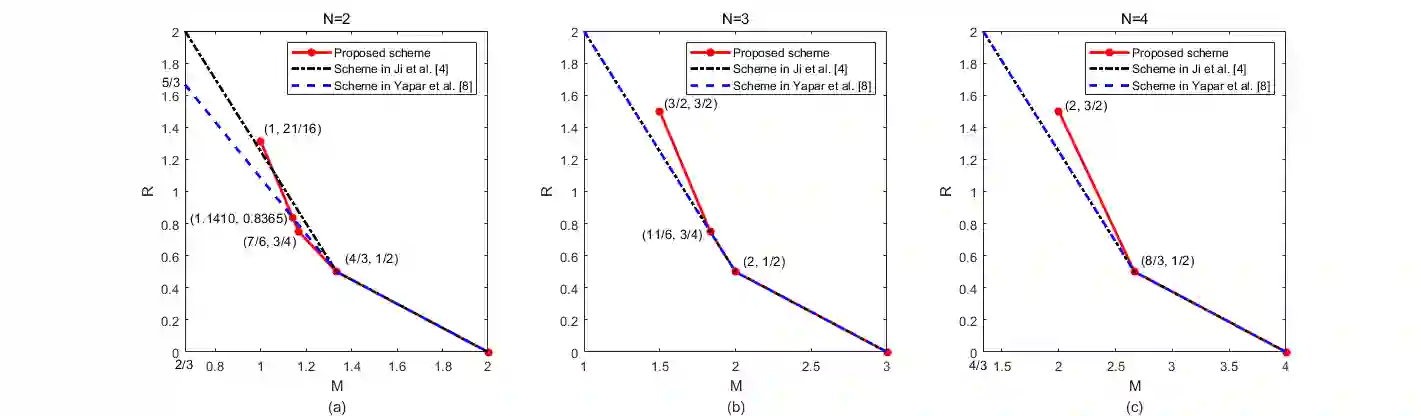
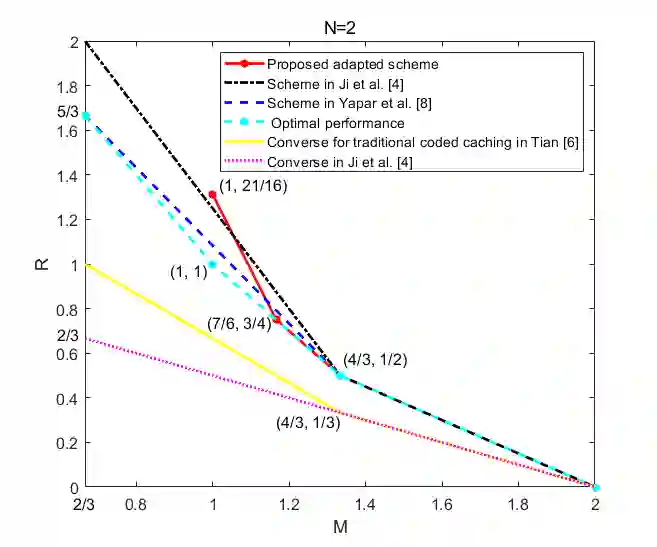
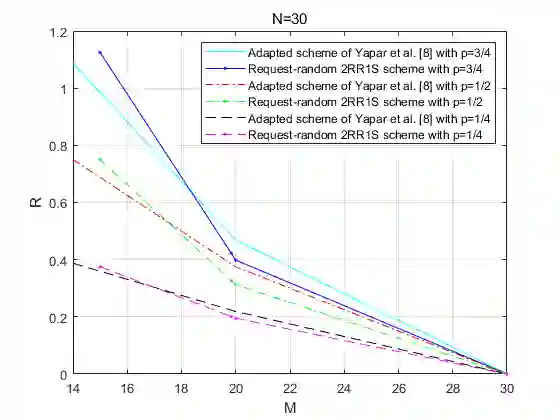
In device-to-device (D2D) coded caching problems, it is possible that not all users will make file requests in the delivery phase. Hence, we propose a new D2D centralized coded caching problem, named the 3-user D2D coded caching with two random requesters and one sender (2RR1S), where in the delivery phase, any two of the three users will make file requests, and the user that does not make any file request is the designated sender. We find the optimal caching and delivery scheme, denoted as the 2RRIS scheme, for any number of files N by proving matching converse and achievability results. It is shown that coded cache placement is needed to achieve the optimal performance. Furthermore, the optimal rate-memory tradeoff has a uniform expression for N>=4 and different expressions for N=2 and 3. To examine the usefulness of the proposed model and scheme, we adapt the 2RR1S scheme to two scenarios. The first one is the 3-user D2D coded caching model proposed by Ji et al. By characterizing the optimal rate-memory tradeoff for the 3-user D2D coded caching when N=2, which was previously unknown, we show that the adapted 2RR1S scheme is in fact optimal for the 3-user D2D coded caching problem when N=2 and the cache size is medium. The benefit comes from coded cache placement which is missing from existing D2D coded caching schemes. The second scenario is where in the delivery phase, each user makes a file request randomly and independently with the same probability p. We call this model the request-random D2D coded caching problem. Adapting the 2RR1S scheme to this scenario, we show the superiority of our adapted scheme over other existing D2D coded caching schemes for medium to large cache size.
翻译:在设备到设备(D2D)编码缓存问题中,传输阶段可能出现部分用户不发起文件请求的情况。为此,我们提出了一种新型D2D集中式编码缓存问题,称为“两随机请求者与一发送者的三用户D2D编码缓存”(2RR1S),其中传输阶段任意两名用户发起文件请求,不发起请求的用户被指定为发送方。我们通过匹配的对偶性证明与可达性结果,针对任意文件数N,定义了该问题的最优缓存与传输方案——2RR1S方案。研究表明,实现最优性能需要编码缓存放置策略。此外,最优速率-内存折衷关系在N≥4时具有统一表达式,而在N=2和3时呈现不同形式。为验证所提模型与方案的实用性,我们将2RR1S方案适配至两种场景。第一种是Ji等人提出的三用户D2D编码缓存模型。通过刻画N=2时该模型此前未知的最优速率-内存折衷关系,我们证明了适配后的2RR1S方案在缓存容量适中时对N=2的三用户D2D编码缓存问题具有最优性,其优势源于现有D2D编码缓存方案所缺乏的编码缓存放置策略。第二种场景中,传输阶段每位用户以相同概率p随机且独立地发起文件请求,我们将此模型称为“请求随机D2D编码缓存问题”。通过将2RR1S方案适配至该场景,我们证明了适配方案在中大缓存容量条件下优于现有D2D编码缓存方案。




相关内容




 微信扫码咨询专知VIP会员