

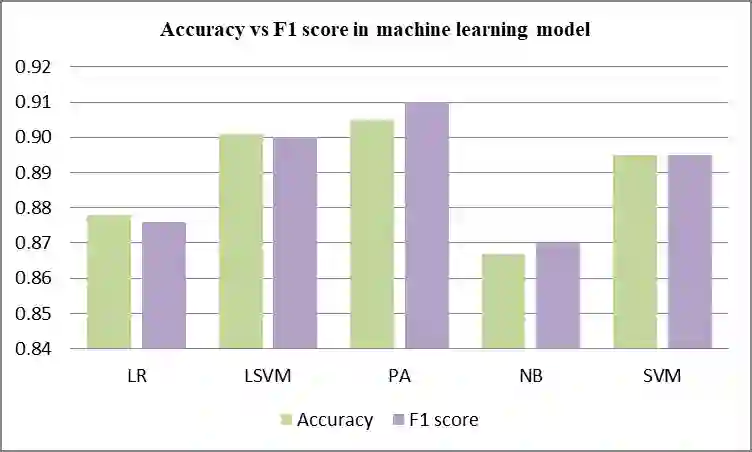
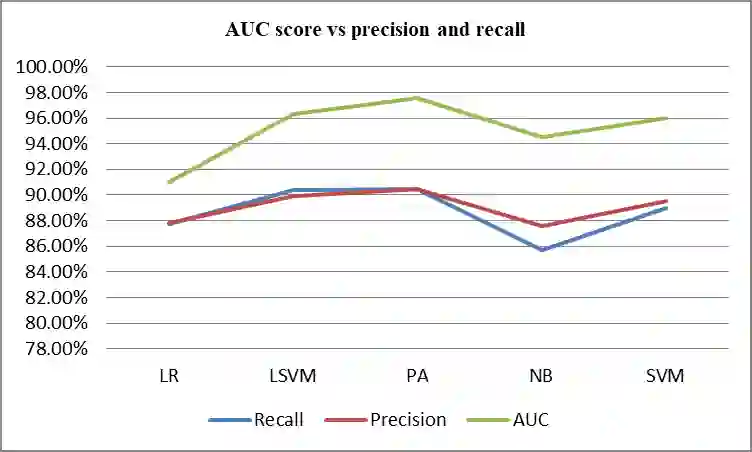
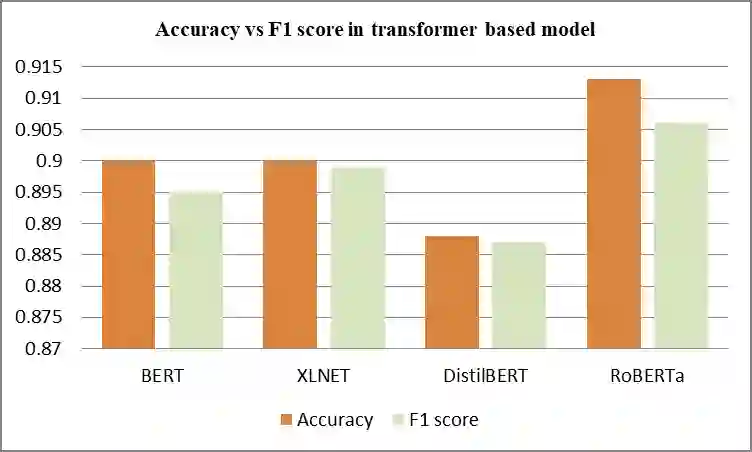
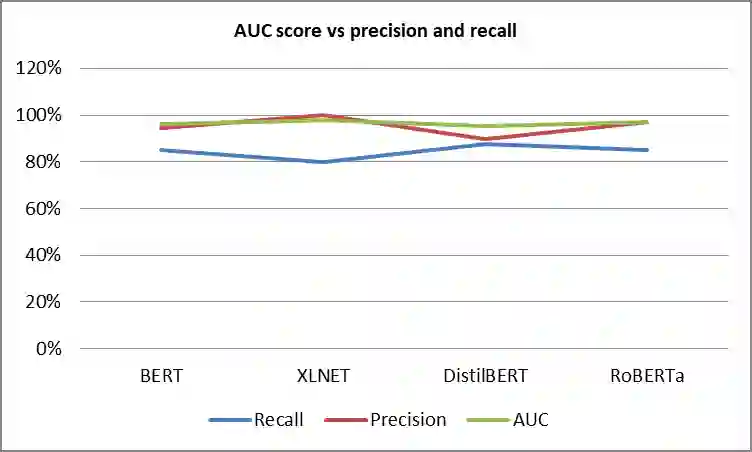
Deceptive text classification is a critical task in natural language processing that aims to identify deceptive o fraudulent content. This study presents a comparative analysis of machine learning and transformer-based approaches for deceptive text classification. We investigate the effectiveness of traditional machine learning algorithms and state-of-the-art transformer models, such as BERT, XLNET, DistilBERT, and RoBERTa, in detecting deceptive text. A labeled dataset consisting of deceptive and non-deceptive texts is used for training and evaluation purposes. Through extensive experimentation, we compare the performance metrics, including accuracy, precision, recall, and F1 score, of the different approaches. The results of this study shed light on the strengths and limitations of machine learning and transformer-based methods for deceptive text classification, enabling researchers and practitioners to make informed decisions when dealing with deceptive content.
翻译:欺骗性文本分类是自然语言处理中的一项关键任务,旨在识别虚假或欺诈性内容。本研究对基于机器学习与Transformer的欺骗性文本分类方法进行了比较分析。我们探究了传统机器学习算法以及先进Transformer模型(如BERT、XLNET、DistilBERT和RoBERTa)在检测欺骗性文本中的有效性。使用包含欺骗性和非欺骗性文本的标注数据集进行训练和评估。通过大量实验,我们比较了不同方法的性能指标,包括准确率、精确率、召回率和F1分数。研究结果揭示了机器学习与基于Transformer的方法在欺骗性文本分类中的优势与局限,使研究人员和从业者在处理欺骗性内容时能够做出明智的决策。




相关内容




 微信扫码咨询专知VIP会员