

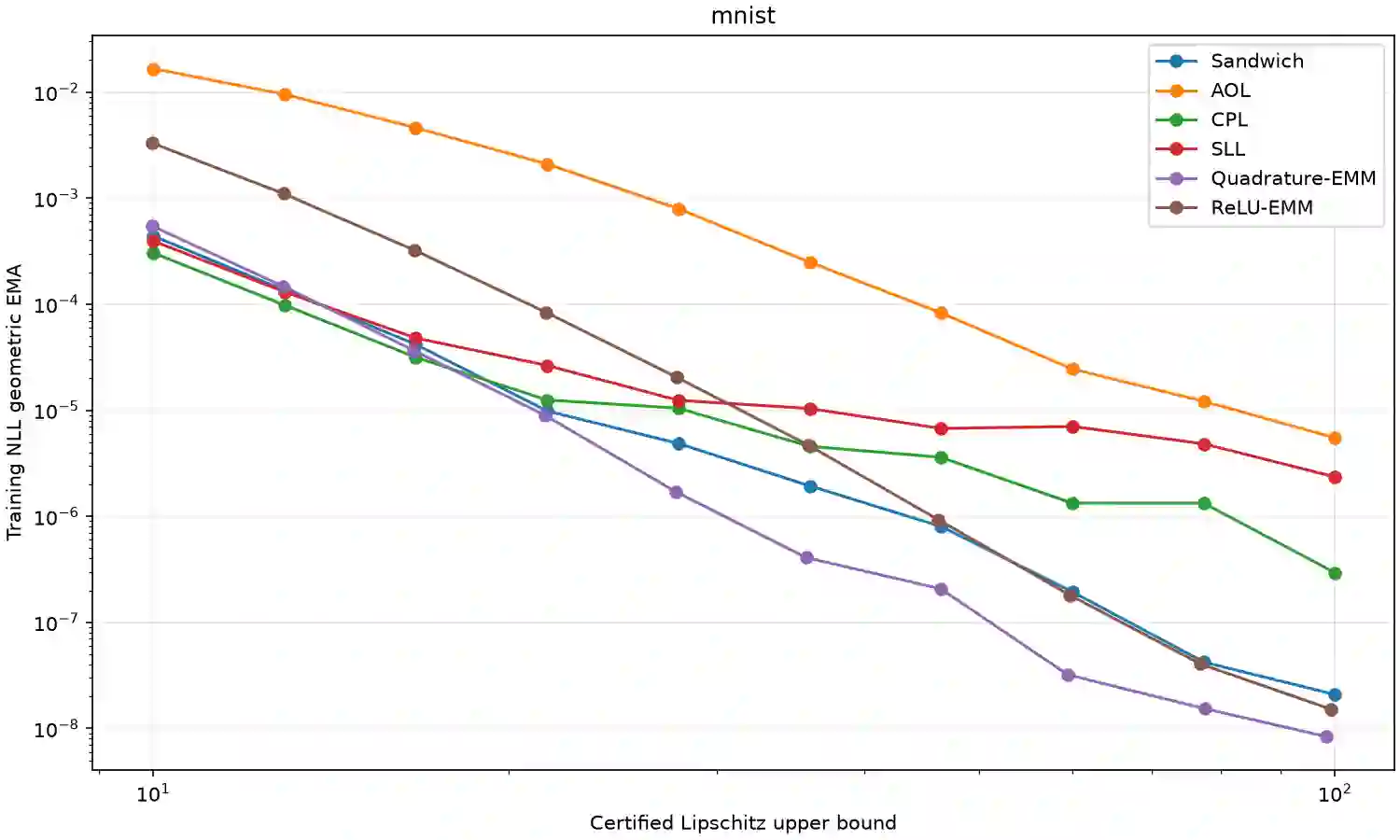
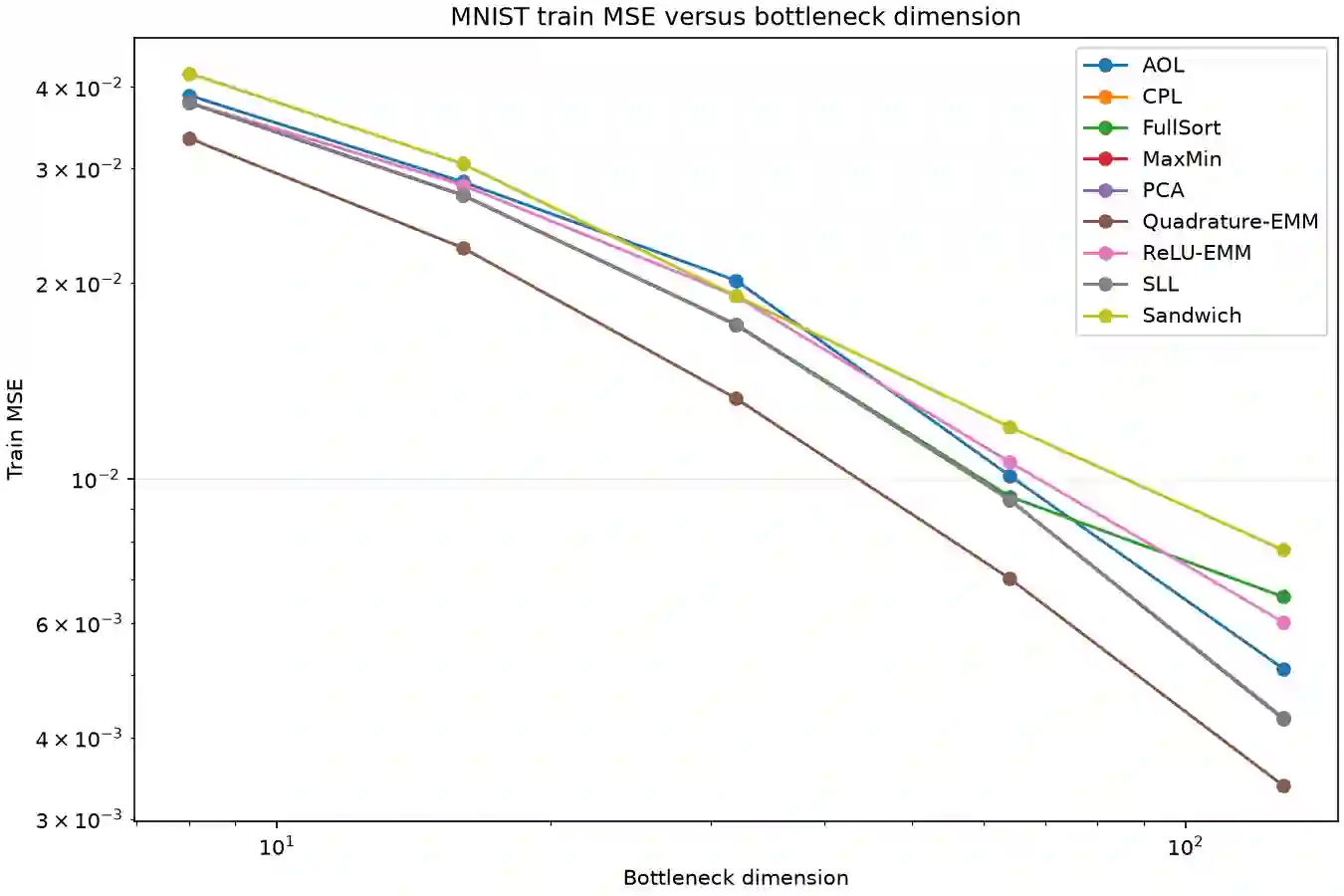
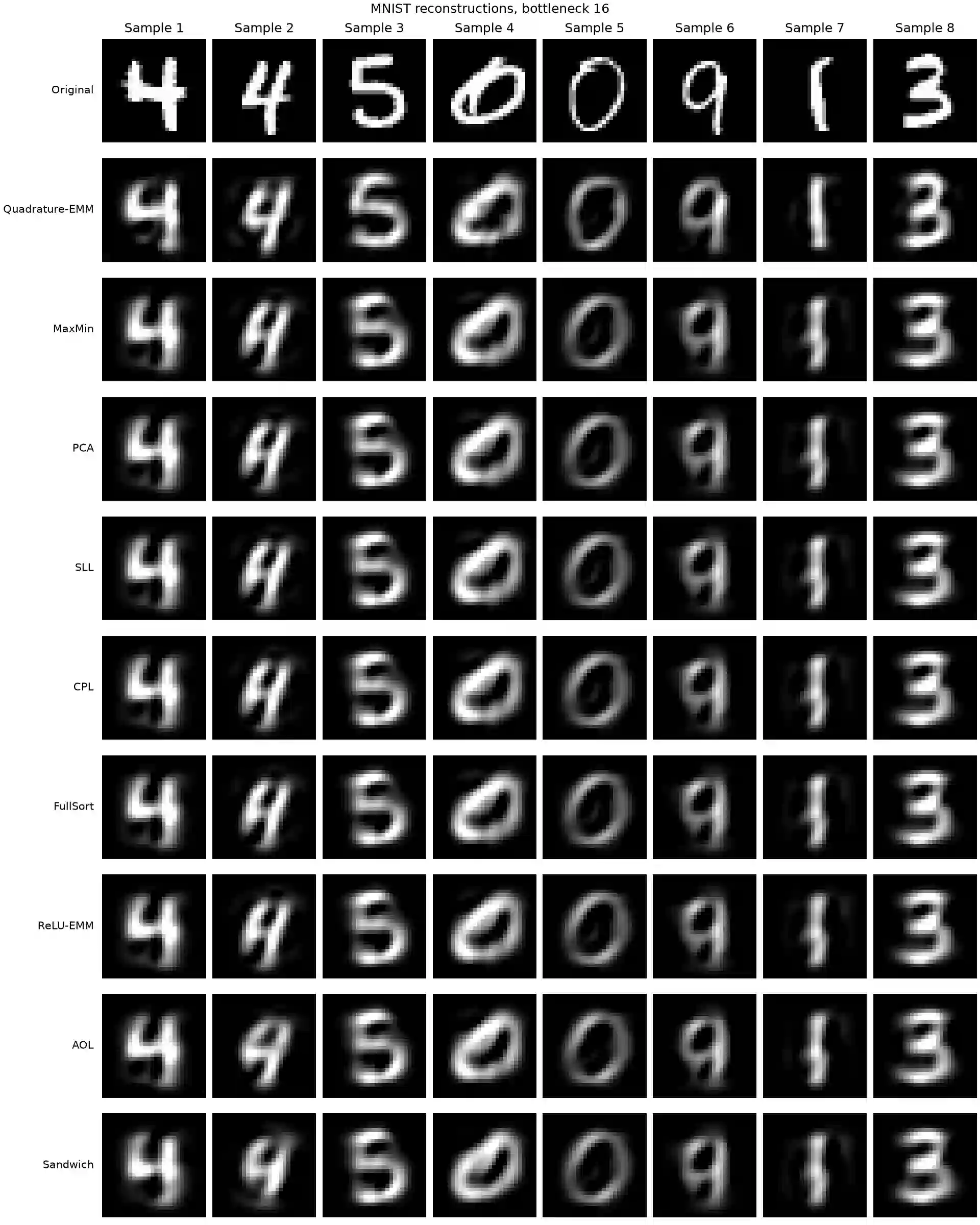
We study the problem of training a neural network to minimize a loss function given a Lipschitz constraint. While the most obvious way to estimate the Lipschitz constant of a neural network is to multiply the Lipschitz constants of its layers, this bound, which we term the _trivial bound_, is often considered impractically loose. We show that, on the contrary, it can be more effective than state-of-the-art methods (Sandwich, Almost-Orthogonal Layers, Convex Potential Layers, and SDP-based Lipschitz Layers) for Lipschitz-constrained learning. Our method combines the trivial bound with a novel activation function (the quadrature nonlinearity) to achieve lower cross-entropy over most of the tested classification bounds. For autoencoders constrained to be nonexpansive in a learned norm, it achieves the lowest pixel reconstruction error at every tested bottleneck width, improving on PCA by 12--24%. Our architecture, consisting of concatenated cosine and sine activations, is supported by a semi-rigorous theoretical analysis of Lipschitz bound looseness that may prove valuable in its own right.
翻译:暂无翻译


相关内容




 微信扫码咨询专知VIP会员