

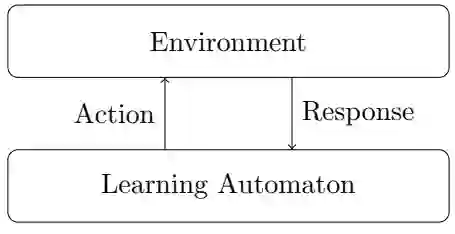
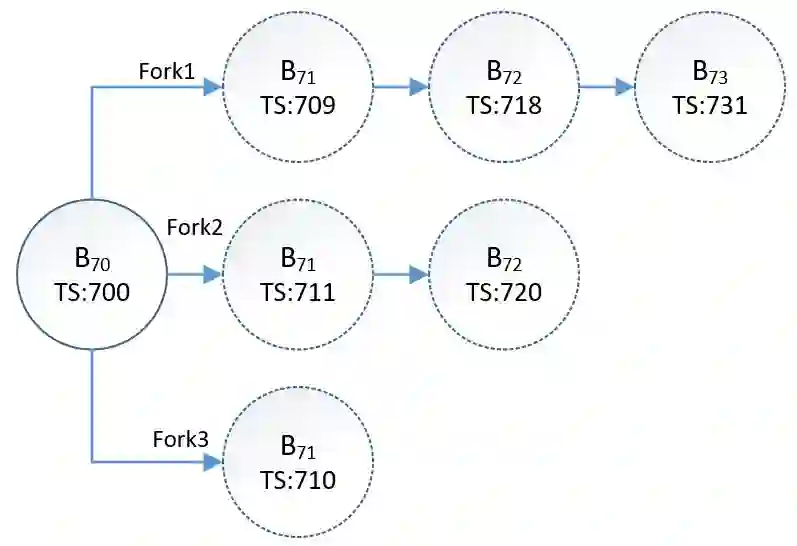
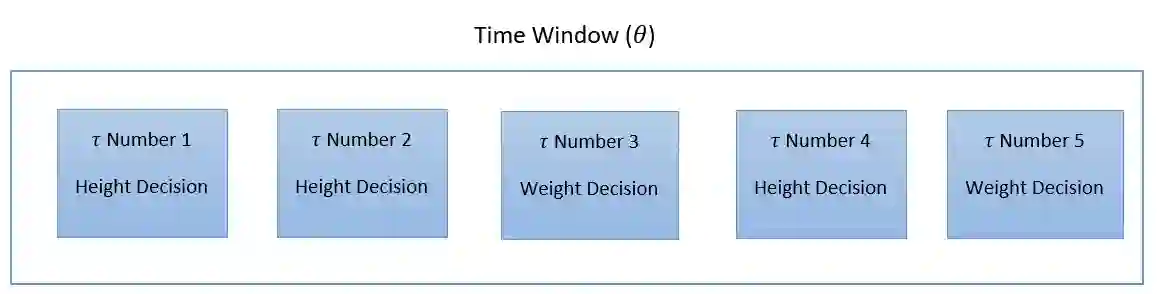
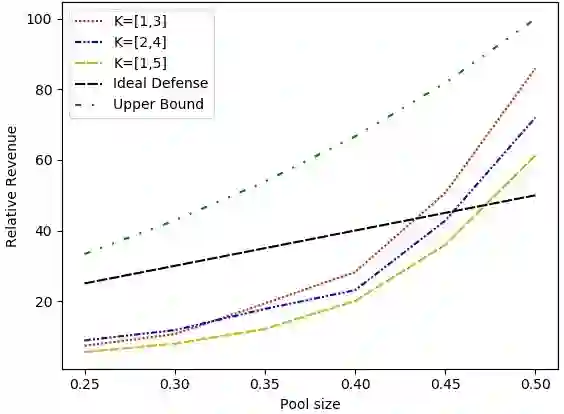
The Bitcoin cryptocurrency has received much attention recently. In the network of Bitcoin, transactions are recorded in a ledger. In this network, the process of recording transactions depends on some nodes called miners that execute a protocol known as mining protocol. One of the significant aspects of mining protocol is incentive compatibility. However, literature has shown that Bitcoin mining's protocol is not incentive-compatible. Some nodes with high computational power can obtain more revenue than their fair share by adopting a type of attack called the selfish mining attack. In this paper, we propose an artificial intelligence-based defense against selfish mining attacks by applying the theory of learning automata. The proposed defense mechanism ignores private blocks by assigning weight based on block discovery time and changes current Bitcoin's fork resolving policy by evaluating branches' height difference in a self-adaptive manner utilizing learning automata. To the best of our knowledge, the proposed protocol is the literature's first learning-based defense mechanism. Simulation results have shown the superiority of the proposed mechanism against tie-breaking mechanism, which is a well-known defense. The simulation results have shown that the suggested defense mechanism increases the profit threshold up to 40\% and decreases the revenue of selfish attackers.
翻译:比特币加密货币近年来备受关注。在比特币网络中,交易被记录在账本中。该网络中,交易记录的进程依赖于被称为矿工的节点,这些节点执行一种称为挖矿协议的协议。挖矿协议的重要特性之一是激励相容性。然而,文献表明比特币挖矿协议并非激励相容。部分拥有高计算能力的节点可通过采用名为自私挖矿攻击的方式,获取超出其公平份额的收益。本文提出一种基于人工智能的防御机制,通过应用学习自动机理论来抵御自私挖矿攻击。所提出的防御机制通过根据区块发现时间分配权重来忽略私有区块,并利用学习自动机以自适应方式评估分支高度差,从而改变当前比特币的分叉解决策略。据我们所知,该协议是文献中首个基于学习的防御机制。仿真结果表明,与著名的防御机制——打破平局机制相比,所提机制具有优越性。仿真结果还显示,该防御机制可将利润阈值提升高达40%,并降低自私攻击者的收益。




相关内容




 微信扫码咨询专知VIP会员