

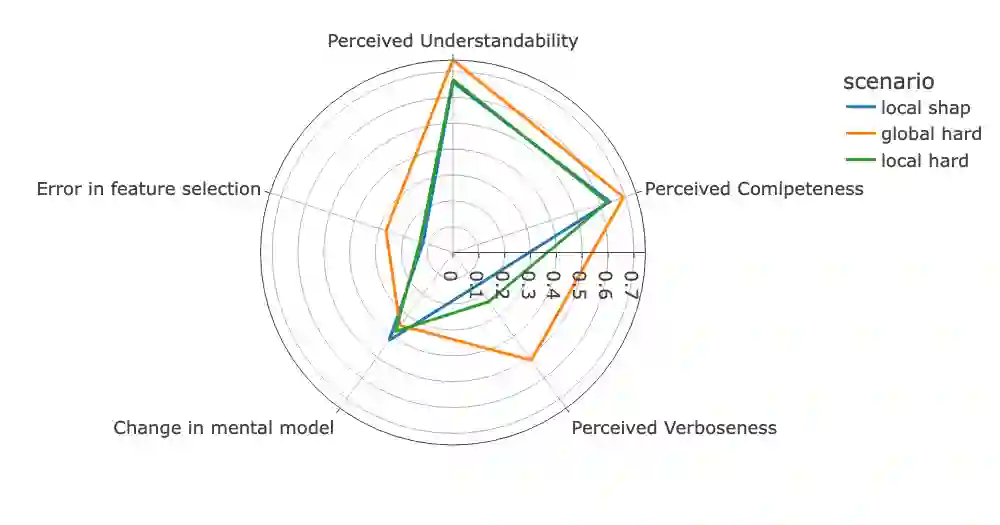
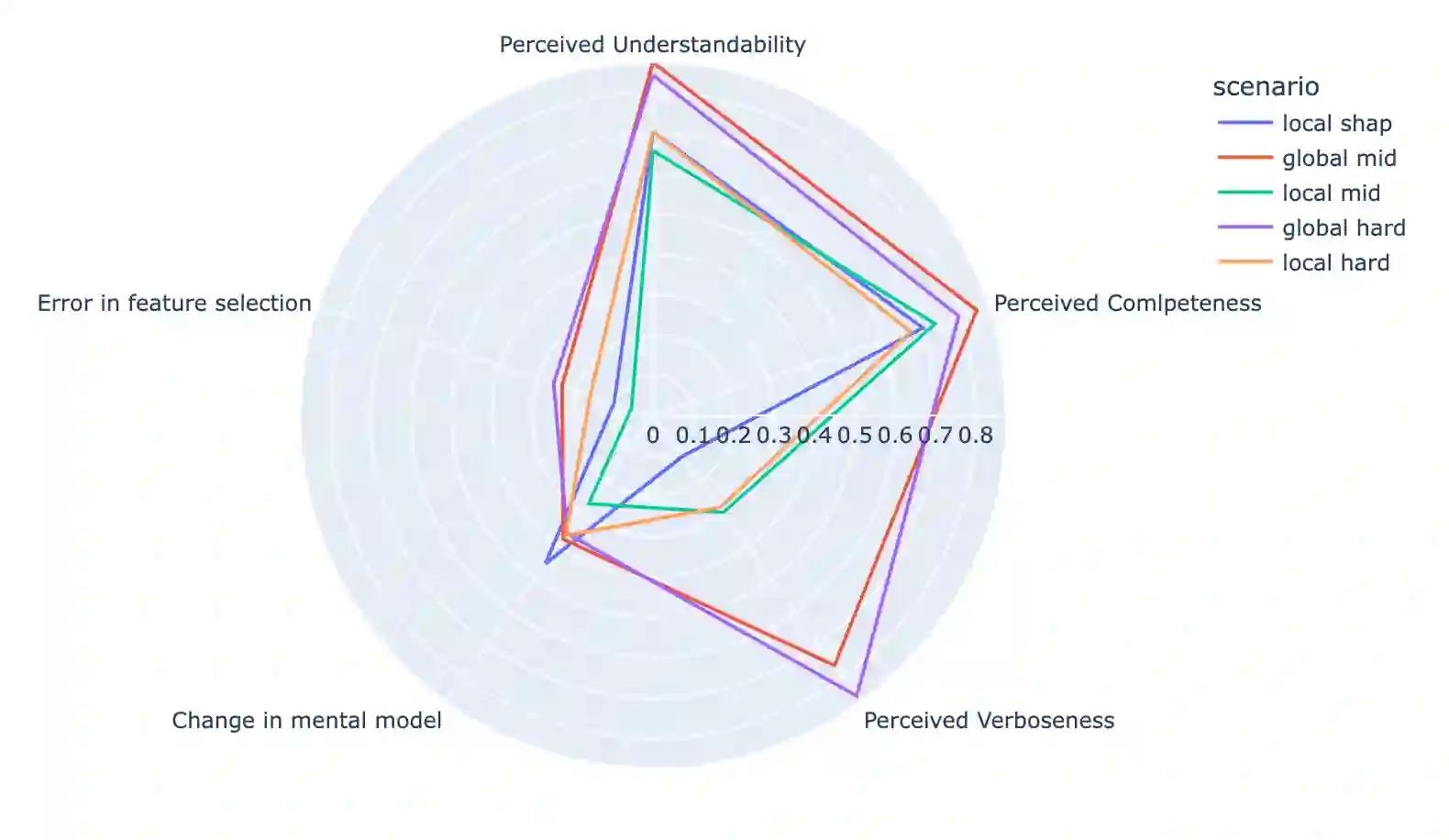
In explainable artificial intelligence (XAI) research, the predominant focus has been on interpreting models for experts and practitioners. Model agnostic and local explanation approaches are deemed interpretable and sufficient in many applications. However, in domains like healthcare, where end users are patients without AI or domain expertise, there is an urgent need for model explanations that are more comprehensible and instil trust in the model's operations. We hypothesise that generating model explanations that are narrative, patient-specific and global(holistic of the model) would enable better understandability and enable decision-making. We test this using a decision tree model to generate both local and global explanations for patients identified as having a high risk of coronary heart disease. These explanations are presented to non-expert users. We find a strong individual preference for a specific type of explanation. The majority of participants prefer global explanations, while a smaller group prefers local explanations. A task based evaluation of mental models of these participants provide valuable feedback to enhance narrative global explanations. This, in turn, guides the design of health informatics systems that are both trustworthy and actionable.
翻译:在可解释人工智能(XAI)研究中,主要关注点一直是为专家和从业者解释模型。模型无关和局部解释方法在许多应用中被认为是可解释且充分的。然而,在医疗保健等领域,最终用户是没有人工智能或领域专业知识的患者,因此迫切需要更易于理解且能增强对模型运行信任的模型解释。我们假设,生成叙述性、患者特异性且全局性(模型的整体性)的模型解释,将能提高可理解性并促进决策。我们使用决策树模型来测试这一假设,为被识别为冠心病高风险的患者生成局部和全局解释。这些解释被呈现给非专家用户。我们发现,个体对特定类型的解释有强烈偏好。大多数参与者偏好全局解释,而较少参与者偏好局部解释。基于任务的心理模型评估为改进叙述性全局解释提供了宝贵反馈。这反过来指导了设计既值得信赖又可操作的医疗信息学系统。







相关内容




 微信扫码咨询专知VIP会员