

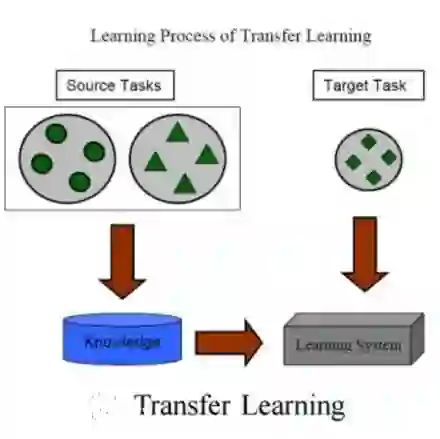
Microbial communities play a key role in biological wastewater treatment processes. Activated sludge settling characteristics, for example, are affected by microbial community composition, varying by changes in operating conditions and influent characteristics of wastewater treatment plants (WWTPs). Timely assessment and prediction of changes in microbial composition leading to settling problems, such as filamentous bulking (FB), can prevent operational challenges, reductions in treatment efficiency, and adverse environmental impacts. This study presents an innovative computer vision-based approach to assess activated sludge-settling characteristics based on the morphological properties of flocs and filaments in microscopy images. Implementing the transfer learning of deep convolutional neural network (CNN) models, this approach aims to overcome the limitations of existing quantitative image analysis techniques. The offline microscopy image dataset was collected over two years, with weekly sampling at a full-scale industrial WWTP in Belgium. Multiple data augmentation techniques were employed to enhance the generalizability of the CNN models. Various CNN architectures, including Inception v3, ResNet18, ResNet152, ConvNeXt-nano, and ConvNeXt-S, were tested to evaluate their performance in predicting sludge settling characteristics. The sludge volume index was used as the final prediction variable, but the method can easily be adjusted to predict any other settling metric of choice. The results showed that the suggested CNN-based approach provides less labour-intensive, objective, and consistent assessments, while transfer learning notably minimises the training phase, resulting in a generalizable system that can be employed in real-time applications.
翻译:微生物群落在生物废水处理过程中发挥着关键作用。例如,活性污泥的沉降特性受微生物群落组成的影响,并随污水处理厂(WWTPs)运行条件和进水特性的变化而改变。及时评估和预测导致沉降问题(如丝状菌膨胀)的微生物组成变化,可预防运行障碍、处理效率降低及不利环境影响。本研究提出了一种创新的基于计算机视觉的方法,通过分析显微图像中絮体和丝状物的形态特征来评估活性污泥沉降特性。该方法通过实施深度卷积神经网络(CNN)模型的迁移学习,旨在克服现有定量图像分析技术的局限性。离线显微图像数据集历时两年采集,每周对比利时一座全规模工业污水处理厂进行采样。采用多种数据增强技术以提升CNN模型的泛化能力。测试了多种CNN架构(包括Inception v3、ResNet18、ResNet152、ConvNeXt-nano和ConvNeXt-S)在预测污泥沉降特性中的表现。以污泥体积指数作为最终预测变量,但该方法可轻松调整以预测任何其他选定的沉降指标。结果表明,所提出的基于CNN的方法能提供更低劳动强度、更具客观性和一致性的评估结果,而迁移学习显著缩短了训练阶段,从而形成可应用于实时场景的通用化系统。




相关内容




 微信扫码咨询专知VIP会员