

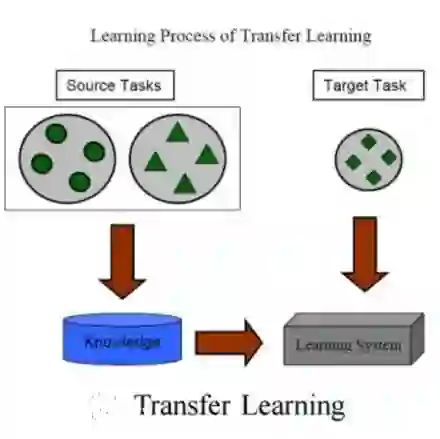
Process design is a creative task that is currently performed manually by engineers. Artificial intelligence provides new potential to facilitate process design. Specifically, reinforcement learning (RL) has shown some success in automating process design by integrating data-driven models that learn to build process flowsheets with process simulation in an iterative design process. However, one major challenge in the learning process is that the RL agent demands numerous process simulations in rigorous process simulators, thereby requiring long simulation times and expensive computational power. Therefore, typically short-cut simulation methods are employed to accelerate the learning process. Short-cut methods can, however, lead to inaccurate results. We thus propose to utilize transfer learning for process design with RL in combination with rigorous simulation methods. Transfer learning is an established approach from machine learning that stores knowledge gained while solving one problem and reuses this information on a different target domain. We integrate transfer learning in our RL framework for process design and apply it to an illustrative case study comprising equilibrium reactions, azeotropic separation, and recycles, our method can design economically feasible flowsheets with stable interaction with DWSIM. Our results show that transfer learning enables RL to economically design feasible flowsheets with DWSIM, resulting in a flowsheet with an 8% higher revenue. And the learning time can be reduced by a factor of 2.
翻译:过程设计是一项创造性任务,目前仍由工程师手动完成。人工智能为过程设计提供了新的可能性。特别是,强化学习通过整合数据驱动模型,在迭代设计过程中学习构建过程流程图并与过程仿真相结合,已在自动化过程设计方面取得一定成功。然而,学习过程中的主要挑战在于强化学习代理需要在严格的过程模拟器中进行大量过程仿真,这导致仿真时间较长且计算成本高昂。因此,通常采用简化仿真方法来加速学习过程。但简化方法可能导致结果不准确。为此,我们提出将迁移学习与强化学习相结合,用于严格仿真方法下的过程设计。迁移学习是机器学习中的成熟方法,能够存储解决某一问题所获得的知识,并将其重新应用于不同的目标领域。我们将迁移学习集成到用于过程设计的强化学习框架中,并将其应用于包含平衡反应、共沸分离和循环回路的示例案例研究。该方法能够通过与DWSIM的稳定交互,设计出经济可行的流程图。结果表明,迁移学习使强化学习能够借助DWSIM经济地设计可行流程图,生成的流程图收益提高8%,且学习时间可减少至原来的1/2。




相关内容




 微信扫码咨询专知VIP会员