

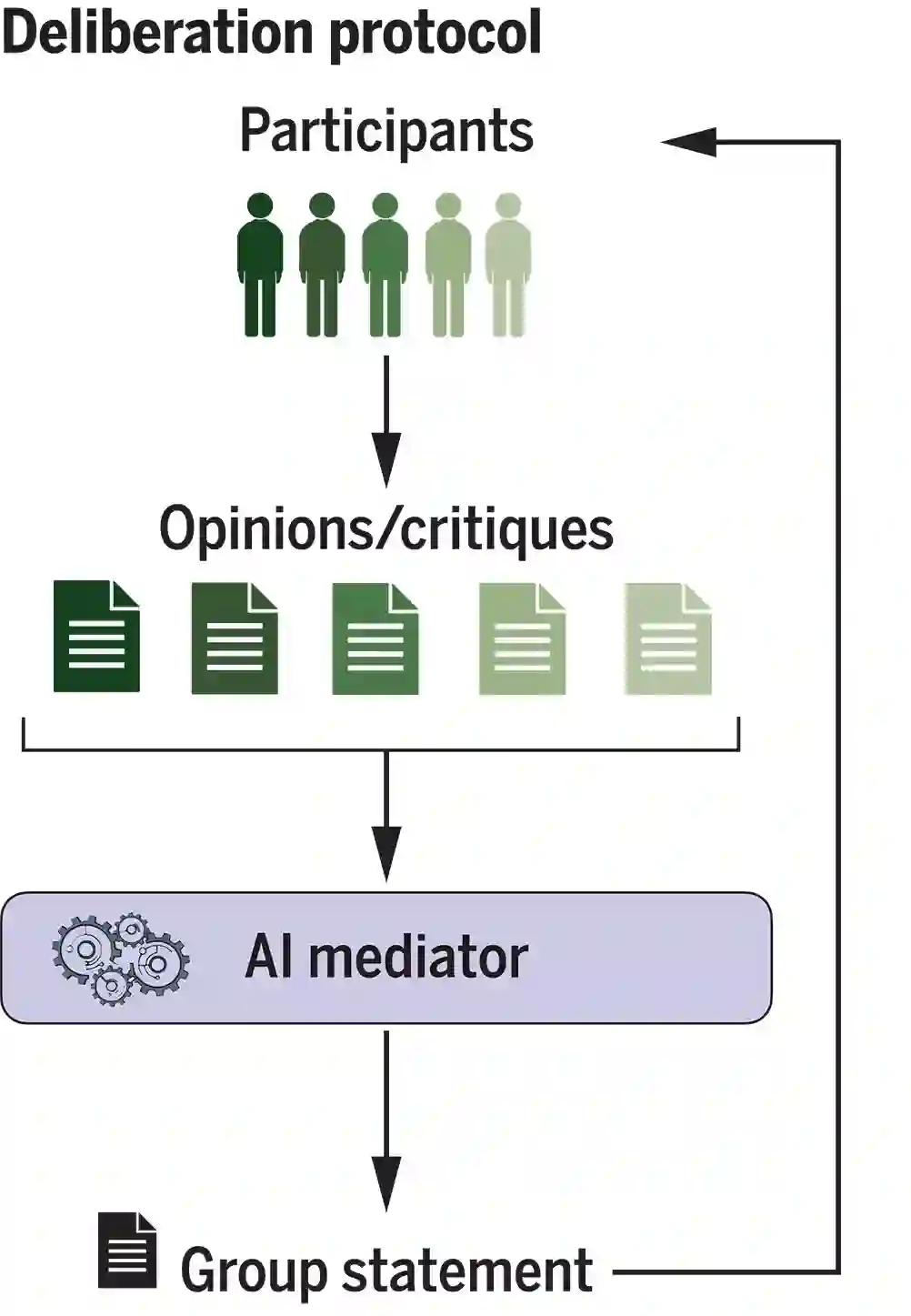
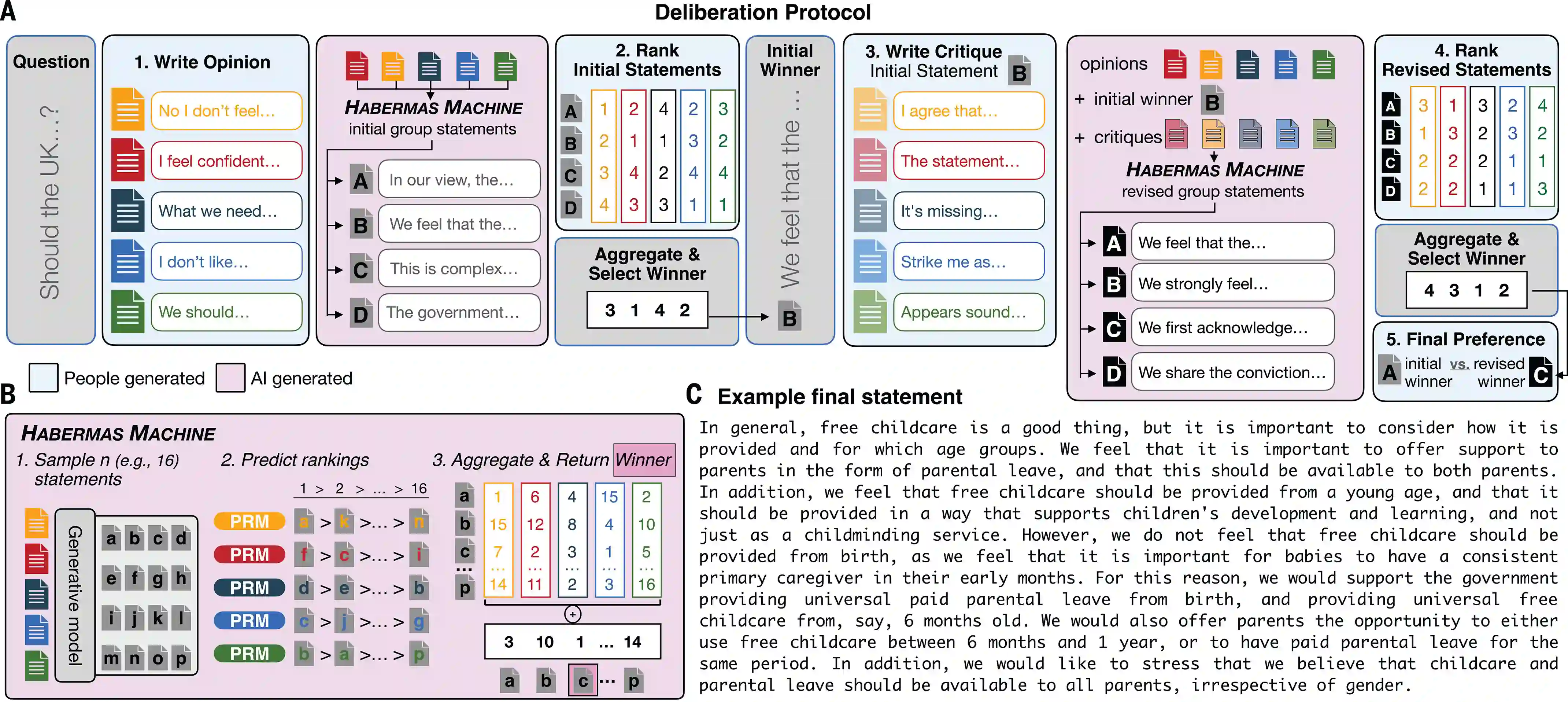
The strength of democracy lies in the free and equal exchange of diverse viewpoints. Living up to this ideal at scale faces inherent tensions: broad participation, meaningful deliberation, and political equality often trade off with one another (Fishkin, 2011). We ask whether and how artificial intelligence (AI) could help navigate this "trilemma" by engaging with a recent example of a large language model (LLM)-based system designed to help people with diverse viewpoints find common ground (Tessler, Bakker, et al., 2024). Here, we explore the implications of the introduction of LLMs into deliberation augmentation tools, examining their potential to enhance participation through scalability, improve political equality via fair mediation, and foster meaningful deliberation by, for example, surfacing trustworthy information. We also point to key challenges that remain. Ultimately, a range of empirical, technical, and theoretical advancements are needed to fully realize the promise of AI-mediated deliberation for enhancing citizen engagement and strengthening democratic deliberation.
翻译:民主的力量源于多元观点的自由平等交流。然而,大规模实现这一理想面临内在张力:广泛参与、实质性审议与政治平等往往相互制约(Fishkin, 2011)。本文探讨人工智能(AI)是否及如何通过介入近期一项基于大语言模型(LLM)的系统案例(Tessler, Bakker等, 2024),帮助化解这种“三难困境”——该系统旨在协助持不同观点者寻求共识。我们深入分析将LLM引入审议增强工具的影响,考察其通过可扩展性提升参与度、借助公平调解促进政治平等、以及(例如)通过呈现可信信息推动实质性审议的潜力。同时,我们指出仍需应对的关键挑战。最终,需要实证研究、技术革新与理论发展的协同推进,方能充分实现AI介导审议在提升公民参与、强化民主审议方面的价值。





相关内容




 微信扫码咨询专知VIP会员